Chamomile Konniyaku Jelly with Lychee is a cold, wobbly dessert made from chamomile tea, lychee juice, and konnyaku powder, a Japanese setting agent derived from konjac root. It is the kind of thing you find in the chiller cabinets of Hong Kong dessert shops, though my version leans more Japanese in its restraint. Only 5 ingredients if you follow my recipe, and no baking at all.
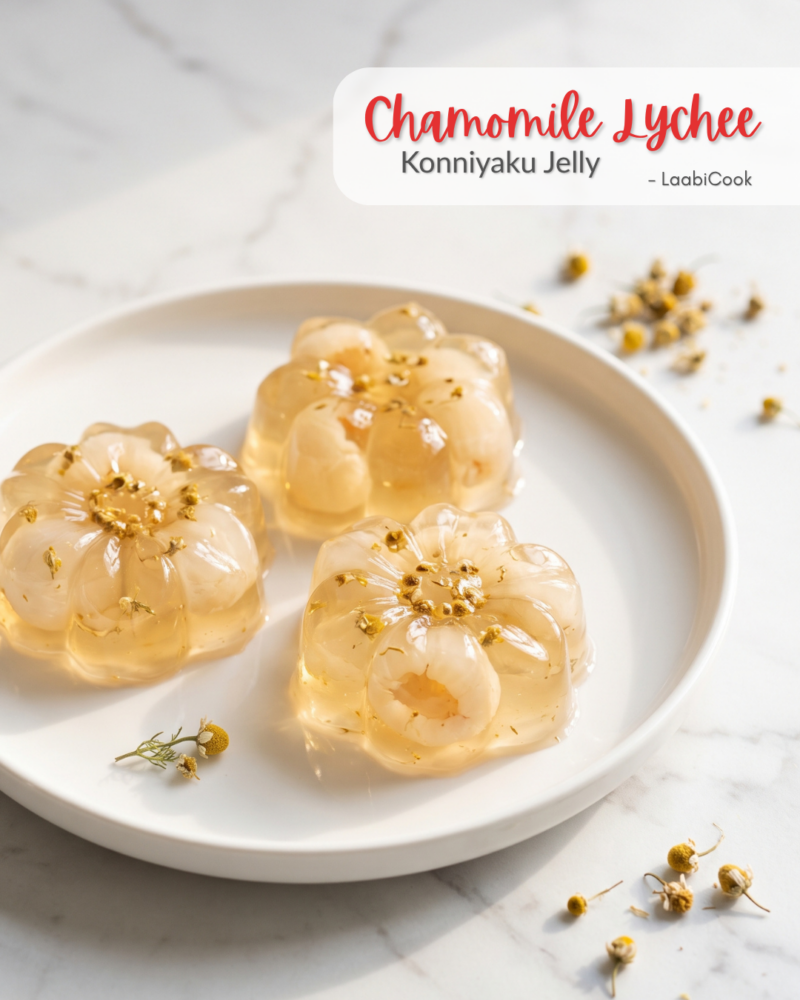
I make this when the afternoons stretch long and humid and I want something sweet that does not sit heavy. The chamomile is genuinely calming. The lychee gives it that nostalgic lift. Set it in the morning, pull it out by evening.
Why You’ll Love This Recipe
- No baking, no eggs, no dairy: This is a completely stove-top dessert. The Konniyaku powder does all the structural work. Perfect if your oven is broken or your kitchen runs hot.
- Make-ahead friendly: The active time is under 15 minutes. The rest is waiting. I often make this after lunch and forget about it until dinner guests arrive.
- Budget and pantry simple: Five ingredients, all from a standard Asian grocery. A can of lychees, a packet of Konniyaku powder, and tea bags you probably already own. The whole thing costs less than a single slice of cake at a cafe.
The Culinary Secrets Behind This Dish
Why pour boiling liquid straight onto the lychee? The residual heat softens the fruit just enough to release its fragrance into the surrounding jelly without turning it mushy. That is the whole trick. Konniyaku powder needs a full rolling boil to activate its glucomannan starch properly. If you only simmer, you get weeping and a weak set. I learned this the hard way with a batch that sat in the fridge for two days and still sloshed.
The 3:1 ratio of lychee juice to water is not arbitrary. Pure lychee juice would set too firm and taste cloying. The chamomile tea bags, boiled in the liquid rather than steeped separately, give up their bisabolol and apigenin compounds more readily in hot sugar-acid solution. The result is a gentler, more integrated floral note than if you brewed tea and mixed it later. Chamomile konniyaku jelly works because the tea becomes part of the structure, not an afterthought.
What You’ll Need
Equipment
- Pot: You need a medium pot to bring 1 liter of liquid to a rolling boil without it foaming over. The wide base helps you whisk the powder in evenly.
- Jelly mould: Any heat-safe mould works: silicone, metal, or even a glass loaf pan. I use a simple rectangle mould because it unmoulds cleanly and slices into neat cubes.
- Fridge: Essential for the set. Konniyaku firms up fastest below 10 degrees Celsius. Room temperature setting takes hours longer and the texture stays slightly rubbery.
Ingredients
- Chamomile tea bags, 4 g (2 bags): Provides the soothing floral backbone. German chamomile (Matricaria chamomilla) is what I buy. The apple-honey notes play beautifully with lychee.
- Lychee juice, 750 ml: The body and main sweetness of the jelly. I use a good Asian brand from the fridge section at the wet market or H-Mart. Check the label for actual lychee content, not just flavoring.
- Water, 250 ml: Dilutes the lychee juice to the right sugar concentration for a tender set. Too much sugar inhibits konjac gel formation.
- Canned lychees, 1 can (drained and halved): Gives you whole fruit to bite into. Halving them lets the jelly surround each piece evenly. Do not use fresh unless you are prepared to peel and pit; canned is perfectly fine here.
- Konnyaku powder, 1 packet: This is your setting agent. One standard packet is usually 10 g. It is not the same as agar agar or gelatin. Konnyaku gives that characteristic chewy, wobbly texture that holds up in tropical heat.
Step-by-Step Cooking Guide
1: Boil the tea base
- Put the chamomile tea bags, lychee juice, and water into your pot. Bring to a rolling boil over medium-high heat. You want actual bubbles breaking the surface, not just a simmer. The tea bags will float; press them down once with a spoon to wet them fully.
2: Whisk in the Konniyaku powder
- With the liquid still boiling, gradually sprinkle in the Konniyaku powder while whisking constantly. Follow the timing on your packet; most need 1-2 minutes of vigorous stirring to fully hydrate. The mixture will turn slightly cloudy and thicken just barely. Do not stop stirring or you get lumps.
3: Arrange the lychee halves
- Divide the drained, halved lychees among your moulds. I use about 3 halves per portion. Press them cut-side down so they stay submerged and do not float to the top when you pour.
4: Pour, cool, and chill
- Pour the hot mixture slowly over the lychees, filling each mould to the top. The heat will soften the fruit slightly and help it adhere to the finished jelly. Let the moulds sit on your counter until they reach room temperature, about 45 minutes. Then transfer to the fridge for at least 4 hours, or until completely firm to the touch.
5: Unmould and serve
- Run a thin knife around the edge if you used a rigid mould, or simply push from the base if silicone. Slice into cubes or diamonds. The jelly should quiver when you shake the plate. That wobble is exactly right. Serve straight from the fridge; this is not a dessert that improves at room temperature.
Ingredient Substitutions & Variations
| Ingredient | Substitute | Taste & Texture Impact |
| Agar agar powder | Konnyaku powder | Noticeably different. Agar sets much firmer and more brittle. You lose the characteristic jiggly, almost bouncy chew of konnyaku. |
| Chrysanthemum tea | Chamomile tea bags | Works well. Use 750 ml of brewed and cooled chrysanthemum tea plus 250 ml water. The cooling properties are similar. The flavor is more honeyed, less apple-like. |
| Fresh peeled lychees | Canned lychees | Acceptable. Fresh lychees are sweeter and more fragrant, but the texture is firmer and they can float awkwardly. Canned is actually more consistent for this application. |
| Longan in syrup, drained | Canned lychees | Works fine. Longan in syrup gives a similar floral sweetness. The fruit is softer and less distinctive, but the overall dessert still delivers. |
Recipe twists:
| Variation | Description & Culinary Details |
| Ginger Chamomile Konniyaku Jelly | Add 2-3 thin slices of fresh ginger to the boiling liquid. Remove before adding Konniyaku powder. The gentle heat works beautifully with chamomile and lychee, especially in rainy weather. |
| Coconut Lychee Konniyaku Jelly | Replace 250 ml of the lychee juice with unsweetened coconut water. The result is less sweet, more refreshing, with a subtle mineral undertone. Good for very hot days. |
| Osmanthus Chamomile Konniyaku Jelly | Stir in 1 tablespoon of dried osmanthus flowers with the tea bags. Strain both out before adding the powder. The osmanthus amplifies the floral quality without adding sweetness. |
Allergen Friendly Adjustments
- Gluten-Free: This chamomile konniyaku jelly is already gluten-free. Konniyaku powder is made from konjac root, not wheat.
- Dairy-Free: Already dairy-free. No milk, cream, or butter in this recipe.
- Nut-Free: Already nut-free. No tree nuts or peanuts anywhere in the ingredient list.
Serving and Pairing Suggestions
- Hot barley tea (mugicha): The roasted, slightly bitter notes of Japanese barley tea contrast the sweet floral jelly beautifully. Serve it in small glasses alongside.
- Plain almond tofu (annin tofu): For a full dessert spread, the silky almond tofu and the chewy konnyaku jelly give you two completely different textures on one plate.
- Osmanthus oolong: A lightly oxidized oolong with osmanthus flowers echoes the chamomile without competing. Serve it warm, not hot, so you do not shock the cold jelly.
Storage, Reheating, and Freezing Guide
- Refrigeration: Keeps covered in the fridge for up to 5 days. The surface may dry slightly; press cling wrap directly onto the jelly if you are not serving within 24 hours.
- Freezing: Not recommended. The konjac gel structure breaks down under freezing and the thawed jelly weeps uncontrollably. Make a fresh batch; it takes 15 minutes of actual work.
- Reheating: No reheating needed or wanted. This is a cold dessert. If you need to soften it slightly for unmoulding, dip the mould base in warm water for 10 seconds, no longer.
Frequently Asked Questions (FAQ)
▶ Can I use all lychee juice and skip the water?
It will set, but the texture shifts. Pure lychee juice makes a firmer, almost bouncy jelly. I prefer the lighter wobble you get with the water added.
▶ What if I only have loose chamomile, not tea bags?
Use loose chamomile flowers in a tea ball or fine sieve. Strain before adding the Konniyaku powder. You need about 4 grams of dried flowers.
▶ Can I freeze leftovers?
It does not freeze well. Ice crystals rupture the konjac gel structure and it weeps badly on thawing. Make it fresh; it takes almost no effort.
Chamomile Lychee Konniyaku Jelly
Equipment
- Pot
- jelly mould
- fridge
Ingredients
- 2 chamomile tea bags (about 4g)
- 750 ml lychee juice
- 250 ml water
- 1 can lychees , drained and halved
- 1 packet Konniyaku powder
Instructions
- Boil tea bags in lychee juice and water. Gradually stir Konniyaku powder into boiling tea (follow the directions on the Konniyaku packaging).
- Put lychee halves into moulds.
- Pour boiled mixture into moulds. Set aside to cool before putting into the fridge. Serve chilled.
Gobble these up too!
-

My guilt-free chocolate mousse uses low-fat milk and zero cream. Pan, whisk, 20 minutes active… Cook recipe >
-
No gelatin, no fuss, no baking. This rose agar agar uses just 5 ingredients and… Cook recipe >
-
Melt, mix, and press your way to crunchy chocolate stacks with just five pantry staples.… Cook recipe >
-
A warm, sticky pudding that makes its own sauce in the oven. Dates keep it… Cook recipe >