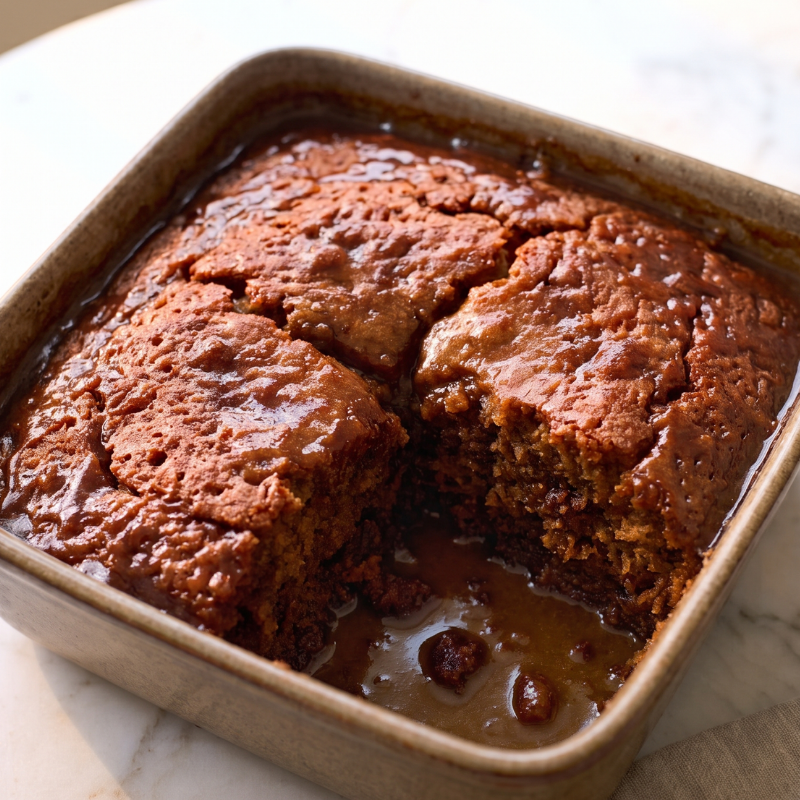
There is a particular hush that falls over a kitchen when a sticky date pudding with caramel sauce is in the oven. The air turns buttery and dark with molasses, and you find yourself hovering near the door, waiting for that first wisp of caramel to escape. This is the pudding for evenings when the light fades early and you need something that asks very little of you but gives back warmth in return.
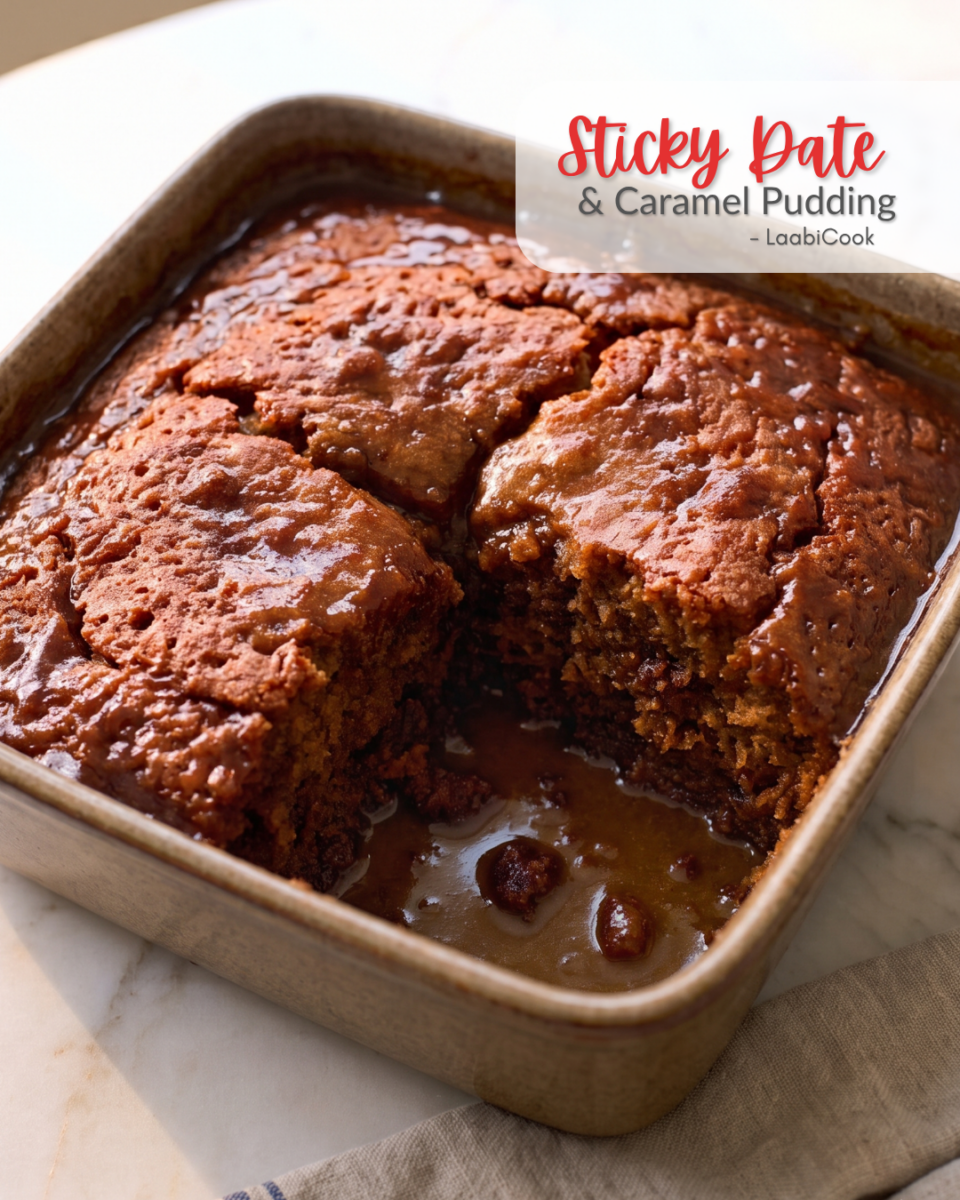
The genius here is in the structure itself. You spread a simple date-spiked batter into your dish, then pour over a loose caramel that seems all wrong until the oven works its magic. The sauce sinks through, pools underneath, and leaves you with a cake layer above and a molten puddle below. Fresh dates make this especially good in late summer through early autumn, when Medjool and Deglet Noor varieties crowd the greengrocers with their sticky, honeyed flesh.
Why You’ll Love This Recipe
- One dish, two textures: The same batter that rises into a tender cake also creates its own sauce beneath. No separate saucepan, no last-minute whisking. The oven does the division for you.
- Dates keep it improbably moist: Even after forty minutes of baking, the pudding stays plush and yielding. Fresh dates melt into the crumb and prevent that dry, bready texture that ruins lesser puddings.
- Serves a crowd from modest ingredients: No eggs, no chocolate, no cream in the batter itself. Just pantry staples and a handful of dates transformed into something that feels generous and occasion-worthy.
The Culinary Secrets Behind This Dish
The self-saucing mechanism relies on density and heat gradients. Your batter is thick and relatively heavy with brown sugar and flour; the poured sauce is thin and hot. In the oven, the sauce sinks because it is less dense than the raw batter, then it hits the hot base of the dish and begins to simmer. The top layer sets into cake as the sauce reduces and thickens underneath. Pouring the sauce over the back of a spoon breaks its fall and prevents it from drilling holes through your batter, which would give you an uneven, soggy top rather than a clean cake layer.
Fresh dates behave differently from dried here. Their higher moisture content means they soften into the crumb without the chewy, raisin-like pockets that dried dates can leave behind. If you are buying in season, look for plump, glossy fruit between August and November in most growing regions. The Maillard reaction on the exposed surface of the pudding gives you that deep, toffeed crust, while the protected underside stays saucy. This is why you must resist the urge to open the oven door; every temperature drop risks a collapsed top and a thin sauce.
What You’ll Need
Equipment
- 26 x 20 cm ovenproof baking dish: This specific size gives you the correct depth for the sauce to pool without drowning the cake. Too shallow and the sauce evaporates; too deep and the top stays raw.
- Heavy-based pan: For dissolving the sauce sugar evenly without scorching. The large volume of boiling water needs steady heat to keep the butter emulsified.
- Large mixing bowl: The batter comes together quickly but needs room for the dates to be folded through without clumping.
- Metal spoon: For pouring the sauce gently over the batter. The back of the spoon disperses the liquid and protects the surface.
Ingredients
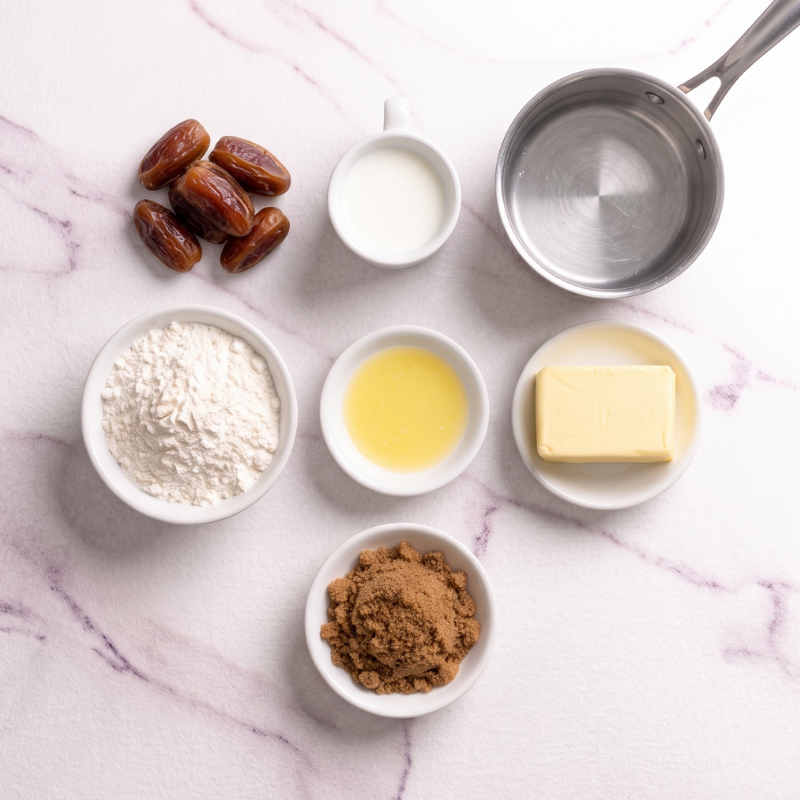
- Self-raising flour, 150 g: Provides structure and the raising agents needed for the cake layer to set firmly above the sauce.
- Brown sugar, 165 g: Gives the batter its caramel depth and moisture-retaining properties. The molasses content is essential to the flavour.
- Butter, 20 g, melted: Just enough fat to tenderise the crumb without weighing down the batter. Melted for easy incorporation.
- Milk, 125 ml: Hydrates the flour and activates the raising agents. The liquid ratio is calibrated for a thick, spreadable batter.
- Fresh dates, 75 g, seeded and finely chopped: The fruit that makes this pudding distinctive. Their natural sugars and moisture keep the crumb tender.
Caramel Sauce
- Brown sugar, 165 g: The body of the sauce. Dissolves into the boiling water to create a thin caramel that thickens in the oven.
- Boiling water, 500 ml: The vehicle that carries the sugar and butter down through the batter. The large volume ensures enough sauce for serving.
- Butter, 60 g, chopped: Gives the finished sauce its richness and sheen. Chopped so it melts quickly and evenly.
Step-by-Step Cooking Guide
1: Heat the oven and prepare your dish
- Set your oven to 180 C and grease your baking dish thoroughly, especially the corners where sauce can stick and burn. A light dusting of flour over the butter helps too.
2: Make the batter
- Combine the flour, brown sugar, melted butter, milk and chopped dates in your bowl. Stir until you have a thick, cohesive mixture with no streaks of flour. The dates should be evenly distributed, not clumped.
3: Spread the batter
- Scrape the mixture into your prepared dish and spread it to the edges with the back of your spoon. The surface should be fairly level but does not need to be perfect.
4: Prepare the caramel sauce
- Put the sauce sugar, boiling water and chopped butter into your pan over medium heat. Stir until the sugar has completely dissolved and the butter has melted into a thin, glossy liquid. Do not boil; you want the ingredients just combined.
5: Pour the sauce over the batter
- Here is the crucial moment. Hold your spoon low over the batter and pour the hot sauce slowly over its back. The liquid will cascade gently onto the surface without breaking through. It will look wrong. Trust the process.
6: Bake until set
- Slide the dish into the oven and bake for about 40 minutes. The centre should feel firm and spring back when lightly pressed, and the top will be a deep golden brown with darker caramel bubbling at the edges.
7: Serve immediately
- Spoon generous portions into shallow bowls, making sure each serving gets cake and the pooled sauce beneath. Cream or vanilla ice cream is traditional and cuts the sweetness.
Ingredient Substitutions & Variations
| Ingredient | Substitute | Taste & Texture Impact |
| Self-raising flour | Plain flour with 1 1/2 tsp baking powder | Works well. Sift the raising agent thoroughly to avoid bitter pockets. |
| Fresh dates | Dried dates, soaked in hot water for 10 minutes then drained | Noticeably chewier and less integrated into the crumb. The pudding will still be good but loses some of its plush tenderness. |
| Milk | Oat milk or soy milk | Fine. The pudding is forgiving; any neutral plant milk will work without textural change. |
Recipe twists:
| Variation | Description & Culinary Details |
| Ginger and date | Add 2 tsp finely grated fresh ginger to the batter and a pinch of ground ginger to the sauce. The heat cuts through the sweetness and warms the throat. |
| Coffee caramel | Replace 100 ml of the boiling water in the sauce with strong hot coffee. The bitterness deepens the caramel without making the pudding taste of coffee. |
| Salted caramel | Add 1/2 tsp flaky sea salt to the sauce sugar. The salt sharpens all the other flavours and makes the sweetness taste more intense rather than simply more sugary. |
Allergen Friendly Adjustments
- Nut-Free: Already free of nuts as written. Check your flour packaging if you are serving someone with severe allergy, as some facilities process nuts.
- Egg-Free: Already free of eggs as written; no substitution needed.
Serving and Pairing Suggestions
- Pouring cream or clotted cream: The cold, loose cream against the hot, dense pudding is textural perfection. Pour it over at the table so everyone controls their own ratio.
- Black tea with bergamot: Earl Grey or a similar scented tea stands up to the caramel without competing. The bergamot lifts the date flavour.
- Buttered green beans with lemon: If you are serving this as a dinner party dessert, start the meal with something sharp and green. The contrast makes the pudding feel more earned.
Storage, Reheating, and Freezing Guide
- Refrigeration: Cover tightly and refrigerate for up to 3 days. The sauce will absorb into the cake over time, so expect a denser, more uniform texture.
- Reheating: Individual portions reheat well in the microwave for 40-60 seconds. The oven, covered with foil at 160 C for 15 minutes, restores the original texture more faithfully.
- Freezing: Not recommended. The sauce separates on thawing and the cake becomes rubbery. This is a pudding to eat fresh, which is part of its charm.
Frequently Asked Questions (FAQ)
▶ My sauce is too thin and the cake is soggy. What happened?
The oven was likely too cool or the door was opened during baking. The sauce needs sustained heat to reduce and the cake needs uninterrupted time to set. Check your oven temperature with a thermometer.
▶ Can I use dried dates straight from the packet?
You can, but they will stay chewy and distinct rather than melting into the crumb. Soak them in hot water first if fresh dates are unavailable. Fresh dates are at their best from late summer through autumn.
▶ Can I double this for a larger crowd?
Yes, but use two separate dishes rather than one large one. The sauce-to-batter ratio is calibrated for this specific depth; a deeper dish gives you underdone cake or evaporated sauce.
Sticky Date & Caramel Pudding
Equipment
- Oven
- 26 x 20 cm ovenproof baking dish
- bowl
- Pan
- spoon
Ingredients
- 150 g self-raising flour
- 165 g brown sugar
- 20 g butter , melted
- 125 ml milk
- 75 g fresh dates , seeded, chopped finely
For Caramel Sauce
- 165 g brown sugar
- 500 ml boiling water
- 60 g butter , chopped
Instructions
- Preheat oven to 180 C.
- Grease a 26 x 20 cm ovenproof baking dish.
- Combine flour, sugar, butter, milk and dates in bowl.
- Mix well.
- Spread mixture into prepared dish.
- To prepare the caramel sauce, combine all sauce ingredients in pan.
- Stir until sugar is dissolved and butter has melted.
- Pour caramel sauce slowly over the back of spoon over batter in baking dish.
- Bake for about 40 mins or until firm in the centre.
- Serve immediately with cream or ice-cream, if desired.
Gobble these up too!
-

My guilt-free chocolate mousse uses low-fat milk and zero cream. Pan, whisk, 20 minutes active…
-
No gelatin, no fuss, no baking. This rose agar agar uses just 5 ingredients and…
-
Melt, mix, and press your way to crunchy chocolate stacks with just five pantry staples.…
-
A warm, sticky pudding that makes its own sauce in the oven. Dates keep it…