Potato Omelette, or what my family simply calls egg fry with potato, is a humble dish of beaten eggs poured over fried potato strips until golden and set, somewhere between a Spanish tortilla and an Asian omelette. It is the thing we make when the fridge holds almost nothing, and it never disappoints.
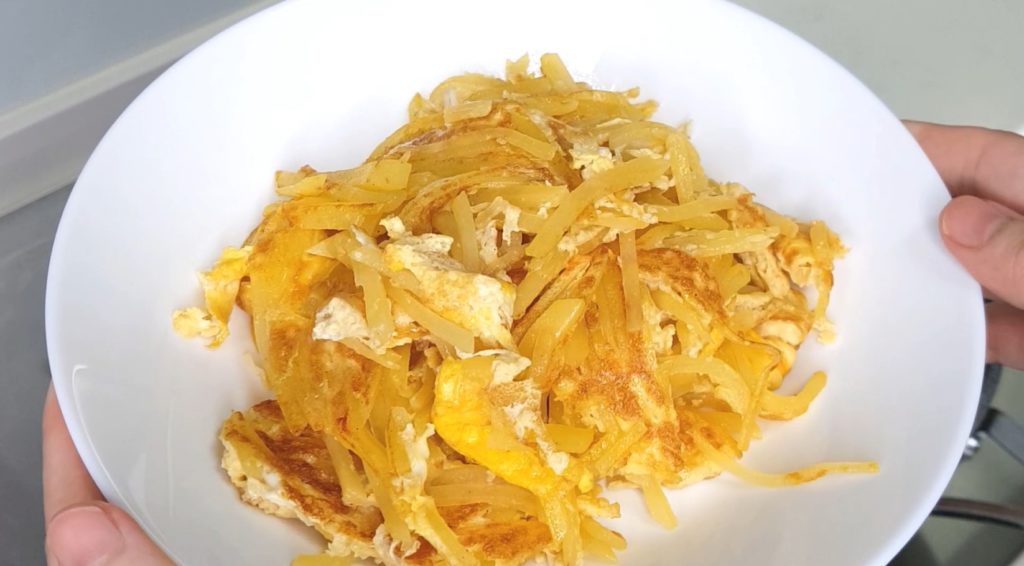
Every household knows onion omelette, but weirdly the most common omelette in my family is this potato version. My siblings and I never have enough of it. It is almost like a combination of rosti and omelette, yielding in the center, satisfying with just two eggs and one potato.
Why You’ll Love This Recipe
- Bare-minimum ingredients: You only need two eggs, one potato, and basic seasonings to make a proper side dish that tastes like more than the sum of its parts.
- Empty-fridge hero: When the fridge is empty, eggs are always the first thing in our minds, and this potato omelette recipe transforms them into something my family asks for by name.
- Crispy-edged comfort: The texture sits right between rosti and omelette, with browned potato underneath and tender egg throughout.
The Culinary Secrets Behind This Dish
The method works because we fry the potato first, not boil or steam it. Dry heat drives off surface moisture and triggers the Maillard reaction, creating that essential browned flavor and slightly crisp texture that holds up when the eggs pour over. Raw potato would release starch and water into the eggs, making the whole thing soggy and pale.
Adding soy sauce to the beaten eggs before they hit the pan serves two purposes. The salt in the soy begins to denature egg proteins early, loosening their structure so they cook more tenderly rather than rubbery. The umami compounds in fermented soy also provide depth that plain salt cannot, carrying savoriness through the neutral egg and starchy potato without needing cheese or meat.
What You’ll Need
Equipment
- Non-stick frying pan, 20-24cm: You need a pan that releases the egg cleanly for flipping, since this potato omelette recipe depends on turning it twice to cook through without breaking.
Ingredients
- Potato, 1 medium: The starch that forms the body of the dish; cutting into strips exposes more surface for browning than cubes would.
- Eggs, 2 large: The protein that binds everything together; two is just enough to set around one potato without becoming egg-heavy.
- Soy sauce, 1 teaspoon: Provides salt and umami depth; beating it into the eggs early seasons them evenly and tenderizes the proteins.
- Salt and pepper, to taste: Seasons the potato directly during frying, since the soy sauce only seasons the egg component.
- Oil, 3 tablespoons: Enough to coat the pan for initial frying and to help the egg release and brown; do not skimp here.
Step-by-Step Cooking Guide
1: Beat eggs with soy sauce
- Crack two eggs into a bowl, add one teaspoon soy sauce, and beat until the color is uniform and no streaks remain. The soy should be fully incorporated so the seasoning distributes evenly through the finished omelette.
2: Fry the potato strips
- Heat three tablespoons oil in your frying pan over medium heat. Add the peeled potato strips, season with salt and pepper, and fry until they take on slight color and soften at the edges. You want them partially cooked and lightly browned, not fully tender or they will turn mushy under the egg.
3: Pour and set the first side
- Pour the beaten egg mixture evenly over the fried potatoes, tilting the pan so it reaches all edges. Let it fry undisturbed until the bottom is cooked and browned, with the top still slightly wet but beginning to set around the edges.
4: Flip to cook the second side
- Use a confident wrist motion or slide onto a plate and invert back into the pan to flip the omelette. Fry until the second side is also cooked through and golden brown, two to three minutes depending on your heat.
5: Flip again if needed
- Peek underneath; if any areas look pale or underdone, flip once more and give them direct contact with the hot pan. Serve when both sides are cooked through and attractively browned, cut into wedges or simply slide onto a plate.
Ingredient Substitutions & Variations
Cooking should be adaptable! If you’re missing a few items, here is how you can easily swap them out while keeping the same incredible flavor profile:
| Ingredient | Substitute | Taste & Texture Impact |
| Soy sauce | Fish sauce, ½ teaspoon | More pungent and salty; use less and expect a Southeast Asian rather than Chinese flavor profile. Still excellent. |
| Soy sauce | Salt only | The omelette will taste flatter and the egg texture slightly firmer; you lose that savory depth that makes this recipe special. |
Recipe twists:
| Variation | Description & Culinary Details |
| Onion and potato egg fry | Add half a thinly sliced onion to the pan with the potato strips; it softens and sweetens into the mix, which is the other version my family makes when we have both ingredients on hand. |
| Chili crisp potato omelette | Drizzle Lao Gan Ma or your favorite chili crisp over the finished omelette, or stir a teaspoon into the beaten eggs for heat and texture throughout. |
Allergen Friendly Adjustments
- Gluten-Free: This potato omelette recipe is naturally gluten-free as written, since soy sauce is the only potential source and most brands contain wheat; use tamari or a certified gluten-free soy sauce to be certain.
- Dairy-Free: Already dairy-free; no butter, milk, or cheese is used.
- Nut-Free: Already nut-free; no tree nuts or peanuts appear in the ingredient list.
- Soy-Free: Replace the soy sauce with ½ teaspoon salt beaten into the eggs; the flavor will be simpler but the dish still works.
Serving and Pairing Suggestions
- Beverage pairing: A cold barley drink or plain warm soy milk, both traditional cooling accompaniments to fried foods in Chinese households.
- Side dish pairing: Plain congee or rice porridge, which turns this from a side into a complete meal and soaks up any excess oil pleasantly.
- Condiment pairing: A small dish of ketchup or chili sauce for dipping, which my siblings and I fought over as children.
Storage, Reheating, and Freezing Guide
- Refrigeration: Cool completely, then store in an airtight container up to two days; the texture softens considerably and the edges lose their crispness.
- Reheating: Warm in a lightly oiled pan over medium-low heat, flipping once, rather than microwaving which makes the egg rubbery.
- Freezing: Not recommended; the potato changes texture and weeps moisture upon thawing, and the egg becomes unpleasantly spongy.
Frequently Asked Questions (FAQ)
▶ Can I use a large potato and more eggs?
Yes, but scale the pan size up too; a crowded pan prevents proper browning and makes flipping nearly impossible. A 26cm pan handles two potatoes and four eggs comfortably.
▶ My family does not eat soy sauce; what else can I use?
Fish sauce works, or simply salt. The dish will taste less complex but still good; my mother sometimes made it this way when she ran out.
▶ Is this the same as a Spanish tortilla?
No, though the ingredients overlap. A Spanish tortilla cooks slowly with much more olive oil and the potatoes are fully tender before the eggs join; this version fries quickly for a lighter texture.
Potato Omelette
Ingredients
- 1 Medium sized potato peeled and cut into strips
- 2 Eggs
- 1 tsp Soy sauce
- Salt to taste
- Pepper to taste
- 3 tbsps Oil for fyring
Instructions
- Beat eggs, soy sauce
- Heat oil in frying pan. Add potato, season with salt and pepper. Fry potato until slightly browned.
- Pour in beaten egg mixture evenly, fry until cooked and browned on one side. Then flip to also cook the other side.
- Flip again if some areas are not cooked.
- Serve when both side are cooked and browned.
Video
Gobble these up too!
-

No cream, no fuss, just a thick savory stew you can pull together after work.…
-

Made with fried elbow macaroni, Macaroni Goreng is stir-fried in a tomato ketchup based sauce,…
-

The Chinese ABC Vegetable Soup aka ABC Soup is a very nutritious soup cooked with…
-

Oden (おでん), a Japanese fish cake soup or stew enjoyed during winter, is commonly found…