Belacan fried rice, or nasi goreng belacan, is a Malaysian fried rice built on fermented shrimp paste, chillies, and whatever you have in the fridge. It is the kind of dish you find at hawker stalls in Penang and in home kitchens across the country when the rice cooker held too much the night before.
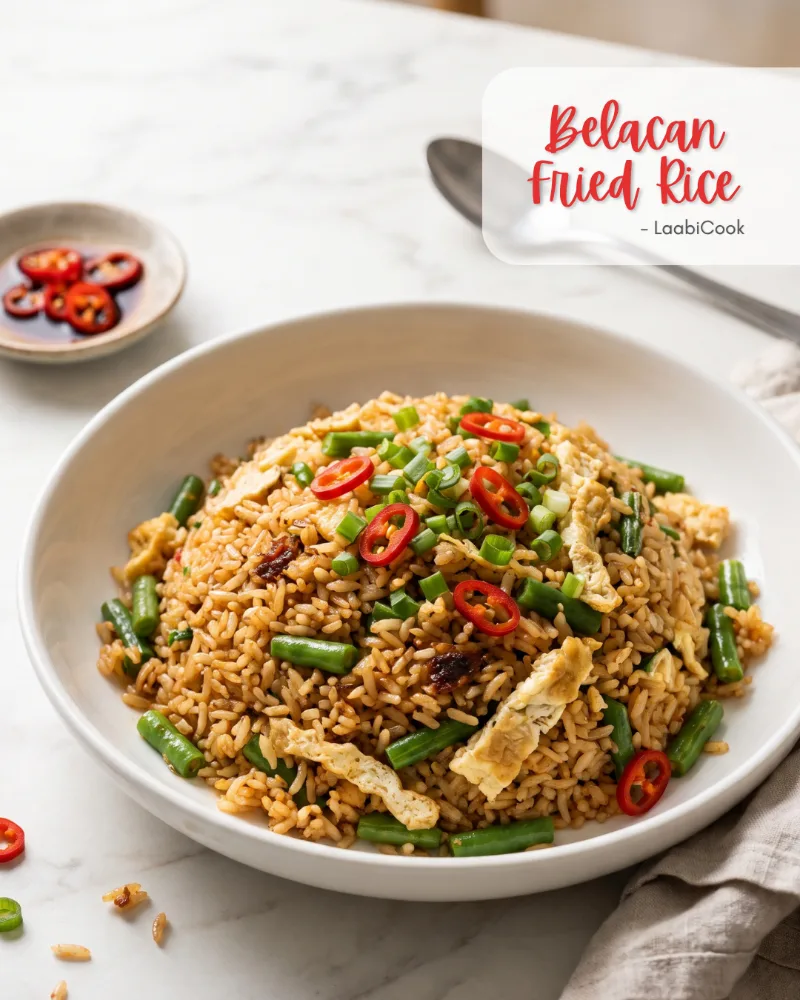
I make my belacan fried rice recipe when I need dinner in 20 minutes and the pantry is nearly bare. Only 4 main ingredients plus a few condiments, and it turns leftover rice into something I actually want to eat. My family asks for this when they are tired of plain food and need something with real heat and savoriness. The eggs on top are the payoff: break the yolk and let it run through the grains.
Why You’ll Love This Recipe
- Fast: From fridge to table in 20 minutes, including prep. The belacan and chilli paste takes 2 minutes in a blender; everything else is chop and toss.
- Pantry-friendly: Built on leftover rice and long-keeping condiments. The only fresh items are eggs, beans, and aromatics most cooks keep on hand.
- Adaptable: Swap the protein, change the vegetable, dial the heat up or down. The belacan base carries almost any addition you throw at it.
The Culinary Secrets Behind This Dish
Cold rice is non-negotiable here, and the reason is starch retrogradation. Freshly cooked rice holds too much moisture; the starch granules are still swollen and soft. When chilled, amylose molecules realign and firm up, creating grains that separate cleanly in the wok instead of clumping into a paste. Overnight refrigeration is ideal, but four hours in the fridge will do in a pinch.
Belacan (shrimp paste) carries enormous umami because fermentation breaks shrimp proteins into free glutamates. Frying it in oil first, before adding wetter ingredients, does two things: it toasts the paste and drives off any raw, fishy edge, and it disperses the flavor compounds through the fat so they coat every grain of rice rather than clustering in spots. The high heat of the wok also triggers Maillard browning on the belacan itself, deepening the savory base note that makes this dish so addictive.
What You’ll Need
Equipment
- Wok: A wok’s sloped sides let you toss rice quickly over high heat without spilling, and the thin carbon steel responds fast to temperature changes when you need to pull the pan off the fire.
- Small frying pan: For the eggs. A smaller surface helps you control a thin, even omelette or, in my preferred version, two neat sunny-side up eggs that hold their shape for topping.
- Sharp knife: For slicing the chilli mixture fine enough to cook through in seconds, and for cutting the omelette into clean strips if you go that route.
Ingredients
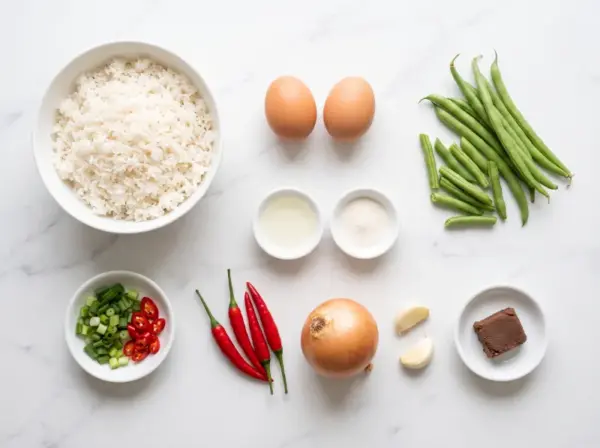
- Oil, 4 tbsp: Neutral oil with a high smoke point, such as vegetable or peanut. You need enough to fry the omelette, toast the belacan, and keep the rice from sticking.
- Eggs, 2: I prefer to cook these sunny-side up and lay them over the top of each portion; the runny yolk becomes a sauce you break into the rice.
- French beans, 200 g: Sliced on the bias so they cook fast and pick up sauce in their cut faces. They add crunch and a clean, grassy note against the deep savoriness of the belacan.
- Cold cooked rice, 4 cups: Leftover jasmine rice is ideal. The grains must be cold and firm so they separate in the wok instead of mashing together.
- Oyster sauce, 1 tbsp: Adds body and a rounded, slightly sweet savoriness that bridges the belacan and soy sauce.
- Light soy sauce, 1 tbsp: For salinity and a touch of fermented depth. Use a Malaysian or Singaporean brand if you can; Chinese light soy is saltier and thinner.
- Pepper, ¼ tsp: White pepper is traditional in Malaysian fried rice and gives a quieter heat than black pepper, letting the belacan stay central.
- Sugar, ½ tsp, optional: A tiny amount balances the salt and brings out the sweetness in the toasted shrimp paste. I usually add it.
- Spring onions and red chilli, to garnish: Fresh color and a sharp, clean bite at the end. Slice the chilli thin so it scatters rather than dominating a single mouthful.
Chilli Mixture
- Red chillies, 4, seeded: The backbone heat and a fruity, capsicum sweetness. Seeding removes most of the intense burn while keeping the flavor.
- Large onion, 1, sliced: Cooks down quickly in the hot oil and provides sweetness and moisture that keeps the belacan from scorching.
- Garlic, 2 cloves: Essential aromatic. Slice thin so it fries in seconds and does not risk burning while the belacan toasts.
- Belacan (shrimp paste), ½ tbsp: The soul of the dish. Malaysian belacan is a fermented block of krill and salt, pungent and deeply savory. Toast it in oil until fragrant before adding anything wet.
Step-by-Step Cooking Guide
1: Cook the eggs
- Heat 1 tablespoon of oil in your wok over medium heat. Pour in the beaten eggs and swirl to form a thin layer. Cook until just set, then slide out, roll up, and slice into thin strips. Or do what I do: fry two sunny-side up eggs in a small pan, keeping the yolks runny, and set them aside to crown each plate at the end.
2: Toast the belacan and fry the aromatics
- Add the remaining 3 tablespoons of oil to the wok and raise the heat. Fry the belacan first, mashing it into the oil until it smells toasted and nutty, about 30 seconds. Add the blended or finely chopped chilli mixture of red chillies, onion, and garlic. Stir-fry until the kitchen fills with fragrance and the onion softens at the edges.
3: Stir-fry the beans
- Toss in the sliced French beans. Keep the heat high and stir constantly until the beans turn a vivid, bright green and just begin to soften, about 2 minutes. They should still have bite; they will cook a little more with the rice.
4: Fry the rice
- Add the cold rice, breaking up any clumps with your spatula. Toss vigorously for 2-3 minutes until every grain is separate and lightly coated with the red-tinted oil. The rice should sizzle and dance in the wok, not steam and stew.
5: Season and finish
- Drizzle in the oyster sauce and light soy sauce, sprinkle over the pepper and sugar if using. Keep tossing until the color is even and the sauces have evaporated enough to cling rather than pool, about 1 minute. Taste a grain; it should be savory first, then subtly sweet, with the belacan lingering at the back of your throat.
6: Plate and garnish
- Pile the rice into bowls. Top with the omelette strips, or place a sunny-side up egg on each portion so the diner can break the yolk themselves. Scatter spring onions and sliced red chilli over the top, and serve immediately while the wok hei, that faint breath of char, still clings to the grains.
Ingredient Substitutions & Variations
| Ingredient | Substitute | Taste & Texture Impact |
| Light soy sauce | Dark soy sauce, ½ tbsp | Noticeably different. Dark soy sauce is sweeter and thicker; use half the amount and expect a darker, less salty dish. |
| Oyster sauce | Mushroom sauce or vegetarian stir-fry sauce, 1 tbsp | Similar function. Mushroom sauce or vegetarian stir-fry sauce gives the same body and savoriness; the flavor will be slightly less rounded. |
| French beans | Long beans or snap peas, same weight | Mild change. Long beans or snap peas hold more crunch and take slightly longer to cook; green beans are closer in texture to French beans. |
| Jasmine rice | Basmati rice, cooled overnight | Slight change in texture. Day-old basmati works but the grains are longer and less absorbent; the sauce will coat differently. Japanese short-grain rice is too sticky for proper fried rice. |
Recipe twists:
| Variation | Description & Culinary Details |
| Lap cheong version | Add 100g of diced lap cheong (Chinese sausage) when you fry the belacan. The fat renders out and perfumes the rice with a sweet, winey pork flavor. This is how my mother-in-law makes it for special occasions. |
| Seafood belacan fried rice | Stir in 150g of small peeled shrimp or diced firm white fish after the beans, cooking just until opaque before adding the rice. The seafood sweetens the belacan and turns this into a one-plate meal. |
| Vegetarian with tofu | Omit the egg and add 200g of cubed firm tofu, pan-fried separately until golden, then folded in at the end. Use mushroom sauce instead of oyster sauce for a fully vegetarian version that still hits the umami hard. |
Allergen Friendly Adjustments
- Gluten-Free: Not as written. Use tamari instead of light soy sauce, and a gluten-free oyster sauce. Check your belacan label; most are gluten-free but brands vary.
- Dairy-Free: This recipe is already dairy-free. No swaps needed.
- Nut-Free: This recipe is already nut-free. No swaps needed.
- Shellfish-Free: Not as written. Belacan is fermented shrimp paste, and oyster sauce contains oyster extract. For a shellfish-free version, use miso or fermented bean paste instead of belacan, and mushroom sauce or dark soy in place of oyster sauce. The flavor will be different but still savory and complex.
- Egg-Free: Not as written. Omit the eggs or replace with crumbled firm tofu pan-fried until golden. You lose the richness, but the dish still works.
Serving and Pairing Suggestions
- Teh tarik: The pulled, frothy Malaysian milk tea cools the chilli heat and its sweetness plays against the salty depth of the belacan.
- Achar (pickled vegetables): The sharp vinegar and turmeric in achar cut through the richness of the shrimp paste and refresh your palate between bites.
- Simple cucumber slices: No recipe needed. Cold, crisp cucumber is traditional alongside spicy Malaysian rice dishes for its cooling properties.
Storage, Reheating, and Freezing Guide
- Refrigeration: Store cooled leftovers in an airtight container for up to 2 days. The beans will soften and lose their snap, but the flavor holds well.
- Reheating: Revive in a hot wok or skillet with a teaspoon of oil, tossing over high heat until the rice is steaming and slightly crisp at the edges again. The microwave works in a pinch but makes the rice heavy.
- Freezing: Not recommended. Fried rice freezes poorly; the rice grains turn hard and the beans become mushy and gray upon thawing. This dish is so fast to make fresh that freezing is not worth the trade-off.
Frequently Asked Questions (FAQ)
▶ How spicy is this actually? Can I tone it down for kids?
The belacan itself is not especially spicy; the heat comes almost entirely from the fresh red chillies. Use just one or two chillies, or swap to a milder chilli, and you will get all the savory depth with far less burn.
▶ I do not have leftover rice. Can I cook fresh rice and use it?
Yes, but not straight from the pot. Spread fresh rice on a tray, refrigerate uncovered for at least two hours, then break up the clumps with wet hands before frying. It will be slightly softer than overnight rice but still workable.
▶ Can I make this in a slow cooker or Instant Pot?
Not really. Fried rice is fast, high-heat cooking. The belacan needs to fry, the rice needs to separate, and the beans need to keep their snap. A slow cooker cannot do any of this. Use a large skillet if you lack a wok, and work in two batches if your pan is small.

Belacan Fried Rice
Equipment
- wok
- Pan
- knife
Ingredients
- 4 tbsp oil
- 2 eggs
- 200 g French beans , sliced
- 4 cups cold cooked rice
- 1 tbsp oyster sauce
- 1 tbsp light soy sauce
- ¼ tsp pepper
- ½ tsp sugar , optional
- chopped spring onions , to garnish
- sliced red chilli , to garnish
Chilli Mixture
- 4 red chillies , seeded
- 1 large onion , sliced
- 2 cloves garlic
- ½ tbsp belacan, shrimp paste
Instructions
- Heat 1 tbsp oil in a wok over medium fire. Add eggs and fry into a thin omelette or sunny-side up. Remove from pan; slice into thin strips.
- Heat remaining oil; stir-fry chilli mix until fragrant. Add French beans and stir-fry until they turn bright green.
- Add rice; toss to mix well. Stir in sauces, pepper and sugar, if using, and continue to mix.
- Top with omelette shreds, and garnish with spring onions and chilli before serving.
Gobble these up too!
-

Master Pattaya Fried Rice with my step-by-step method for the signature omelette wrap. Only 25… Cook recipe >
-
No time to plan dinner? This Malaysian fried rice needs only what I already have:… Cook recipe >
-
Thai Pineapple Fried Rice, Khao Pad Sapparot, is a tangy curry-spiced fried rice from Thailand… Cook recipe >