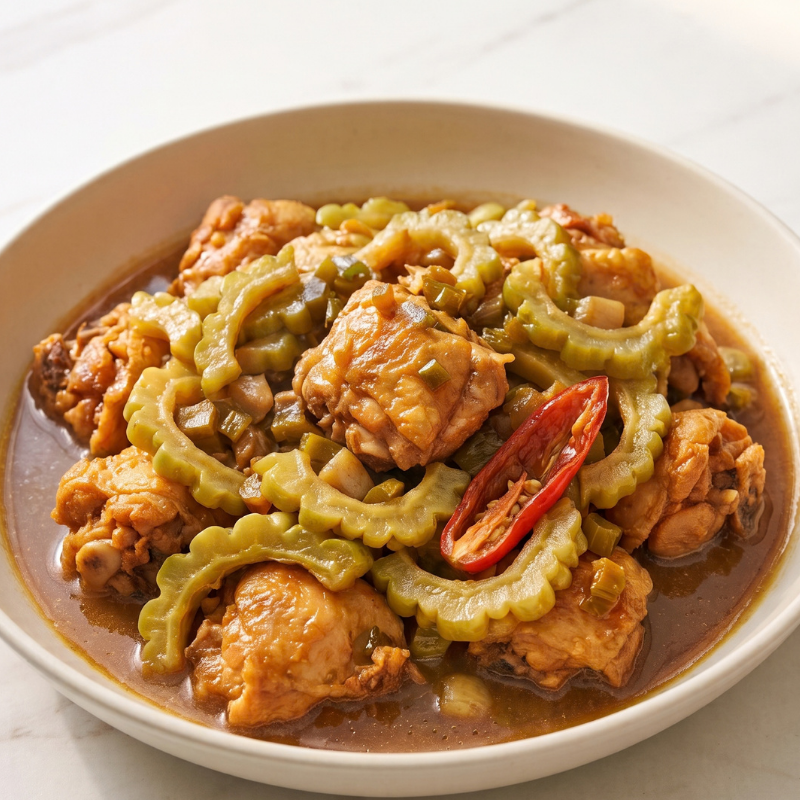
Braised bittergourd chicken is a Chinese home-cooked dish that turns one of Asia’s most polarizing vegetables into something even the skeptics finish. The secret is in the treatment: a quick pass through hot oil softens the harsh edge, while pickled pineapple and chilli build a savory gravy that balances rather than masks.
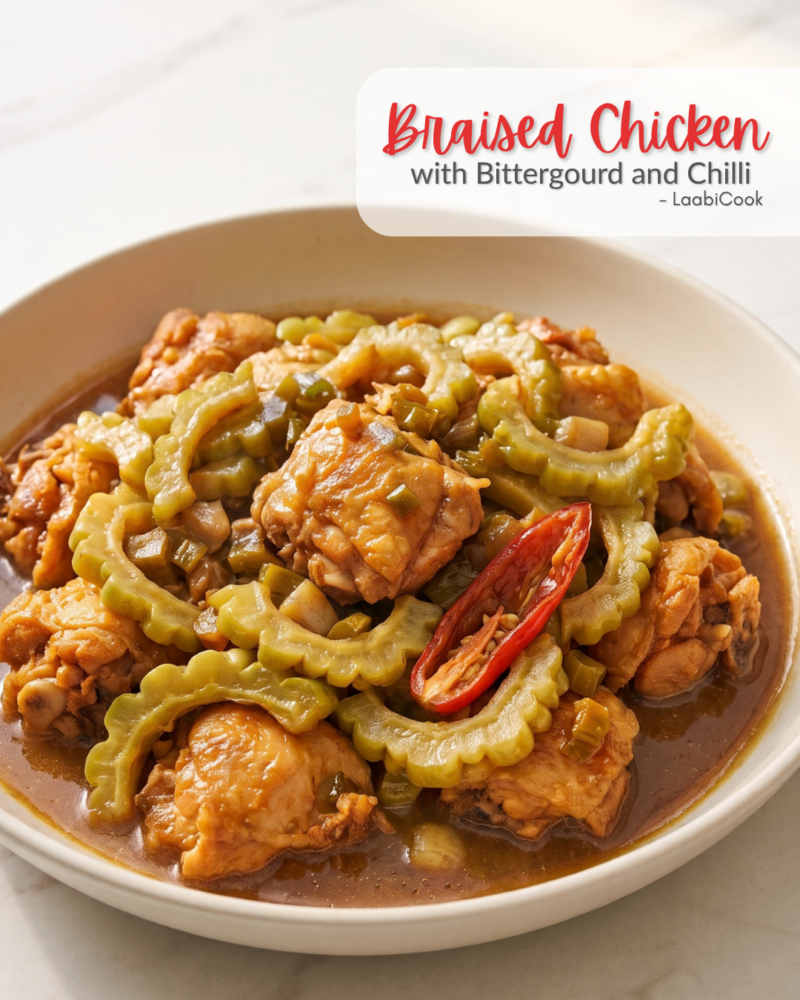
My mother made this when the weather turned humid and someone in the family needed cooling. Bittergourd helps with detoxing and is excellent for lowering blood pressure. She never announced it as health food. She just set the wok on the stove and let the smell of garlic and chilli do the talking.
Why You’ll Love This Recipe
- Converts the bittergourd haters: The 30-second oil pass and the pickled seasoning tame the bitterness without killing the vegetable’s character. You still know what you’re eating. You just want more of it.
- One wok, 25 minutes: Deep-fry, drain, braise, thicken. The same wok carries you from start to finish. Fewer dishes than a stir-fry with separate rice.
- Pantry-friendly luxury: Soy paste and pickled vegetables keep forever. Buy bittergourd fresh, use frozen chicken, and you have dinner without a market run.
The Culinary Secrets Behind This Dish
Passing bittergourd through oil at 180°C does two things. The high heat ruptures cell walls and drives off some of the cucurbitacin compounds that read as aggressively bitter on the tongue. It also primes the surface for the braise: the slight dehydration and starch gelatinisation from the brief fry helps the vegetable absorb the savory gravy instead of shedding water into it. You are not deep-frying to crispness here. Thirty seconds is enough to change the vegetable’s chemistry without turning it soft.
The pickled pineapple brings acid, sugar, and fermented depth all at once. This combination is the traditional foil for bitter vegetables. The acid brightens, the sugar rounds, and the fermentation adds umami that bridges the chicken and bittergourd. Chilli seeds the dish with capsaicin, which does not cancel bitterness but distracts from it, letting the other flavors register first. Cornstarch thickens only at the end so the braise reduces properly first, concentrating flavor before you lock it in.
What You’ll Need
Equipment
- Wok: You need the volume for safe deep-frying and the surface area for the final toss. A deep skillet works in a pinch, but the shape fights you when you add stock.
- Sieve: Draining oil from both chicken and bittergourd is non-negotiable. Paper towels will not cut it; you need the air circulation to stop carryover cooking and sogginess.
Ingredients
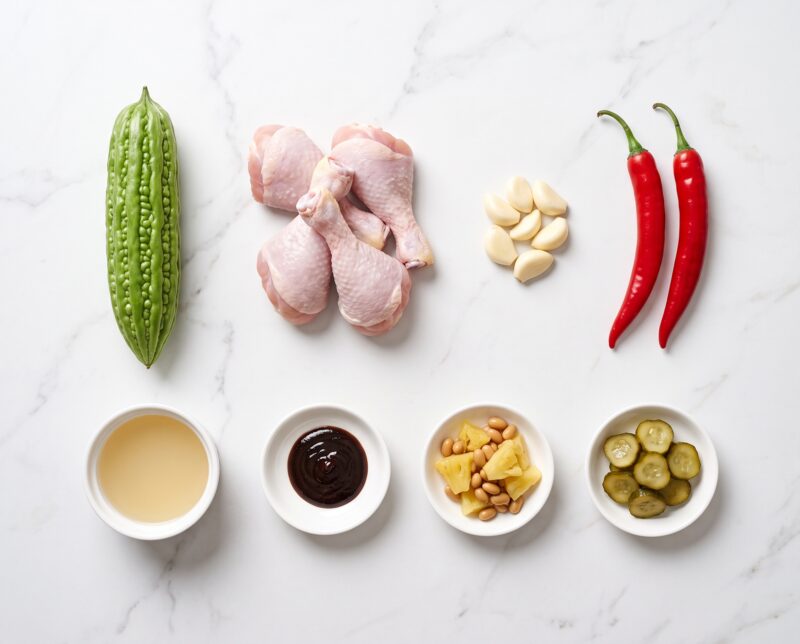
- Bittergourd, 200 g: The star, obviously. Choose firm, dark green specimens with tight ridges. The pale, bumpy Indian variety works too, though it carries more bitterness.
- Cooking oil, 400 ml: Neutral and high-smoke: peanut, canola, or vegetable. You are not consuming all of it; most stays in the wok.
- Chicken drumstick, 600 g, deboned and cut into 4-cm pieces: Dark meat stays tender through the braise. Deboning yourself saves money; asking the butcher saves time. Either way, 4-cm pieces cook evenly.
Aromatics and heat
- Garlic, 50 g, chopped: A heavy hand for the aromatics.
- Large red chillies, 2, sliced lengthways and seeded: Visual drama and mild heat. The seeding keeps it family-friendly; leave seeds if you want the burn.
Braising liquid
- Chicken stock, 250 g: Homemade is ideal, but a good concentrate diluted strong works. You need body, not just salted water.
- Cornstarch, 1 tbsp, mixed into 2 tbsps water: Slurry for the final gloss. Add it off the boil or you get lumps.
Seasoning paste
- Soy paste, 1 ½ tbsps: Thick, sweet, and malty. Not light soy sauce. Look for the jar labeled taucheo or soy paste at the supermarket.
- Pickled pineapple with soy bean, 40 g: The secret weapon. Fermented, fruity, and slightly funky. Keeps indefinitely in your fridge door.
- Pickled cucumber, 40 g: Brings crunch and sharpness to the paste. The cheap jarred kind from the supermarket works fine.
- Sugar, ½ tsp: Just enough to wake up the pickles. The pineapple brings most of the sweetness.
Step-by-Step Cooking Guide
1: Prep the bittergourd
- Slice off both ends. Cut into 5-cm chunks, halve each to expose the white pith, and scrape out the seedy center with a spoon. Slice into 1-cm thick crescents. Do not salt and drain; the oil pass does that work for you.
2: Make the seasoning paste
- Blend soy paste, pickled pineapple with soy bean, pickled cucumber, and sugar into a coarse paste. A mini processor is fastest; a fork and determination work too. You want integrated, not pureed.
3: Fry the chicken
- Heat oil in your wok over a high fire until it shimmers. Add chicken pieces carefully; they should sizzle immediately. Deep-fry for 2 minutes until the edges turn golden. Remove with a slotted spoon and drain in a sieve. The chicken is not cooked through yet; the braise finishes it.
4: Pass the bittergourd through oil
- Add bittergourd to the same hot oil. Cook for 30 seconds exactly; the color brightens to vivid jade and the edges soften slightly. Remove immediately and drain over a sieve. This step is called guo you in Chinese cooking, and it is what makes this recipe possible.
5: Build the base
- Pour off almost all the oil, leaving about 1 teaspoon in the wok. Reduce heat to medium. Stir-fry garlic and chilli for 30 to 40 seconds until the garlic turns fragrant and just begins to color at the edges. Do not brown it; burnt garlic turns bitter, which defeats the purpose.
6: Combine and season
- Return chicken and bittergourd to the wok. Add your seasoning paste and toss vigorously for 30 seconds until every piece is coated. The smell should hit you now: savory, slightly sweet, with the funk of fermentation underneath.
7: Braise and thicken
- Add stock and bring to a boil. Let it bubble vigorously for 2 to 3 minutes until the gravy reduces by half and clings to the back of a spoon. Stir in the cornstarch slurry; the sauce will turn glossy and coat the ingredients. Turn off the fire immediately and serve. The bittergourd should still have some bite.
Ingredient Substitutions & Variations
| Ingredient | Substitute | Taste & Texture Impact |
| Chicken drumstick | Chicken thigh fillet, pork belly, or firm tofu puffs | Thigh works identically. Pork belly needs 5 minutes longer braise. Tofu puffs absorb the gravy beautifully but add no protein of note. |
| Soy paste | 1 tbsp yellow bean sauce plus ½ tsp sugar | Close, but lacks the caramel depth. Add a drop of dark soy sauce for color. |
| Pickled pineapple with soy bean | 2 tbsps sweet pickled pineapple plus 1 tsp fermented bean paste | Noticeably less complex. The soy bean fermentation is hard to fake; seek the real thing at provision shops. |
| Bittergourd | Young angled luffa or chayote | You lose the point of the dish, but the method works. Neither vegetable needs the oil pass; add directly to the braise. |
| Chicken stock | Water plus 1 tsp chicken powder or 1 crumbled stock cube | Acceptable in a pinch. The dish is forgiving because the seasoning paste carries so much flavor. |
Recipe twists:
| Variation | Description & Culinary Details |
| Seafood swap | Replace chicken with whole prawns or sotong, cleaned and scored. Reduce deep-frying to 1 minute and braise time to 2 minutes. The gravy becomes sweeter and lighter. |
| Extra vegetables | Add tau pok, beancurd skin, or rehydrated dried shiitake after the braise begins. They drink up the gravy and turn the dish into a one-wok meal. |
| Dry version | Skip the stock and cornstarch. Toss everything in the seasoning paste over high heat until the chicken cooks through, about 4 minutes. More intense, less saucy, excellent over plain rice. |
Allergen Friendly Adjustments
- Gluten-Free: Not as written. Soy paste and pickled products often contain wheat. Seek gluten-free taucheo and verify your pickles; otherwise, the dish is safe.
- Dairy-Free: Already free of dairy. No substitutions needed.
- Nut-Free: Already free of nuts. Check your oil source if using peanut oil; substitute canola if concerned.
- Soy-Free: Not possible. The dish is built on fermented soy products.
Serving and Pairing Suggestions
- White rice: Non-negotiable. The gravy demands a starch to catch it.
- Hot Chinese tea: Iron Buddha or pu-erh cut through the richness and echo the bittergourd’s cooling reputation.
- Clear soup with winter melon: Doubles down on the approach to heat and humidity. A light broth balances the wok’s intensity.
Storage, Reheating, and Freezing Guide
- Refrigeration: Keeps 3 days in an airtight container. The bittergourd softens further but the flavor deepens. Many families prefer it on day two.
- Reheating: Gently in a covered pan with a splash of water, or microwave in 30-second bursts, stirring between. Do not overheat; the chicken toughens.
- Freezing: Not recommended. The bittergourd turns mushy and weeps liquid on thawing, breaking the emulsion of the gravy. Make fresh; it is fast enough.
Frequently Asked Questions (FAQ)
▶ Do I really need to deep-fry the bittergourd?
Yes, for this specific recipe. The 30-second oil pass is what cooks use to manage bitterness without the usual salting and rinsing. Skipping it leaves you with harsh, watery slices.
▶ My gravy is too thin. What went wrong?
You added the cornstarch while the liquid was boiling hard, which can break the starch granules before they swell. Next time, reduce heat slightly, stir the slurry in, then bring back to a gentle bubble.
▶ Can I use bittergourd that has started to yellow?
Avoid it. Yellowing means the bittergourd is overripe; the flesh turns spongy and the bitterness becomes aggressive rather than complex. Firm and green is the only buy.
▶ Where do I find pickled pineapple with soy bean?
Provision shops in Singapore or Malaysia stock it. In other cities, search for pickled fruit or look in the refrigerated pickle section of large Asian grocers. It is worth the hunt.
Braised Chicken with Bittergourd and Chilli
Equipment
- wok
- sieve
Ingredients
- 200 g bittergourd
- 400 ml oil
- 600 g chicken drumstick, deboned and cut into 4-cm pieces
- 50 g garlic, chopped
- 2 large red chillies, sliced lengthways and seeded
- 250 g chicken stock
- 1 tbsp cornstarch, mixed into 2 tbsps water
- 1 ½ tbsps soy paste
- 40 g pickled pineapple with soy bean
- 40 g pickled cucumber
- ½ tsp sugar
Instructions
- Slice off bittergourd ends. Cut into 5-cm chunks; halve each to remove centre and slice into 1-cm thick pieces. Set aside.
- Blend soy paste, pickled pineapple with soy bean, pickled cucumber and sugar into a paste.
- Heat oil in wok over a high fire. Deep-fry chicken for 2 mins. Remove; put chicken into a sieve to drain excess oil.
- Add bittergourd to same hot wok. Cook for 30 secs; remove (this is called “passing through oil”). Drain over a sieve.
- Remove oil from wok leaving about 1 tsp oil. Stir-fry garlic and chilli over a medium fire until fragrant, 30 to 40 secs.
- Return chicken and bittergourd to wok. Add seasoning ingredients and toss to mix well.
- Add stock; bring mixture to boil. Cook until gravy is halved, 2 to 3 mins. Add starch mixture; mix well. Turn fire off and serve.
Gobble these up too!

Learn the Teochew trick for taming bittergourd. This braised chicken uses pickled pineapple and chilli… Cook recipe >
No cream, no fuss, just a thick savory stew you can pull together after work.… Cook recipe >
Simmer tender chicken in sesame oil, ginger and Shaoxing wine until the sauce clings to… Cook recipe >
Deep-fried yam melts into fluffy rice while crisp shallots wait to crown your bowl. Gather… Cook recipe >