The first time you lift the lid off your wok, your kitchen fills with something unmistakable: toasted sesame, slow-bloomed ginger, and the sweet edge of rice wine reducing down to syrup. That is the promise of a proper three cup chicken recipe, the Taiwanese dish that turns humble chicken into something you will want to eat straight from the pan with a spoon. It is called three-cup because of the original equal parts sesame oil, soy sauce and wine, though home cooks have always adjusted to taste.
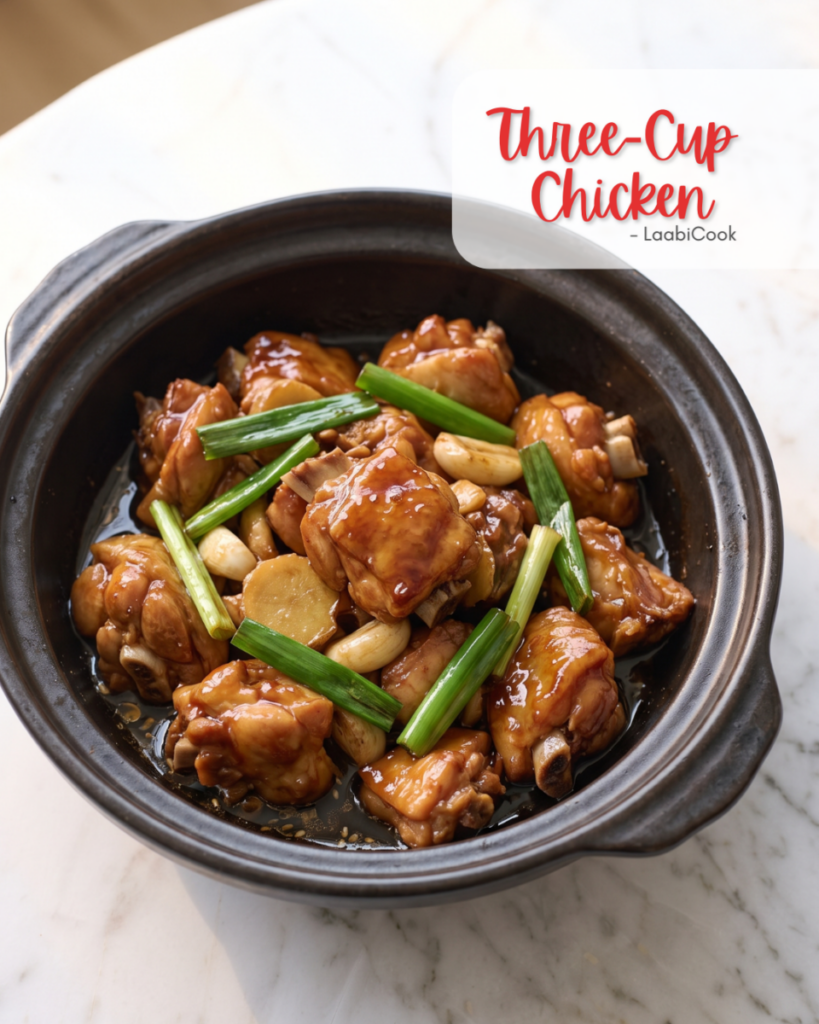
This version keeps the spirit but reins in the oil so the sauce clings rather than pools. You will have dinner on the table in under half an hour, and the only real effort is slicing ginger and waiting out the final simmer as the liquid turns glossy and coats each piece of chicken. Serve it over steamed rice and you have a complete meal that tastes like someone who loves you cooked it.
Why You’ll Love This Recipe
- One pan, minimal washing: Everything happens in your wok or deep skillet. No separate saucepans, no strainers, no fuss.
- Twenty minutes of gentle simmering: The active cooking time is brief, and the covered simmer does the work of tenderising the chicken while you set the table.
- Sauce that clings, not drips: The final uncovered minutes reduce the liquid to a glossy glaze that sticks to the meat rather than running off onto the plate.
The Culinary Secrets Behind This Dish
The magic of this dish lies in the sequence of heat. You start with a generous amount of sesame oil and aromatics over medium-high heat to wake up the ginger and garlic, then push them to the edges and sear the chicken briefly. This is not about browning deeply; it is about coating the meat in flavoured fat so the surface proteins set and hold moisture during the simmer. The Maillard reaction here is gentle, but it matters: those lightly caramelised edges give the sauce its savoury backbone.
Shaoxing wine brings both alcohol and amino acids to the party. The alcohol carries volatile aroma compounds from the ginger and sesame oil up into your nose as it simmers off, while the wine’s own fermented depth adds complexity that plain water cannot. Sugar balances the salt of the soy sauce and encourages the final reduction; as the liquid evaporates, the sugar concentration rises and the sauce thickens naturally without starch. Adding the green spring onions only at the very end preserves their fresh, almost grassy heat as a counterpoint to the dark, reduced glaze.
What You’ll Need
Equipment
- Wok or deep skillet: You need high sides to contain the initial sizzle of sesame oil and the later bubbling reduction, plus enough surface area to lay chicken pieces in a single layer.
- Tight-fitting lid: The covered simmer traps steam that gently cooks the chicken through before you uncover to reduce the sauce.
- Sharp knife and stable board: Slicing ginger paper-thin and cutting chicken through bone-in joints requires confidence and a blade that will not slip.
Ingredients
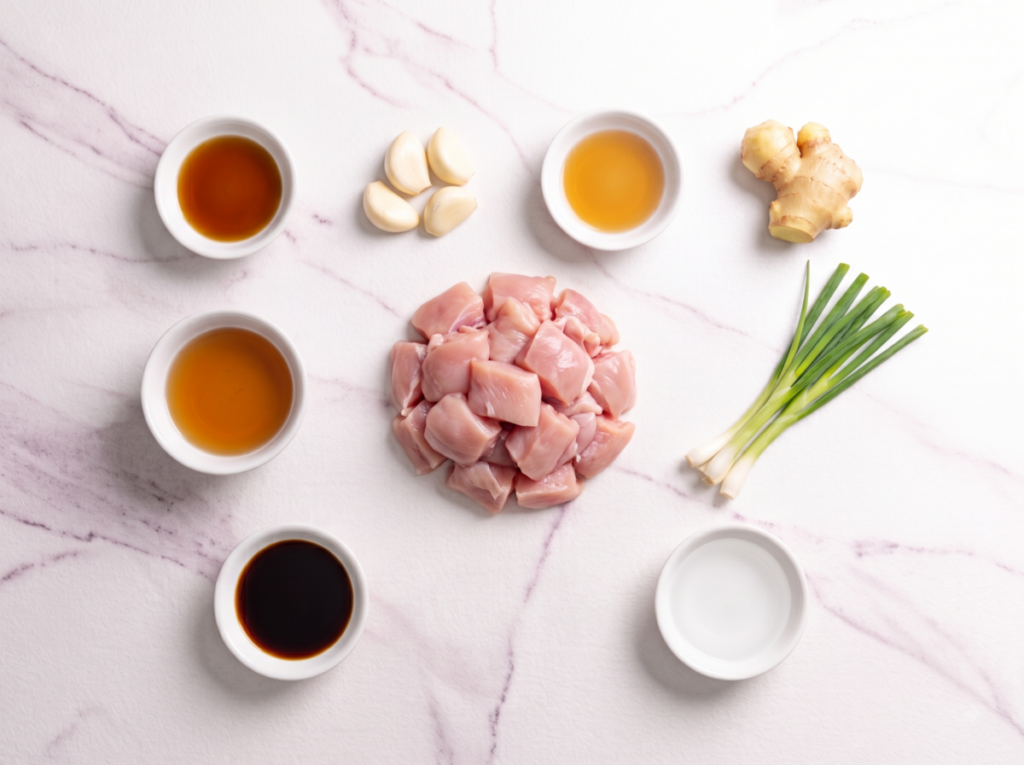
Aromatics and oil
- Sesame oil, ¼ cup: The fat base that carries flavour; toasted sesame oil gives the dish its signature warm, nutty aroma.
- Garlic, 4 cloves chopped: Adds pungent sweetness that mellows into the sauce during simmering.
- Ginger, 5 cm knob sliced: Fresh ginger provides heat and brightness; slicing rather than mincing keeps it from burning and allows easy removal if preferred.
- Spring onions, 5 cut with whites and greens separated: Whites go in early to sweeten the oil; greens finish the dish with colour and fresh bite.
Chicken and sauce
- Chicken, 1 kg cut into 8 cm chunks: Bone-in pieces stay juicier through the quick simmer; 8 cm chunks cook evenly without drying out.
- Shaoxing wine, ¼ cup: Chinese rice wine adds depth and a subtle sweetness; it is irreplaceable for authentic flavour.
- Light soy sauce, ¼ cup: Seasons and colours the sauce without the heaviness of dark soy.
- Water, ¼ cup: Dilutes the initial liquid so the chicken can simmer gently without the sauce becoming too salty too fast.
- Sugar, 1 tbsp: Balances saltiness and helps the sauce reduce to a glossy glaze.
- Salt, to taste: Final adjustment; the soy sauce usually provides enough, but palates vary.
Step-by-Step Cooking Guide
1: Warm the sesame oil
- Set your wok over medium heat and pour in the sesame oil. Let it heat until it shimmers and you can smell toasted nuts, about 30 seconds. Do not let it smoke.
2: Sizzle the aromatics
- Add garlic, ginger and the white parts of the spring onions. Stir constantly for 30-45 seconds until fragrant and the garlic is just turning pale gold at the edges.
3: Coat the chicken
- Add chicken pieces and turn the heat to medium-high. Toss and stir for about 1 minute until every piece is coated in oil and the surfaces have turned opaque white. You are not browning deeply here, just sealing the exterior.
4: Build the braising liquid
- Pour in Shaoxing wine, followed by light soy sauce, water, sugar and a small pinch of salt. Stir once to dissolve the sugar and distribute everything evenly.
5: Bring to a boil
- Increase heat to high until the liquid bubbles vigorously across the surface. This should take 1-2 minutes depending on your stove.
6: Simmer covered
- Reduce heat to low, cover tightly, and simmer for 5 minutes. The chicken will release its juices and begin to tenderise.
7: Reduce to glaze
- Remove the lid, stir the pieces once, and continue cooking over medium-low heat for another 5 minutes. The sauce will bubble more actively and reduce to a thin syrup that coats the back of a spoon. The chicken should read 74°C at the thickest part if you check with a thermometer.
8: Finish with green onions
- Scatter the reserved green spring onion sections over the chicken and fold them through. They will wilt slightly in the residual heat but keep their fresh colour and bite.
9: Serve immediately
- Spoon over steamed rice while the sauce is still glossy and hot. The dish waits poorly; the sauce continues to thicken as it cools.
Ingredient Substitutions & Variations
| Ingredient | Substitute | Taste & Texture Impact |
| Shaoxing wine | Dry sherry | Acceptable but noticeably different; sherry is sweeter and lacks the fermented depth. Avoid cooking wine with added salt. |
| Light soy sauce | Tamari | Works well and keeps the dish gluten-free; tamari is slightly richer and less salty, so you may need a pinch more salt at the end. |
| Spring onions | One medium brown onion, sliced | Worse; onions lack the fresh green top for finishing and will sweeten more during cooking, changing the character of the dish. |
| Bone-in chicken | Boneless thigh, cut large | Cooks faster and stays tender, but the sauce will be less rich without bone-derived gelatin. Reduce simmer time by 2 minutes. |
Recipe twists:
| Variation | Description & Culinary Details |
| Three-cup mushrooms | Replace chicken with 800g mixed mushrooms, quartered. They release more liquid, so reduce the added water to 2 tablespoons and extend the final reduction by 3-4 minutes until the sauce clings. |
| Three-cup tofu | Use 600g firm tofu, pressed and cut into thick slabs. Pan-fry the tofu first until golden, then proceed from step 4. The tofu will drink up the sauce and become deeply flavoured. |
| Spiced version with basil | Add a generous handful of Thai basil leaves in the final 30 seconds of cooking, off the heat. The residual warmth will perfume the dish with anise notes without wilting the leaves to slime. |
Allergen Friendly Adjustments
- Gluten-Free: Not as written; soy sauce contains wheat. Use tamari or gluten-free soy sauce to adapt.
- Dairy-Free: Already dairy-free. No changes needed.
- Nut-Free: Already nut-free. Sesame is a seed, not a tree nut, but confirm with anyone with seed allergies.
- Soy-Free: Not as written; soy sauce is essential. Coconut aminos can substitute but will taste noticeably different and less savoury.
Serving and Pairing Suggestions
- Steamed jasmine rice: The neutral, slightly sticky grains catch every drop of the reduced sauce. This is non-negotiable.
- Cold Taiwanese beer or oolong tea: The crisp carbonation of lager cuts through the rich sesame oil; alternatively, a roasted oolong stands up to the savoury depth without competing.
- Quick-pickled cucumber: Thinly sliced cucumber tossed with rice vinegar and a pinch of sugar refreshes the palate between bites of rich chicken.
Storage, Reheating, and Freezing Guide
- Refrigeration: Cool completely and refrigerate in an airtight container for up to 3 days. The sauce will thicken to a paste; this is normal.
- Reheating: Warm gently in a covered pan with a splash of water to loosen the sauce. Microwave works in 30-second bursts with a damp paper towel over the bowl.
- Freezing: Not recommended. The high sesame oil content separates and turns grainy when frozen and thawed, and the texture of the chicken suffers.
Frequently Asked Questions (FAQ)
▶ Why is my sauce still thin after 10 minutes of simmering?
Your heat was likely too low during the final uncovered stage. Raise it to medium-low and watch closely; the sauce should reduce visibly in the last 3 minutes.
▶ Can I use chicken breast instead of thighs or bone-in pieces?
You can, but reduce the covered simmer to 3 minutes and the final reduction to 2-3 minutes. Breast dries out quickly; check that the internal temperature does not exceed 74°C.
▶ Do I really need to separate the spring onion whites and greens?
Yes. The whites contain more sulphur compounds that mellow into sweetness when cooked; the greens are milder and lose their colour and texture if cooked too long.
▶ My sesame oil tastes bitter. What went wrong?
You overheated it. Sesame oil has a low smoke point. Start with a cooler pan and heat gently until fragrant, not smoking.
Three-Cup Chicken
Equipment
- wok
- Pan
Ingredients
- ¼ cup sesame oil
- 4 cloves garlic , chopped
- 5 cm knob ginger , sliced
- 5 spring onions , cut & separate into green and white sections
- 1 kg chicken , cut into 8 cm chunks
- ¼ cup Shaoxing wine
- ¼ cup light soy sauce
- ¼ cup water
- 1 tbsp sugar
- Salt , to taste
Instructions
- Heat the sesame oil in wok.
- Stir-fry garlic, ginger and white portion of spring onions briefly till fragrant.
- Add chicken pieces; mix well over medium-high fire for about 1 min.
- Add wine, followed by light soy sauce, water, sugar and salt.
- Bring to a boil.
- Lower fire and simmer, covered, for 5 mins.
- Stir once and continue cooking for another 5 mins or till most of the liquid has evaporated and the chicken is cooked.
- Stir in rest of spring onions.
- Serve hot with rice.
Gobble these up too!
-

Lemon prawns, a zesty Chinese seafood stir-fry with whiskey and spring onions. Only 7 ingredients,…
-
Learn the Teochew trick for taming bittergourd. This braised chicken uses pickled pineapple and chilli…
-
Brinjal lovers, this one’s for you. Pork, garlic, hot bean paste, cornflour slurry for gloss.…
-
No cream, no fuss, just a thick savory stew you can pull together after work.…