This is the bowl you want when the evening has been long and you need something warm without the wait. Twenty minutes, one pot, and a blender are all that stand between you and dinner. The dish comes together like a quiet ritual: peel, blend, toss, eat. It is simple enough for a Tuesday night and just unusual enough to feel like a small adventure on your own familiar stovetop.
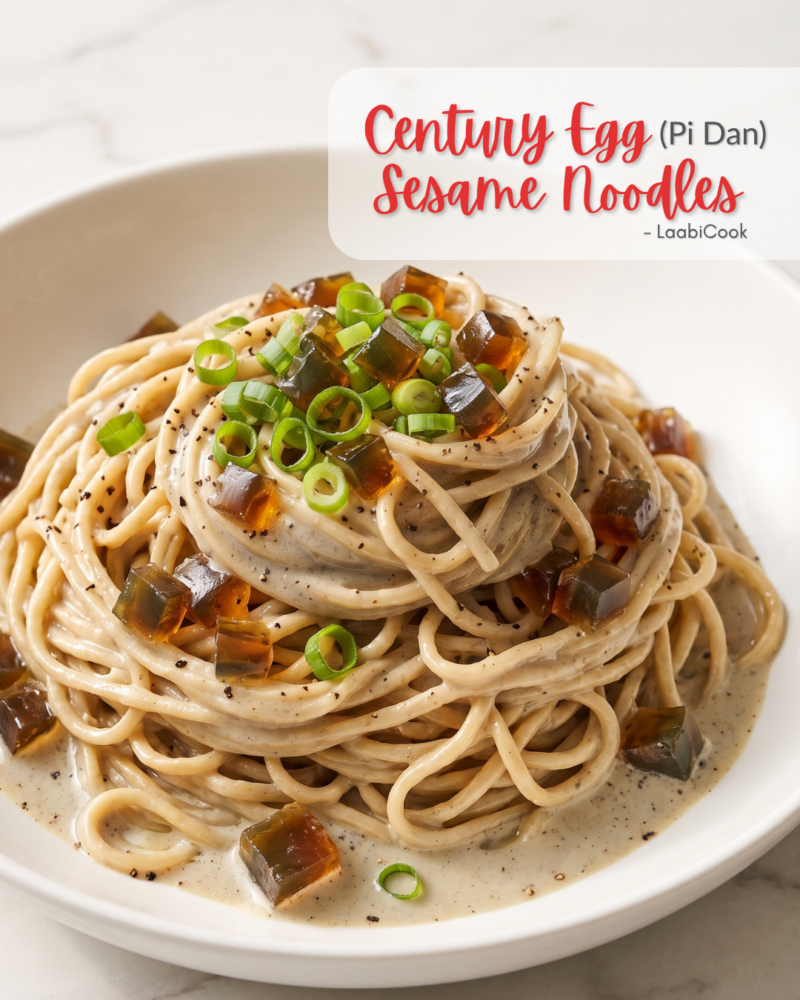
My husband first fell for this dish on a trip to Taiwan, and he’s been craving it ever since. The trouble is, century egg noodles aren’t the easy find you’d expect; plenty of the places we’ve traveled since simply don’t serve it, and he’s come home disappointed more than once. So somewhere along the way, making it ourselves stopped being optional.
There’s also the matter of the yolk itself. I’ll admit it: the texture of a raw century egg yolk has never been my favorite part of the dish, that soft, custardy give. This recipe is where it wins me over: blending the yolk into a silken sesame sauce smooths that texture out completely, so all that’s left is the flavor, deep and savory, without anything to hesitate over.
These century egg noodles turn that intensity into comfort, coating every strand in that same silken sauce.
This is the bowl you want when the evening has been long and you need something warm without the wait. Twenty minutes, one pot, and a blender are all that stand between you and dinner. The dish comes together like a quiet ritual: peel, blend, toss, eat. It is simple enough for a Tuesday night and just unusual enough to feel like a small adventure on your own familiar stovetop.
Why You’ll Love This Recipe
- Weeknight speed: From raw egg to finished bowl in under twenty minutes, with no chopping board full of prep and only one pot to wash afterward.
- One transformative ingredient: The century egg yolk emulsifies into the sesame dressing, creating a sauce that tastes far richer than its short ingredient list suggests.
- Quietly customisable: The base is mellow enough to accept whatever you have: a spoonful of chili oil, leftover roasted vegetables, or that container of braised minced meat with mushroom you made last weekend.
The Culinary Secrets Behind This Dish
Century egg yolk works here because it is already partially denatured and concentrated. The alkaline curing process breaks down proteins and lipids into amino acids and free fatty acids, which means the yolk blends smoothly without the raw edge of a fresh egg. When you whirl it with sesame dressing, the fat in the dressing and the emulsified proteins in the yolk form a stable, creamy suspension. A tablespoon of water loosens this just enough to coat noodles without pooling at the bottom of the bowl.
The whites you set aside are not wasted tradition. Their firm, jelly-like texture comes from the same alkaline cure that turned the yolk creamy. Some cooks dice them for garnish, though this recipe keeps the focus on the sauce. If you do save them, know that their flavor is milder and their texture more resilient than the yolk; they hold up well in fried rice or congee the next day.
What You’ll Need
Equipment
- Blender: Essential for transforming the dense century egg yolk and thick sesame dressing into a pour-able, silky sauce. A small personal blender or immersion blender works perfectly.
- Pot: For boiling your noodles. Any medium saucepan or stockpot that holds at least two liters of water will prevent sticking and give the noodles room to move.
- Bowl: Wide and shallow is best here, giving you space to toss the noodles thoroughly with the sauce without spilling over the sides.
Ingredients
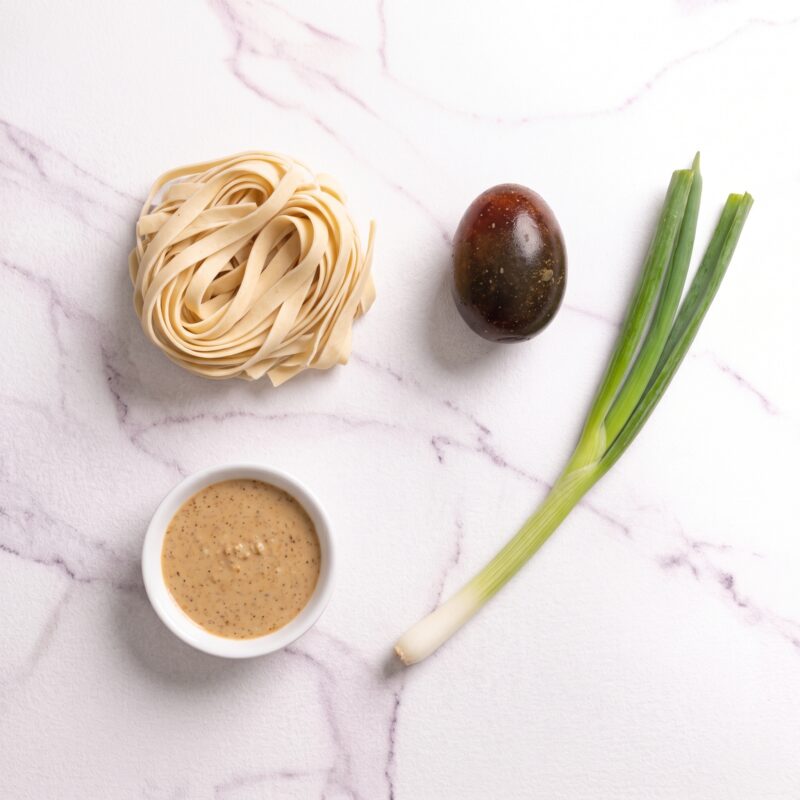
- Noodles, 80 g: The canvas for your sauce. Wheat noodles, rice noodles, or even fresh ramen all work; choose what you have and what you like to slurp.
- Century egg, 1: Both yolk and white come from this one egg, though only the yolk becomes sauce. The alkaline cure gives it that signature custardy texture and deeply savory depth.
- Sesame dressing, 3 tbsp: The fat base that carries flavor and helps emulsify the yolk. Store-bought is fine; look for one with a balance of sesame and mild oil so it does not overwhelm the egg.
- Soy sauce, to taste: For salt and umami. Add after blending so you can judge the full flavor of the yolk-sesame base first.
- Black pepper, to taste: A small kick of heat and floral aroma that cuts through the richness of the sauce.
Garnish
- Spring onions, 1 tbsp chopped: Fresh, sharp contrast to the creamy sauce. Scatter generously; they wake up every bite.
Step-by-Step Cooking Guide
1: Separate the century egg
- Crack and peel the egg carefully. The white will be firm and translucent, the yolk soft and clay-like. Slide the yolk into your blender, dice the white and set aside.
2: Blend the sauce
- Add the sesame dressing to the yolk and blend until completely smooth and pour-able, like thin pancake batter. If the mixture clings to the sides or looks thick, add water one teaspoon at a time until it loosens.
3: Season to taste
- Stop the blender and taste the sauce. It should be rich, nutty, and slightly funky from the egg. Add soy sauce and black pepper gradually, blending briefly between additions, until the salt and heat feel right to you.
4: Cook the noodles
- Bring your pot of water to a rolling boil. Add the noodles and cook according to package timing, testing a minute early for the texture you prefer. They should be tender but still have some resistance when you bite. Drain thoroughly, shaking the colander to remove excess water that would dilute your sauce.
5: Toss and serve
- Transfer the hot noodles to your bowl and pour the sauce over them. Toss with chopsticks or tongs until every strand is coated. Top with diced century egg white, spring onions and serve immediately.
Ingredient Substitutions & Variations
| Ingredient | Substitute | Taste & Texture Impact |
| Sesame dressing | Tahini thinned with neutral oil and a pinch of sugar | Quite close if your tahini is fresh and smooth. The flavor will be more purely sesame and less rounded. |
| Spring onions | Chopped cilantro or chives | Minimal change. Cilantro adds a different aromatic note; chives are milder and closer in spirit. |
| Wheat noodles | Rice vermicelli or shirataki | Rice vermicelli works well but clings less sauce. Shirataki is noticeably worse here; its water content fights the emulsion. |
Recipe twists:
| Variation | Description & Culinary Details |
| With braised minced meat and mushroom | This is the upgrade I return to most often. Spoon a generous heap of warm braised minced meat with mushroom over the sauced noodles. The savory-sweet meat and earthy mushrooms turn a simple bowl into something that feels like a complete meal. |
| Chili oil version | Replace half the sesame dressing with your favorite chili oil, or simply drizzle it over the finished bowl. The heat amplifies the century egg’s funk and gives you something closer to Sichuan street noodles. |
| Cold noodle salad | Rinse the cooked noodles under cold water until completely cool, then toss with the sauce and a splash of rice vinegar. Chill for ten minutes before serving. The sauce thickens slightly and clings differently, better suited to hot summer evenings. |
Allergen Friendly Adjustments
- Dairy-Free: Already free of dairy. The creaminess comes entirely from the egg yolk and sesame fat.
- Nut-Free: Already free of tree nuts. Sesame is a seed, not a nut, though some people with nut allergies also react to sesame. Check your specific sensitivity.
- Egg-Free: Not possible as written. The century egg is the foundation of the sauce. See substitutions for a non-traditional alternative.
Serving and Pairing Suggestions
- Hot jasmine tea: The floral aroma and gentle bitterness cut through the richness of the sesame sauce and refresh your palate between bites.
- Quick pickled cucumbers: Their crunch and bright acidity balance the soft, creamy noodles. Slice thin, salt for ten minutes, then rinse and dress with rice vinegar.
- Braised minced meat with mushroom: This is the pairing that elevates the bowl from snack to supper. The recipe is worth seeking out.
Storage, Reheating, and Freezing Guide
- Refrigeration: The blended sauce keeps covered in the refrigerator for up to two days. It will thicken and the flavors will mellow; thin with a little water and taste for seasoning before using. Tossed noodles do not store well; the sauce continues to absorb and the texture suffers.
- Reheating: Warm the sauce gently in a small pan or microwave at half power, stirring often, until just loose again. Do not overheat or the emulsion may break and look grainy, though it will still taste fine.
- Freezing: Not recommended. The emulsified sauce separates when frozen and thawed, and the texture becomes unpleasantly gritty. This is a dish best made fresh.
Frequently Asked Questions (FAQ)
▶ My sauce looks curdled and grainy. What happened?
The yolk and sesame dressing did not emulsify fully, usually because the yolk was too dry or the dressing too thick. Add water gradually while blending. A grainy sauce still tastes good; just whisk vigorously before tossing.
▶ Can I use the century egg white in this dish?
You can dice it and add it as a garnish for texture, though the flavor is milder than the yolk and the color is striking against the pale sauce. Many cooks prefer to save it for fried rice or congee where its firm texture shines.
▶ Where do I find century eggs?
Asian grocery stores with a refrigerated section usually carry them, often near the tofu or fresh noodles. They are also sold online. Look for eggs with intact shells and no cracks; the interior should smell earthy and complex, not strongly ammoniated.
▶ The sauce tastes too strong or too mild. How do I fix it?
Too strong usually means the century egg was particularly pungent; balance with a little more sesame dressing and a pinch of sugar. Too mild means the egg was mild or the sesame dressing dominated; add soy sauce drop by drop until the savory depth comes forward.
Century Egg Sesame Noodles
Equipment
- blender
- Pot
- bowl
Ingredients
- 80 g noodles , of your choice
- 1 century egg
- 1 tbsp spring onions , chopped
- 3 tbsp Sesame dressing
- Soy sauce , to taste
- Black pepper , to taste
Instructions
- Peel the century egg, separate yolks and whites. Dice white and set aside.
- In a blender, mix yolk and sesame dressing until runny. Add a little water if it's too dry.
- Taste and adjust the seasoning as you like.
- Bring a pot of water to a boil. Cook the noodles until they reach your preferred doneness. Drain well and place in a bowl.
- Toss the mashed century egg mixture with the noodles. Top with diced century egg white and chopped spring onions. Serve immediately.
Gobble these up too!
-

Learn to make zaru soba with a proper mirin-soy dipping base. I use smoked salmon…
-
Only laksa paste, tuna and spaghetti stand between you and dinner. I make this when…
-
Crispy bacon, sweet capsicum, and juicy tomatoes tossed with macaroni in olive oil. Only 8…
-
No time to plan dinner? This Malaysian fried rice needs only what I already have:…