Stir fried sambal beef noodles is exactly what it sounds like: fresh Hokkien noodles tossed with thin-sliced beef, green beans, and baby bok choy in a blazing hot wok with sambal belacan. It is Malaysian-Singaporean hawker food at its most direct, the kind of dish you eat on a plastic stool with sweat on your temples and no regrets.
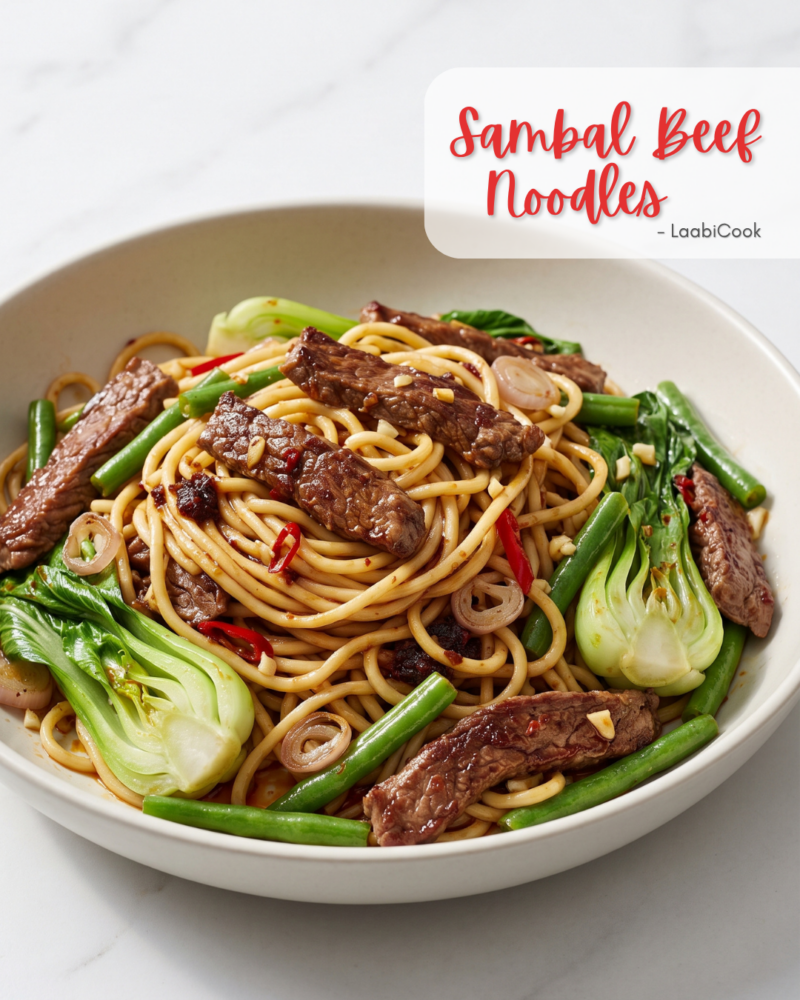
I make this when I need dinner in twenty minutes and I want it to taste like I tried harder. Only ten ingredients, one wok, and a jar of sambal belacan that lives permanently in my fridge door. The whole thing costs less than a takeout container and feeds four hungry people. My son asks for this by name when he walks in smelling it from the hallway.
Why You’ll Love This Recipe
- 20 minutes start to finish: The beef sears in under 3 minutes, vegetables cook in 4, and noodles need only a quick toss. Dinner faster than delivery.
- One wok, minimal cleanup: Everything builds in sequence in the same pan. The only other vessel is a bowl for loosening noodles.
- Pantry-star friendly: Sambal belacan keeps for months in the fridge. With a jar on hand, you only need fresh noodles, one protein, and whatever greens look good.
The Culinary Secrets Behind This Dish
The secret to this dish is understanding what the sambal belacan does in the hot wok. Belacan is fermented shrimp paste, and when it hits hot oil with garlic and chilli, the Maillard reaction kicks in fast. Those sugars and amino acids in the fermented paste brown deeply in seconds, creating a savory, almost smoky base that plain chilli paste cannot replicate. This is why I add it to the hot wok rather than mixing it cold with noodles later.
Separating Hokkien noodles with boiling water before they go into the wok is not just about loosening them. It removes surface starch that would otherwise clump in the pan and steam rather than fry. You want the noodles to take on some direct heat and char at the edges, not turn into a soft, wet tangle. The quick drain also means they enter the wok at a temperature where they will absorb the sambal oil rather than cool the pan down.
What You’ll Need
Equipment
- Wok: Essential for the high-heat, quick toss that keeps beef tender and gives noodles smoky wok hei. A large skillet works in a pinch but you will sacrifice some char.
- Large bowl: For loosening Hokkien noodles with boiling water. Needs to be big enough that the noodles can move freely as you separate them with a fork.
- Fork: For teasing apart the noodles under boiling water without tearing them. Chopsticks can work but a fork gives you more leverage against clumps.
- Baby bok choy, 350 g, quartered: Wilts fast, adds moisture, and soaks up the sambal oil. Quartered so stems cook through while leaves stay bright.
Ingredients
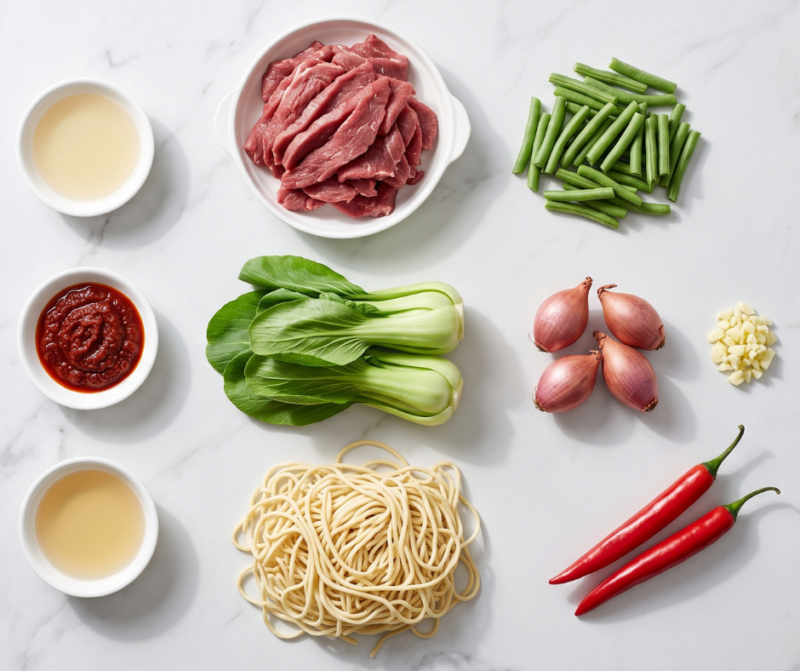
- Olive oil, 60 ml: Neutral enough to let the sambal shine, with enough body to carry the stir-fry. Vegetable oil works too.
- Rump steak, 700 g, sliced thinly: Affordable cut with good flavor for fast, high-heat cooking. Slice thin against the grain for tenderness.
- Green beans, 300 g, cut into 5-cm lengths: Adds crunch and a clean, grassy contrast to the rich sambal. Almost tender is the target; they finish cooking as everything combines.
Aromatics
- Garlic, 1 clove, chopped coarsely: Browns quickly in the hot wok, adding sweet, roasted depth to the sambal base.
- Long red chillies, 2, sliced: Fresh capsicum heat and color. Different from the belacan’s fermented funk; together they layer the spice.
- Sambal belacan, 90 g: The soul of the dish. Fermented shrimp paste and chilli combined; savory, funky, and irreplaceable.
Noodles and finish
- Fresh Hokkien noodles, 400 g: Thick, chewy wheat noodles that grab sauce beautifully. The target texture is springy with some caramelized edges.
- Beef stock, 60 ml: Just enough liquid to loosen the sambal into a glossy coating rather than a dry paste. Adds subtle savory backbone.
- Shallots, 4, sliced thinly: Added at the very end for sharp, raw onion bite and a pop of color against the red sambal.
Step-by-Step Cooking Guide
1: Sear the beef in batches
- Heat 60 ml olive oil in your wok over a medium fire. When it shimmers and just begins to smoke, add half the steak slices in a single layer. Let them sear undisturbed for 30 seconds, then toss until browned on the edges and still pink in the center. Remove to a plate. Repeat with the second batch. Set all beef aside; it will cook further when it returns to the wok.
2: Build the sambal base with vegetables
- Keep the wok hot. Throw in the green beans and stir-fry for 2-3 minutes until they are almost tender but still snap when you bite. Add the garlic, sliced chillies, and sambal belacan. Stir-fry for 30 seconds until your kitchen smells incredible and the sambal is sizzling actively. Toss in the bok choy quarters and stir-fry quickly just to coat them in the red oil and begin wilting.
3: Loosen the noodles
- While the vegetables cook, place the Hokkien noodles in a large bowl and cover completely with boiling water. Use a fork to gently tease apart any clumps. They only need 1-2 minutes to loosen. Drain thoroughly; wet noodles will cool your wok and steam instead of fry.
4: Combine and finish
- Return the seared beef and any accumulated juices to the wok. Pour in the beef stock, then add the drained noodles and sliced shallots. Toss everything together with your spatula, lifting and turning, until the noodles are hot through and coated in glossy red sambal oil and the shallots have softened slightly. This takes 1-2 minutes. Serve immediately in deep bowls while the wok hei still clings to everything.
Ingredient Substitutions & Variations
| Ingredient | Substitute | Taste & Texture Impact |
| Sambal belacan | Sambal oelek or homemade chilli-garlic paste | Worse. You lose the funky, savory depth that defines the dish. Add fish sauce to compensate. |
| Hokkien noodles | Rice noodles, bee hoon, or dried egg noodles rehydrated | Different texture. Rice noodles or bee hoon are lighter and soak up sauce faster; do not overcook. |
| Rump steak | Flank steak, sirloin, or thinly sliced pork shoulder | Acceptable. Slightly less beefy depth; you may want extra stock. |
| Olive oil | Vegetable, peanut, or canola oil | Much worse. Olive oil has a low smoke point for wok cooking; the sambal may taste bitter if it burns. |
Recipe twists:
| Variation | Description & Culinary Details |
| Seafood version | Swap beef for sotong rings and prawns, add them after the sambal is fragrant, and reduce stock to 30 ml. Seafood cooks faster and releases moisture. Finish with a squeeze of calamansi. |
| Vegetarian (not vegan; belacan contains shrimp) | Omit beef and stock, double the green beans and bok choy, add 200g firm tofu cubes patted dry. Fry the tofu first until golden, remove, then proceed. Use vegetable stock instead of beef. |
| Mee goreng style | Reduce sambal belacan to 60g, add 2 tablespoons kecap manis with the stock, and top with a fried egg. The sweet soy rounds off the heat and the runny yolk creates extra sauce. |
Allergen Friendly Adjustments
- Gluten-Free: Not free as written. Hokkien noodles contain wheat. Swap to rice noodles or bee hoon for a gluten-free version. The texture will be lighter but the sambal coating works just as well.
- Dairy-Free: Already dairy-free. No milk, butter, or cream anywhere in this recipe.
- Nut-Free: Already nut-free. No peanuts, tree nuts, or nut oils used.
- Shellfish-Free: Not free as written. Sambal belacan contains shrimp paste. Swap to a plain sambal oelek or a homemade chilli-garlic paste. You will lose the savory depth of belacan, so add a splash of fish sauce or extra salt to compensate.
Serving and Pairing Suggestions
- Ice-cold Tiger beer: The classic Malaysian pairing. The malt sweetness and carbonation cut straight through the sambal heat and refresh your palate between bites.
- A quick cucumber pickle: Slice cucumber thin, toss with rice vinegar and a pinch of salt. The cool crunch and acidity balance the wok’s intensity perfectly.
- Chinese tea: If you want to eat this at noon and still function, pu-erh or tie guan yin cleanses the palate without competing with the belacan.
Storage, Reheating, and Freezing Guide
- Refrigeration: Keeps for 2 days in an airtight container. The noodles will absorb more sauce as they sit, so the texture softens. Still tasty, just less springy.
- Reheating: Best revived in a hot wok or skillet with a splash of water to loosen the sambal. Microwave works in 60-second bursts but the beef will toughen and the noodles turn gluey.
- Freezing: Not recommended. Fresh Hokkien noodles do not freeze well after cooking; they turn mushy and the bok choy collapses into stringy nothing. Make only what you will eat within two days.
Frequently Asked Questions (FAQ)
▶ Where do I find sambal belacan?
You want the sambal belacan itself, not sambal oelek or a generic sweet chilli sauce. Look for brands like Sing Long in Asian grocers, usually near the shrimp pastes. A 90g jar costs around $3-4 and keeps for months in the fridge.
▶ Can I skip the fresh chillies if the sambal is already spicy?
Do not skip it. If your chillies are very hot, remove the seeds. The two long red chillies add fresh capsicum flavor and a different kind of heat that complements the slow burn of the belacan. Without them, the dish tastes flat.
▶ Can I use other greens instead of baby bok choy?
Yes, absolutely. I often use whatever greens I have: choy sum, gai lan, even frozen spinach squeezed dry. The timing changes slightly; tougher stems need longer in the wok, leaves go in later.
▶ How do I keep the beef from going tough?
Slice it thin against the grain, and do not crowd the wok. Two batches is usually enough for 700g. If you throw it all in at once, it boils in its own juices and turns rubbery. Browned fast equals tender.
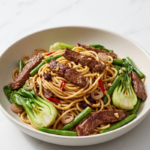
Stir-Fried Sambal Beef Noodles
Equipment
- wok
- Large bowl
- Fork
Ingredients
- 60 ml olive oil
- 700 g rump steak, sliced thinly
- 300 g green beans, cut into 5-cm lengths
- 350 g baby bok choy, quartered
Aromatics
- 1 clove garlic, chopped coarsely
- 2 long red chillies, sliced
- 90 g sambal belacan or chilli shrimp paste
Noodles and finish
- 400 g fresh Hokkien noodles
- 60 ml beef stock
- 4 shallots, sliced thinly
Instructions
- Heat oil in a wok over a medium fire. When hot, stir-fry steak, in batches, until browned and tender. Remove from wok and set aside.
- Add green beans to hot wok and stir-fry until almost tender. Add garlic, chilli and sambal belacan. Stir-fry until fragrant. Add bok choy, stir-fry quickly to mix well.
- Meanwhile, place Hokkien noodles in a large bowl. Cover with boiling water; separate with a fork. Drain and set aside.
- Return steak to wok. Add stock, noodles and shallots. Stir-fry until hot. Serve at once.
Gobble these up too!
-

Learn to make zaru soba with a proper mirin-soy dipping base. I use smoked salmon… Cook recipe >
-
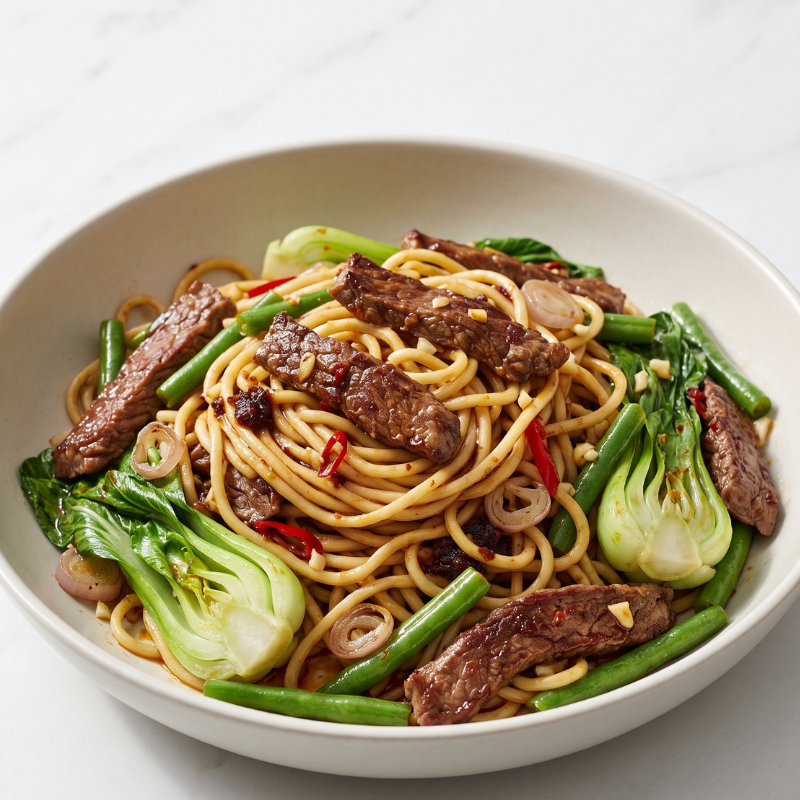
Sambal belacan transforms everyday beef and noodles into something you will want to make weekly.… Cook recipe >
-
Blend that century egg yolk into a velvety sesame sauce, toss with hot noodles, and… Cook recipe >
-
Craving something spicy and deeply comforting? This sardine otah comes together in one blender and… Cook recipe >