There is a particular quiet pleasure in opening the fridge and finding a jar of glossy, amber eggs waiting for you. This ajitsuke tamago (味付け玉子) recipe delivers exactly that, a staple borrowed from Japanese ramen shops where these soy-marinated eggs, whose name simply means “flavored eggs,” sit ready to transform a plain bowl of rice or a midnight snack into something deeply satisfying.
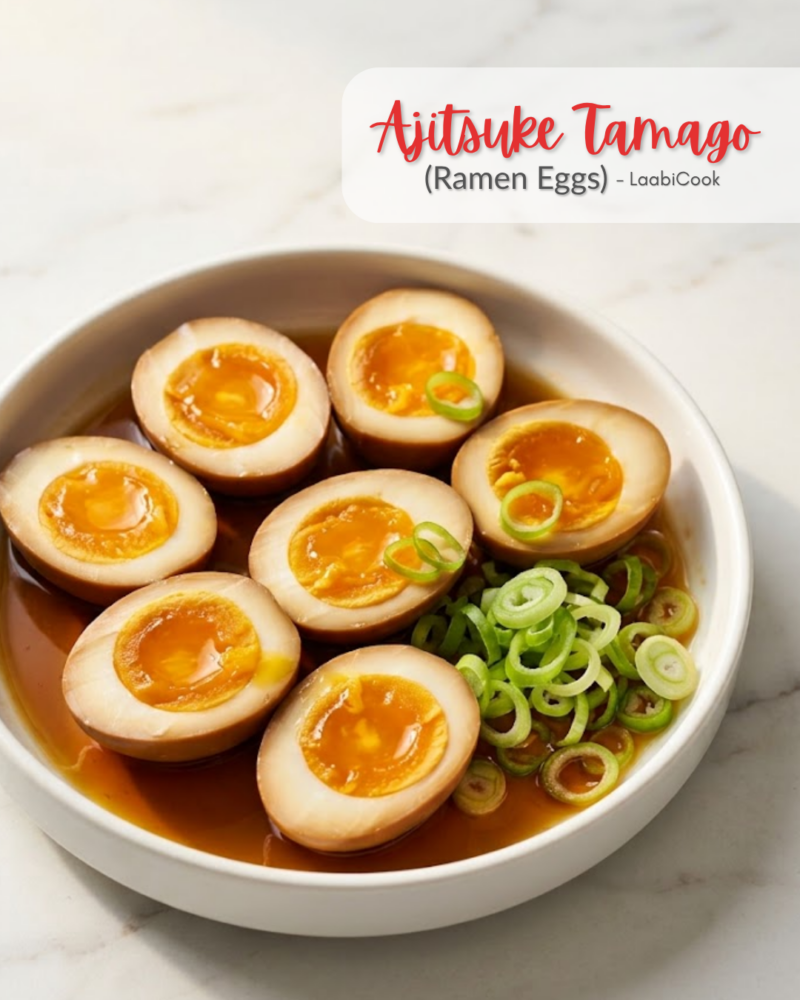
The magic lies in the contrast: a firm, savory white that gives way to a yolk still custardy at its heart, stained bronze at the edges from its long bath in dashi and soy. You will find yourself making batch after batch, replenishing the container whenever it empties, because few things are as reliable as having these eggs on hand.
Why You’ll Love This Recipe
- Make-ahead friendly: Once marinated, the eggs keep for a full week in the refrigerator, improving in flavor each day.
- Versatile beyond ramen: Tuck them into bento boxes, slice over rice bowls, or eat straight from the container as a savory snack.
- Precise but forgiving: The six-minute simmer and ice bath method produces reliably jammy yolks without guesswork.
The Culinary Secrets Behind This Dish
The texture of ajitsuke tamago depends on two opposing forces: heat and its immediate arrest. When you lower room-temperature eggs into boiling water, the outer white sets quickly while the inner yolk remains fluid. The six-minute window is calibrated for 60 gram eggs; smaller eggs will set firmer, larger ones will run. Stirring during the first minute of cooking centers the yolk by distributing heat evenly around the spherical white, preventing that disappointing off-center yolk that ruins clean slices.
The marinade itself demonstrates how osmosis works in your favor. The egg white, already porous from cooking, absorbs the seasoned liquid while the yolk, protected by its fat content, takes on color more slowly. Cooling the marinade completely before contact is non-negotiable; residual heat will push the yolk past custard into crumbly territory. The optional spring onion, often the frozen trimmings from previous cooking, contributes aromatic sulfur compounds that steep into the marinade without requiring fresh produce.
What You’ll Need
Equipment
- Medium saucepan: Holds enough water to fully submerge six eggs without crowding, which prevents cracking from impact.
- Egg timer or phone timer: Six minutes passes quickly; precision here determines whether your yolk is jammy or chalky.
- Large bowl with ice water: Stops cooking instantly and causes the cooked white to contract slightly from the shell for easier peeling.
- Airtight container or jar: Keeps eggs fully submerged in marinade and prevents fridge odors from penetrating the porous whites.
Ingredients
- Eggs, 6 large (60g each): Eggs aged 2-3 days peel more cleanly than farm-fresh ones, and room temperature eggs resist cracking when lowered into boiling water.
For the marinade
- Water, 1 cup: Forms the base liquid that carries dashi and seasonings into the egg white through osmosis.
- Dashi stock powder, 1 sachet: Provides umami depth from dried bonito and kelp; this is the savory backbone that distinguishes these from simple soy eggs.
- Soy sauce, 1/4 cup: Delivers salt and the characteristic amber stain; use regular, not low-sodium, for proper concentration.
- Mirin, 1/4 cup: Adds subtle sweetness and sheen; its alcohol helps the marinade penetrate while balancing salt.
- Spring onion, 1 stalk (optional): Frozen trimmings work beautifully here, releasing gentle allium fragrance without requiring fresh shopping.
Step-by-Step Cooking Guide
1: Prepare the marinade
- Combine water, dashi powder, soy sauce, mirin, and spring onion in your pot. Bring to a boil and let bubble for 2-3 minutes until the kitchen smells savory and sweet. Turn off the heat and set aside to cool completely; this is essential, as warm marinade will overcook your eggs.
2: Boil water for eggs
- Fill your pot with fresh water, enough to cover the eggs by at least an inch. Bring to a rolling boil over high heat. This waiting period allows your eggs to come to room temperature if you have not already done so.
3: Lower eggs into boiling water
- Gently lower the room-temperature eggs into the bubbling water, using a spoon to prevent dropping. The water should settle to a simmer; if it boils violently, reduce heat slightly to prevent eggs from knocking against each other and cracking.
4: Simmer exactly six minutes
- Set your timer the moment the last egg enters. Stir gently once or twice during the first minute to center the yolks. The whites will set firm while the yolks remain softly jammy.
5: Shock in ice bath
- Immediately transfer the eggs to your prepared ice water bath. Let them sit until completely cold to the touch, about 5 minutes. This sudden temperature drop prevents carryover cooking and makes peeling straightforward.
6: Peel the eggs
- Crack each egg gently against the bowl and peel under the cold water. The shell should slip away cleanly from eggs aged 2-3 days; fresh eggs will fight you.
7: Marinate submerged
- Place peeled eggs in your container and pour the completely cooled marinade over them, ensuring full coverage. Refrigerate at least 12 hours; the whites will turn bronze while the yolk centers stay golden.
8: Serve and store
- Slice ajitsuke tamago in half with a sharp knife to reveal the contrast of dark amber white and custardy yolk. Return uneaten eggs to their marinade; they will keep up to 7 days in the refrigerator.
Ingredient Substitutions & Variations
| Ingredient | Substitute | Taste & Texture Impact |
| Dashi stock powder | Vegetarian dashi or 1 teaspoon mushroom powder | Loses the subtle smoky fish notes; still savory but less authentically ramen-shop. |
| Mirin | 2 tablespoons sake plus 1 tablespoon sugar | Slightly less complex sweetness and reduced sheen on the finished eggs. |
| Soy sauce | Tamari | Nearly identical flavor; tamari is slightly richer and makes this gluten-free. |
| Spring onion | Omit entirely | Minimal loss; the marinade stands well on its own without allium notes. |
Recipe twists:
| Variation | Description & Culinary Details |
| Spiced ajitsuke tamago | Add two dried shiitake mushrooms and a few slices of fresh ginger to the simmering marinade for warming depth. |
| Deeper color overnight eggs | Extend marination to 24 hours for eggs that are stained through nearly to the yolk, with firmer, more concentrated flavor. |
| Miso-marinated eggs | Replace half the soy sauce with white miso paste whisked into the warm marinade, straining before cooling for a gentler, fermented sweetness. |
Allergen Friendly Adjustments
- Gluten-Free: Not as written; dashi powder often contains wheat-derived ingredients. Use gluten-free tamari and verify dashi is wheat-free or make kombu-only dashi.
- Dairy-Free: Already dairy-free; no milk products are used.
- Nut-Free: Already nut-free; no tree nuts or peanuts are present.
- Fish/Shellfish-Free: Not as written; dashi contains bonito (dried tuna). Use kombu-only or shiitake dashi for a fish-free version.
Serving and Pairing Suggestions
- Beverage pairing: Cold genmaicha or a light Japanese lager cuts through the savory richness.
- Side dish pairing: Steamed short-grain rice and pickled ginger make a complete, balanced meal.
- Noodle pairing: Float these eggs in homemade or quality instant ramen with corn and bamboo shoots.
Storage, Reheating, and Freezing Guide
- Refrigeration: Store eggs submerged in marinade in an airtight container for up to 7 days; flavor deepens over the first three days.
- Reheating: Serve cold or at room temperature; warming will firm the yolk beyond the intended texture.
- Freezing: Not recommended; the white becomes rubbery and weeps upon thawing, and the yolk crumbles.
- Marinade reuse: Freeze used marinade and refresh with additional soy sauce and mirin before reusing; boil and cool completely first.
Frequently Asked Questions (FAQ)
▶ Why do my eggs crack when I lower them into the water?
Cold eggs from the refrigerator contract when they hit boiling water; let them sit out 30 minutes first, or lower them gently on a spoon.
▶ Can I use extra-large or jumbo eggs with the same timing?
No; the six-minute timing is calibrated for 60-gram large eggs. Larger eggs need 30-60 seconds longer, smaller eggs 30 seconds less.
▶ My yolks are fully cooked and crumbly. What went wrong?
Either the eggs cooked too long, or the warm marinade continued cooking them; be precise with timing and ensure marinade is fully cooled.
▶ The eggs taste good but look pale. How do I get that dark color?
Patience; 12 hours gives light color, 24-48 hours gives the deep amber of ramen shop eggs. Also verify you are using regular, not low-sodium, soy sauce.
Japanese Marinated Ramen Eggs (Ajitsuke Tamago)
Equipment
- Pot
- Egg Timer
- Ice water bath
- Container
Ingredients
- 6 eggs
Marinate
- 1 cup water
- 1 sachet dashi stock powder
- 1/4 cup soy sauce
- 1/4 cup mirin
- 1 spring onion (optional)
Instructions
Marinade
- In a pot, combine water, dashi stock powder, soy sauce, mirin and spring onion. Boil for 2 to 3 minutes, or until the flavors are combined well.
- Turn off the heat and let it cool completely, otherwise it will over cook the eggs.
Eggs
- Boil water a pot of water that is enough to cover 6 eggs.
- Carefully place eggs in the pot after the water has started boiling.
- Cook the eggs for 6 minutes. Stir the eggs occasionally, so the egg yolk will be right in the middle.
- Remove eggs from the water and place in an ice water bath to stop the cooking process.
- Peel eggs while the water is still cold and place in a container.
Combine
- Pour cooled marinade sauce over the eggs and make sure eggs are covered with the marinade.
- Marinate eggs at least 12 hours or longer. The ramen eggs can last up to 7 days in the fridge. Enjoy!
Video
Notes
- Refrigeration: Store eggs submerged in marinade in an airtight container for up to 7 days; flavor deepens over the first three days.
- Reheating: Serve cold or at room temperature; warming will firm the yolk beyond the intended texture.
- Freezing: Not recommended; the white becomes rubbery and weeps upon thawing, and the yolk crumbles.
- Marinade reuse: Freeze used marinade and refresh with additional soy sauce and mirin before reusing; boil and cool completely first.
Gobble these up too!
-

Made with fried elbow macaroni, Macaroni Goreng is stir-fried in a tomato ketchup based sauce,…
-

Oden (おでん), a Japanese fish cake soup or stew enjoyed during winter, is commonly found…
-

There is a special kind of magic that happens when humble kitchen leftovers transform into…
-

Pasteis de nata (蛋挞), Portuguese flaky egg tarts, have been around since the 18th century.…