Crispy roast pork belly, Siu Yuk (烧肉), is Cantonese roast meat at its most dramatic: glassy shattered skin over soft fat and juicy meat. It is the dish that stops conversation at a dim sum table.
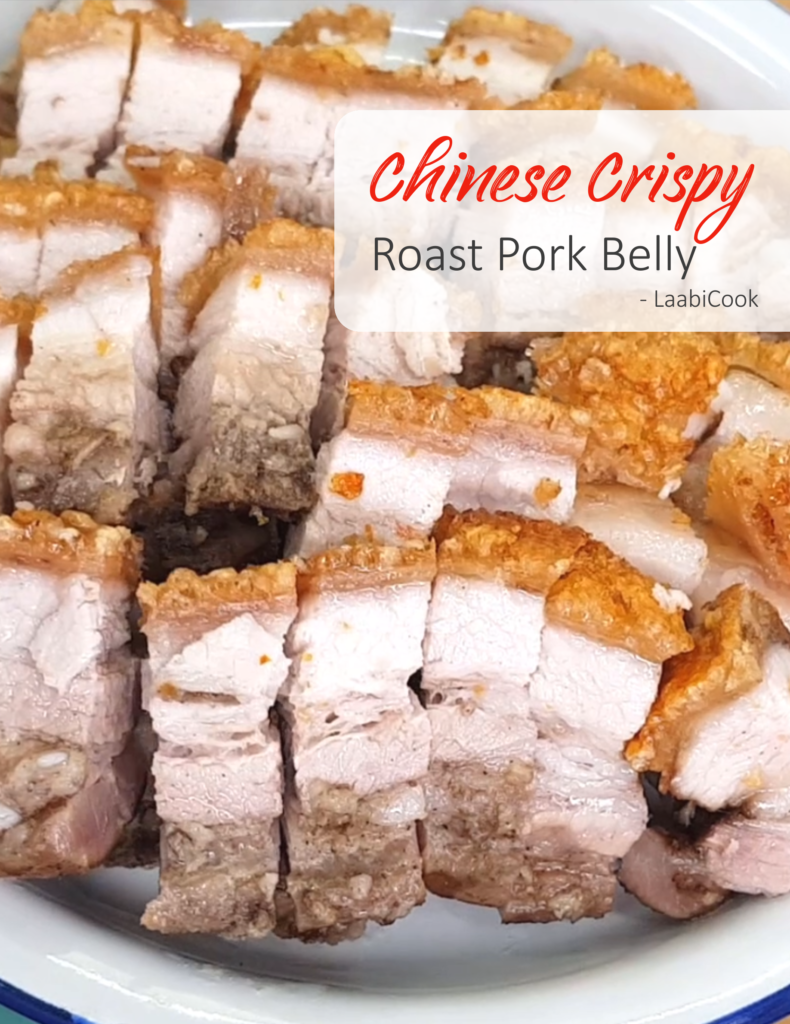
My sister in Australia has been raving about her version for years. It took me several tries to get the flavor and juiciness I wanted. Now my parents and brother clear the plate every single time they visit. They still ask the same question when they walk through the door: You never make roast pork today?
Why You’ll Love This Recipe
- Crackling that actually shatters: The overnight fridge drying plus the salt crust method gives you glassy, blistered skin without vinegar or baking soda tricks.
- Mostly hands-off: The active work is under an hour. The rest is waiting for the fridge and the oven to do their jobs. Plan ahead and bake tomorrow!
- Crowd-pleasing centerpiece: My family clears the plate every time. It is the dish they ask for before they even sit down.
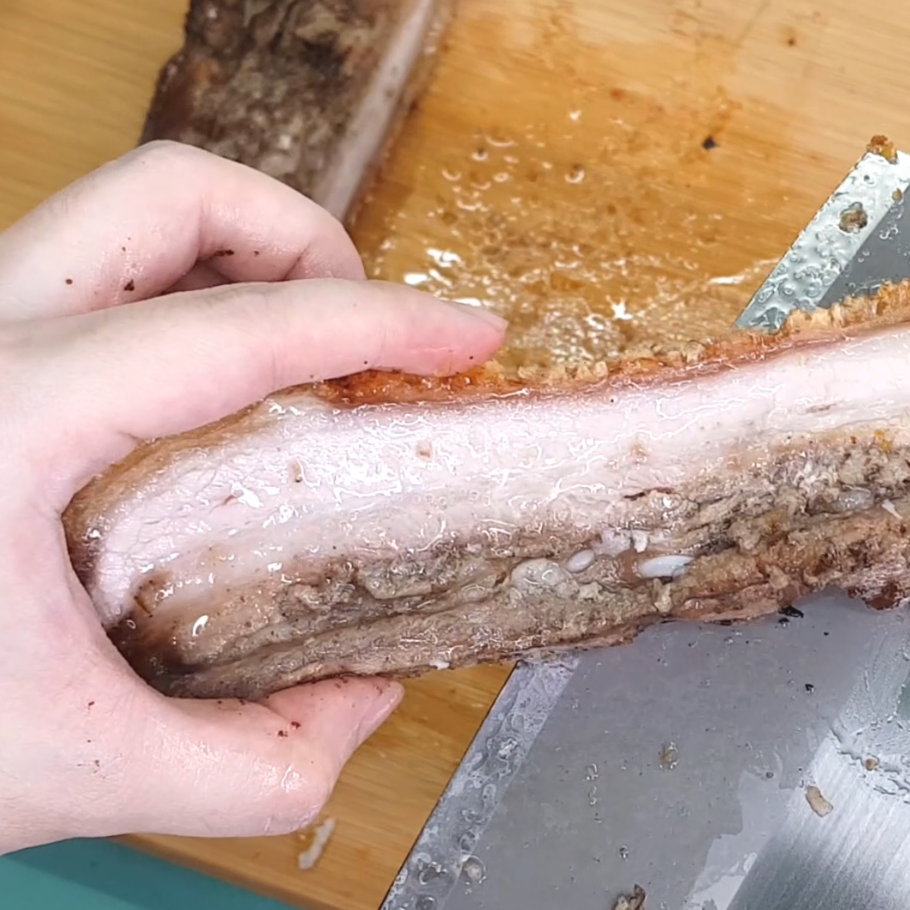
The Culinary Secrets Behind This Dish
Parboiling the pork belly for just 5 minutes, not longer, sets the surface proteins without driving out excessive moisture. The brief heat tightens the exterior, firms the skin for easier pricking, and strips away some of the stronger porky compounds that can turn unpleasant during long roasting. Go past 8 minutes and the belly begins to shrink and buckle, which ruins your flat crackling surface.
Leaving the skin exposed in the fridge overnight is the real engine behind the shatter. Moisture is the enemy of crispness; the dry cold air of the refrigerator pulls water from the skin through simple evaporation, while the salt crust during the first bake actively draws out whatever remains through osmosis. That two-stage drying, passive then active, is what lets the skin blister into proper crackling at 240°C. The water in the roasting pan protects the meat underneath by creating a humid micro-climate that slows surface moisture loss from the flesh, so your crackling can be desiccated and your meat still juicy.
What You’ll Need
Equipment
- Large pot: For the initial 5-minute parboil with ginger and wine. Wide enough to hold the belly flat.
- Oven: Needs to hit 240°C for the final blast. A accurate thermostat matters; too low and the skin stays leathery.
- Sharp tool: Bamboo skewer, fork, or meat tenderizer. Anything pointy will do. No special gadget required.
- Shallow box or dish: For marinating. Must fit the belly with flesh side down so skin stays untouched by liquid.
- Kitchen towel: For dapping skin dry at three separate stages. Paper towel works in a pinch but a proper cloth absorbs better.
- Refrigerator: The drying chamber. Skin must sit uncovered for at least 6 hours, preferably overnight.
- Skewers: Two, inserted crosswise through the meat to stop curling during roasting. Skip if halving the recipe.
- Aluminum foil: Wraps the meat sides, shielding them from direct heat while leaving skin fully exposed.
- Wire rack: Elevates the belly above the pan so hot air circulates underneath and the skin crisps evenly.
- Roasting pan: Deep enough to hold 3cm of water. Catches drippings and creates oven humidity to keep meat moist.
Ingredients
Parboiling
- Pork belly, 1 kg, skin on: The star. Skin-on is essential; without it you have no crackling. Ask your butcher for even thickness.
- Ginger, 6 slices: Goes into the parboiling liquid to mellow any strong pork odors.
- Shaoxing huatiao wine, 2 tbsps: For the parboil. Adds aroma and helps clean the meat.
Marinade
- Soy sauce, 1/4 cup: The savory backbone of the marinade. Salty, dark, and deeply umami.
- Shaoxing huatiao wine, 1/3 cup: More than the parboil amount. Adds complexity and helps tenderize.
- Brown sugar, 2 tbsps: Balances the salt and encourages light caramelization on the meat edges.
- Five-spice powder, 1 tsp: The classic Cantonese blend of star anise, cloves, cinnamon, Sichuan pepper, and fennel. Warm and aromatic.
- Salt, 1 tsp: Seasons the meat, not the skin. The sea salt later handles the skin.
- White pepper, 1 tsp: Subtle heat that works with five-spice without competing.
- Garlic, 4 cloves, minced: Pungent and sweet when roasted. Gets pushed into the cuts.
Roasting
- Sea salt, to cover entire skin surface: Coarse crystals draw moisture during the first bake. Easier to brush off cleanly than fine table salt.
- Room temperature water, 3cm deep in roasting pan: Creates steam humidity to protect the meat while the skin crisps. Also catches drippings.
Step-by-Step Cooking Guide
1: Parboil the belly
- Place the pork belly skin side down in a large pot. Add the ginger slices and 2 tablespoons of Shaoxing wine. Cover with water, bring to a boil, and let it bubble for exactly 5 minutes. Remove and let it cool until you can handle it comfortably.
2: Prick the skin
- Flip the belly skin side up. Use a bamboo skewer, fork, or meat tenderizer to prick as many holes as possible across the entire skin surface. Stop when you feel resistance from the fatty layer; do not pierce into the meat or the finished pork will be too salty.
3: Score the flesh
- Turn the belly flesh side up. Make cuts about 2cm apart and 1.5cm deep into the meat, not through the skin. This opens channels for the marinade to seep in.
4: Make the marinade
- In a shallow box or dish large enough to hold the belly, mix together the soy sauce, 1/3 cup Shaoxing wine, brown sugar, five-spice powder, salt, white pepper, and minced garlic until the sugar dissolves.
5: Marinate the meat
- Spoon the marinade into each cut, rubbing it in. Place the belly flesh side down in the box, taking care that none of the marinade touches the skin. The skin must stay completely dry.
6: Dry the skin overnight
- Pat the skin dry with a kitchen towel. Place the belly uncovered in the fridge, skin side up, for at least 6 hours or overnight. The cold dry air will pull moisture from the skin, which is the secret to proper crackling.
7: Preheat to 180°C
- Set your oven to 180°C and let it come fully to temperature while you prepare the belly.
8: Skewer to prevent curling
- Remove the belly from the marinade and place it skin side down on your work surface. Push two skewers crosswise through the meat layer to hold it flat during roasting. Skip this step only if you are halving the recipe.
9: Wrap in foil
- Pat the skin dry once more with a kitchen towel. Wrap the sides and bottom of the belly tightly with aluminum foil, leaving the skin completely exposed.
10: Arrange on rack
- Set a wire rack inside your roasting pan and place the belly on top, skin facing up. The rack lets hot air circulate underneath for even crisping.
11: Salt the skin
- Cover the entire skin surface with a generous layer of coarse sea salt. Do not let it spill down the sides onto the meat, or that patch will be over-seasoned.
12: First bake at 180°C
- Slide the pan into the oven. Pour room temperature water into the pan until it is 3cm deep. Bake at 180°C for 60 minutes. The water creates humidity that keeps the meat tender while the salt draws moisture from the skin.
13: Preheat to 240°C
- Remove the belly from the oven. Increase the oven temperature to 240°C.
14: Remove salt and foil
- Brush off all the salt crust and discard. Remove the aluminum foil. Pat the skin dry one last time with your kitchen towel. Any moisture left now will prevent blistering.
15: Blast at 240°C
- Return the belly to the oven, still at 240°C, and bake for 40 minutes. The skin will puff and blister into shatteringly crisp crackling. Watch the color; every oven is different.
16: Rest and trim
- Let the belly rest for at least 15 minutes. This allows juices to settle back into the meat. Remove the skewers. Trim any genuinely burnt spots if needed, though I have never had to scrape mine. I like it thick and crispy!
17: Carve and serve
- Place the belly skin side down on your board. Cut through the meat first, then press down firmly to snap through the crackling. Serve with mustard, chilli sauce, or a small dish of sugar for dipping.
Ingredient Substitutions & Variations
Cooking should be adaptable! If you’re missing a few items, here is how you can easily swap them out while keeping the same incredible flavor profile:
| Ingredient | Substitute | Taste & Texture Impact |
| Shaoxing huatiao wine | Dry sherry or omit and add extra garlic | Acceptable but less aromatic. Dry sherry works in a pinch; avoid cooking wine with salt added. |
| Five-spice powder | Homemade blend of star anise, cloves, cinnamon, Sichuan pepper, fennel | Slightly different warmth. Chinese five-spice is the standard; a homemade blend may vary in clove or cinnamon intensity. |
| Brown sugar | White sugar, rock sugar, or palm sugar | Acceptable. White sugar or rock sugar dissolve easily; palm sugar adds a faint caramel note that is not traditional but pleasant. |
Recipe twists:
| Variation | Description & Culinary Details |
| Stir-fried with greens | Cut the roasted belly into strips and stir-fry with gai lan or chye sim and a splash of the reserved marinade. The rendered fat becomes the cooking oil. |
| Render the drippings | Save the drippings and fat from the roasting pan. Strain and chill to separate the pure pork lard from the darker drippings. Use the lard for frying bee hoon or vegetables. |
| Red beancurd marinade | Add 1 teaspoon of fermented red beancurd to the marinade for a deeper color and slightly funky complexity. A Macau variation that some prefer. |
Allergen Friendly Adjustments
- Gluten-Free: Not gluten-free as written. Soy sauce contains wheat. Swap to tamari or a certified gluten-free soy sauce. Check your five-spice powder blend, as some brands add wheat starch.
- Dairy-Free: Already dairy-free. No butter, milk, or cream anywhere in this recipe.
- Nut-Free: Already nut-free. No nuts or nut products in the ingredient list.
- Soy-Free: Not soy-free as written. Both the marinade and the dipping suggestion include soy. For the marinade, use coconut aminos; the flavor will be milder and slightly sweeter. Omit any soy-based dipping sauces.
Serving and Pairing Suggestions
- Hot jasmine tea: The classic Cantonese pairing. Its subtle bitterness cuts through the richness of the fat.
- Steamed white rice: Plain and absorbent. Lets the pork be the event.
- Yellow mustard or chilli sauce: The traditional condiments. A little sugar for dipping is also proper Cantonese style.
Storage, Reheating, and Freezing Guide
- Refrigeration: Store leftovers in an airtight container in the fridge for up to 3 days. The crackling will soften slightly but reheating helps.
- Reheating: Reheat until just warmed through, either in a hot oven or air fryer at 200°C for 8-10 minutes. Do not overheat or the meat will dry out.
- Freezing: Not recommended. The crackling will lose its texture entirely and become leathery. The meat also suffers. Make fresh and enjoy it that way.
Frequently Asked Questions (FAQ)
▶ Can I skip the overnight fridge drying and bake right after marinating?
No. It will not work. The skin must be completely dry before the salt crust goes on, and the fridge does that job. A 6-hour minimum is non-negotiable; overnight is what I do every time.
▶ Do I really need the skewers?
They are there to stop the belly from curling as the fat renders and the meat contracts. If you halve the recipe and use a smaller piece, the tension is less and you can skip them. For a full kilo, do not skip.
▶ My crackling is crispy in some spots but chewy in others. What went wrong?
Look for even thickness from your butcher. Uneven belly means thin spots overcook while thick spots stay underdone. Ask them to trim it flat if needed. A good butcher will understand.
▶ What happens if I prick all the way through to the meat layer?
It will be unpleasantly salty. The holes are only through the skin, not into the fat or meat. If you puncture too deep, the salt crust dissolves and seasons the flesh directly during roasting.
Chinese Crispy Roast Pork Belly
Equipment
- Pot
- Oven
Ingredients
- 1 kg pork belly skin on
- 6 slices ginger
- 2 tbsps Shaoxing huatiao wine
Marinade
- 1/4 cup soy sauce
- 1/3 cup Shaoxing huatiao wine
- 2 tbsps brown sugar
- 1 tsp five-spice powder
- 1 tsp salt
- 1 tsp white pepper
- 4 cloves garlic minced
For baking
- Sea salt to cover entire skin surface
- Room temperature water 3cm deep in roasting pan
Instructions
Parboil and pricking
- Place pork belly skin side down in a pot of water, add ginger and 2 tbsps of Shaoxing wine. Turn on heat and let it boil for 5 mins. Remove from pot, allow to cool.
- Use a sharp tool (bamboo stick, fork or meat tenderizer) to prick as much holes as possible on the skin without penetrating the fatty layer.
- Flip the pork belly over, make about 2cm wide and 1.5cm deep cuts in the flesh.
Marinate
- Mix well together in a box big enough to fit the pork belly: soy sauce, Shaoxing wine, brown sugar, five-spice powder, salt, pepper and minced garlic.
- Spoon the marinade inside the cuts. Then place pork belly flesh side down in marinade without marinating the skin.
Dry and chill
- Dap skin dry with kitchen towel.
- Leave in fridge uncovered for at least 6 hours or overnight.
After 6 hours or overnight
- Preheated oven to 180°C
- Remove pork belly from marinade, place skin side down. Insert 2 skewers crosswise through the meat to prevent it from curling. Dap skin dry with kitchen towel.
- Wrap with aluminum foil but leave the skin exposed
- Arrange wire rack on roasting pan and place pork belly on rack.
- Cover the entire skin surface with sea salt
Bake
- Place pork belly and pan oven, add 3cm of water in pan. Bake for 60 mins at 180°C.
- Take out the pork belly from the oven and preheat oven to 240°C.
- Remove salt crust and aluminum foil. Dap skin dry with kitchen towel
- Place pork belly back in oven. Bake at 240°C for 40 mins.
Carve & serve
- Allow pork belly to cool for at least 15 mins. Remove skewers and cut off the burnt parts of the pork belly.
- Carve it into bite-size pieces and serve with mustard, chili sauce or sugar.
Video
Gobble these up too!
-

Brinjal lovers, this one’s for you. Pork, garlic, hot bean paste, cornflour slurry for gloss.…
-
Cola and char siew sauce transform pork ribs into glossy, sticky perfection. No oven, no…
-
This homey Cantonese classic asks little of you and gives back so much. Let the…
-
This fried mee sua recipe brings together two Singapore classics: birthday noodles and hawker-style frying.…