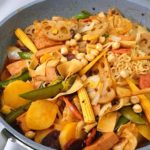
Mala Xiang Guo (麻辣香锅) is a Sichuan dry stir-fry that started as a way to use up hotpot leftovers, now found in food courts across Singapore and Malaysia. You fry whatever meat and vegetables you have, then coat them in numbing mala hotpot sauce until glossy and reduced.
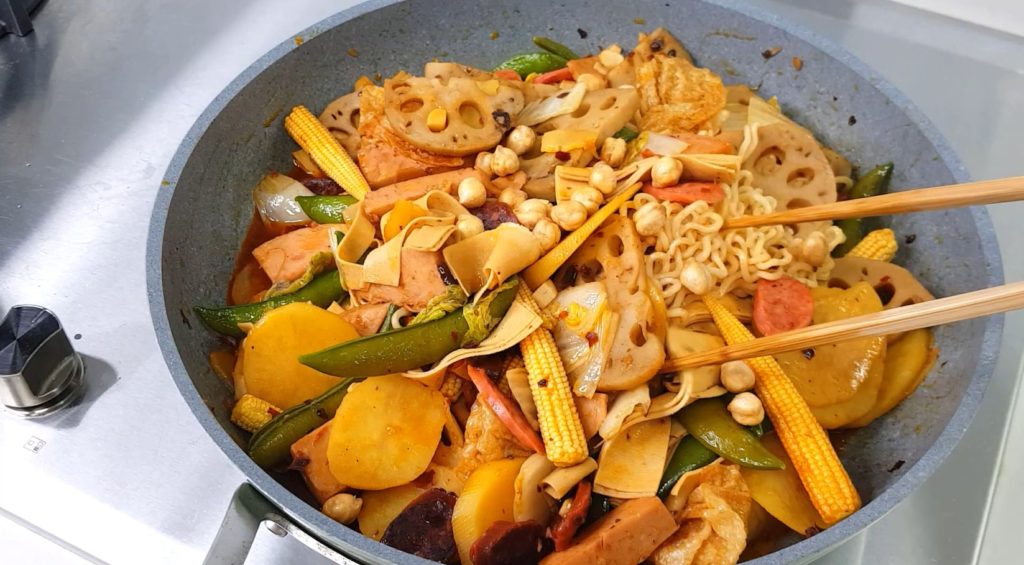
It is the perfect mala xiang guo recipe for cold rainy days. I make it when I want hotpot flavor without the pot, the gas burner, and the two-hour commitment. Only one frying pan, whatever is in my fridge, and twenty minutes until dinner. My family asks for this when the weather turns; it is that kind of food.
Why You’ll Love This Recipe
- Use whatever you have: The recipe is built for clearing the fridge. No exact shopping list needed; the method adapts to whatever meat, vegetables, and noodles are on hand.
- One pan only: Everything cooks in a single frying pan. No boiling water, no hotpot burner, no mountain of dishes after.
- Fast and flexible: From fridge to table in about twenty minutes. The only variable is how long your slowest vegetable takes to soften.
The Culinary Secrets Behind This Dish
The order of adding ingredients matters because different components need different heat exposure. Potatoes and lap cheong go in early so the potatoes take on color through the Maillard reaction and the sausage renders its fat into the oil. That rendered fat carries spice compounds from the mala base across the whole dish. Meat goes next so it browns rather than boiling in the stock that comes later. The stock and mala base only hit the pan after the solids have seared; this keeps textures distinct instead of stewing everything together.
The final stage, where you reduce the sauce until only some remains, is what separates xiang guo from hotpot. In hotpot you dip and eat; here the sauce clings. Reducing concentrates the capsaicin and hydroxy-alpha-sanshool, the compound that creates mala’s signature numbing. That coating quality is why this works with noodles; they soak up the reduced sauce rather than sitting in soup.
What You’ll Need
Equipment
- Frying pan: A wide one with some depth, because you are piling in a lot of ingredients and need surface area for frying before the stock goes in.
Ingredients
Choice of main ingredients
- Cabbage, potato, lotus root, ladyfinger: These are your bulk vegetables. Cabbage wilts down and soaks sauce; potato needs early frying for color; lotus root stays crunchy; ladyfinger thickens slightly.
- Enoki, king oyster, honshimeji, black fungus: Mushrooms give savory depth and varied textures. Enoki soaks up spice; king oyster stays meaty; black fungus adds crunch.
- Chicken, pork, sausage, luncheon meat: Use whatever you have. Lap cheong in particular renders sweet fat that balances the heat.
- Fish, prawn, sotong: Quick-cooking seafood that goes in late so it does not overcook and turn rubbery.
- Sweet potato noodles, instant noodles: Sweet potato noodles are chewy and hold sauce well; boil and drain instant noodles before adding.
- Tofu, beancurd skin: Tofu soaks up mala; fried beancurd skin goes in last, so it doesn’t break into small pieces.
Aromatics and Sauce
- 4 tbsps oil: For frying the aromatics and potatoes; you need more than a stir-fry because the mala base needs fat to carry its flavor.
- 10 garlic cloves, cut into chunks: Chunky cut so they do not burn; they sweeten and perfume the oil.
- Mala hotpot base: The soul of the dish. Buy the Sichuan brands at Chinese supermarkets; they vary hugely in numbingness and salt.
- 1 cup chicken stock: Creates steam to cook vegetables through and gives you sauce to reduce.
- Salt, to taste: Usually not needed; the mala base is salty. Taste first.
- Extra dried chillies: For more heat if your base is mild or you want to suffer properly.
Garnish and toppings
- Peanuts: Crunchy counterpoint to soft vegetables and slippery noodles.
- Coriander: Fresh lift at the end; traditional cooling balance to heaty mala.
Step-by-Step Cooking Guide
1: Prep all ingredients
- Cut cabbage into rough squares, potato and lotus root into thin slices so they cook through, ladyfinger into halves or thirds. Slice mushrooms, chunk the meat, shell the prawns. Keep seafood separate; it cooks fast and goes in later.
2: Fry aromatics
- Put your frying pan over medium-high heat. Add the oil, then the garlic and dried chillies. Fry until you can smell garlic clearly, about 30 seconds. Do not let it brown; bitter garlic ruins the dish.
3: Fry potatoes and lap cheong
- Add potatoes and lap cheong first. Fry, turning occasionally, until the potato edges take on light brown color. This takes 4-5 minutes. The sausage fat renders into the oil and flavors everything that follows.
4: Add and cook meat
- Add chicken, pork, luncheon meat, whatever meat you are using. Spread it out, let it sear. Fry until cooked through, about 3-4 minutes. You want some browning, not boiling.
5: Add vegetables, seafood, and stock
- Now pile in the remaining vegetables, mushrooms, tofu, and seafood. Pour in the chicken stock. Mix well so everything gets some liquid. The stock will steam the harder vegetables through.
6: Season with mala base
- Add mala hotpot base a spoonful at a time, tasting as you go. I start with two tablespoons for a mild batch, up to four if my family wants to feel the numbing. Mix thoroughly, taste, and add salt or more base only if needed.
7: Add noodles and reduce
- Add fried beancurd skin and noodles now. Mix well and keep cooking until the liquid reduces and only some sauce remains clinging to the ingredients. This takes about 3-4 minutes of active tossing. The noodles should be tender and coated, not swimming.
8: Garnish and serve
- Scatter peanuts and coriander over the top. Serve straight from the pan. It looks dramatic and saves a dish.
Ingredient Substitutions & Variations
Cooking should be adaptable! If you’re missing a few items, here is how you can easily swap them out while keeping the same incredible flavor profile:
| Ingredient | Substitute | Taste & Texture Impact |
| Chicken stock | Water or vegetable stock | Acceptable. The dish loses some savoriness and depth; add a splash more soy sauce to compensate. |
Recipe twists:
| Variation | Description & Culinary Details |
| Vegetarian version | Omit all meat and seafood, double the mushrooms, and add firm pressed tofu. Use vegetable stock. The mushrooms give enough umami to carry the dish. |
Allergen Friendly Adjustments
- Gluten-Free: Not as written. The mala hotpot base often contains wheat-based soy sauce or bean pastes, and instant noodles are wheat-based. Use a certified gluten-free mala base and swap noodles for sweet potato noodles or rice to make this gluten-free.
- Dairy-Free: Already dairy-free. No milk, butter, or cream anywhere in this dish.
- Nut-Free: Not as written. Peanuts are a garnish here. Simply omit them; the dish loses crunch but not flavor. Check your mala base label, as some brands use peanut oil.
Serving and Pairing Suggestions
- Jasmine tea: Hot and unsweetened, it cuts the grease and the numbing sensation clears faster.
- Steamed white rice: Essential if you have made it spicy. The starch absorbs capsaicin and gives you relief between bites.
- Cold cucumber salad: A classic Sichuan pairing; the cool crunch and black vinegar brightness reset your palate.
Storage, Reheating, and Freezing Guide
- Refrigeration: Keeps 2 days in the fridge. The numbing sensation fades and the spice can turn slightly bitter, so eat quickly.
- Reheating: Pan-fry with a splash of water or stock to loosen the sauce. Microwave works but makes seafood rubbery.
- Freezing: Not recommended. Tofu and noodles turn spongy and disintegrate; the sauce separates. This is a fresh-eat dish.
Frequently Asked Questions (FAQ)
▶ Do I really need extra salt?
It depends on your mala base. Most bases are very salty from fermented bean pastes and soy sauce. I always add the base first, mix, taste, then decide if salt is needed. You will rarely need more than a pinch.
▶ Can I make this with just vegetables?
Yes, absolutely. The base recipe is flexible; use whatever you have. The only rule is grouping by cooking time: hard vegetables and cured meats first, quick-cooking seafood and leafy things later.
Mala Xiang Guo (Sichuan Spicy Stir-Fry)
Ingredients
Choice of ingredients
- Vegetable cabbage, potato, lotus root, ladyfinger
- Mushroom enoki, king oyster, honshimeji, black fungus
- Meat chicken, pork, sausage, luncheon meat
- Seafood fish, prawn, sotong
- Noodles sweet potato noodles, instant noodles
- Others tofu, beancurd skin
Base and seasoning
- 4 tbsps Oil for frying
- 10 – 12 cloves Garlic cut into small chunks
- Mala hotpot base
- 1 cup Chicken stock
- Salt if needed
- Extra cut dried chillies for more spiciness
Garnish
- Peanuts
- Coriander
Instructions
- Cut and slice all ingredients.
- Heat oil in frying pan. Add garlic and dried chilli, fry until fragrant.
- Add potatoes and lap cheong, fry potatoes until slightly brown for added fragrance.
- Add all meat products, fry until cooked.
- Add the rest of the ingredients and chicken stock. Mix well.
- Add in mala hotpot base according to your spice level. Mix well. Taste and add more salt or mala hotpot base if needed.
- Now add in fried beancurd skin and noodles. Mix well and cook until there's only some sauce left.
- Garnish and serve.
Video
Gobble these up too!

My dad used to come home with too much sotong. This 15-minute squid stew is…
Transform kang kong into something irresistible with Lao Gan Ma and a handful of pantry…
Few dishes deliver the dramatic flavor return for minimal kitchen time quite like a classic…
This stir-fried lemongrass pork in chilled lettuce cups captures that balance with effortless elegance. Minced…