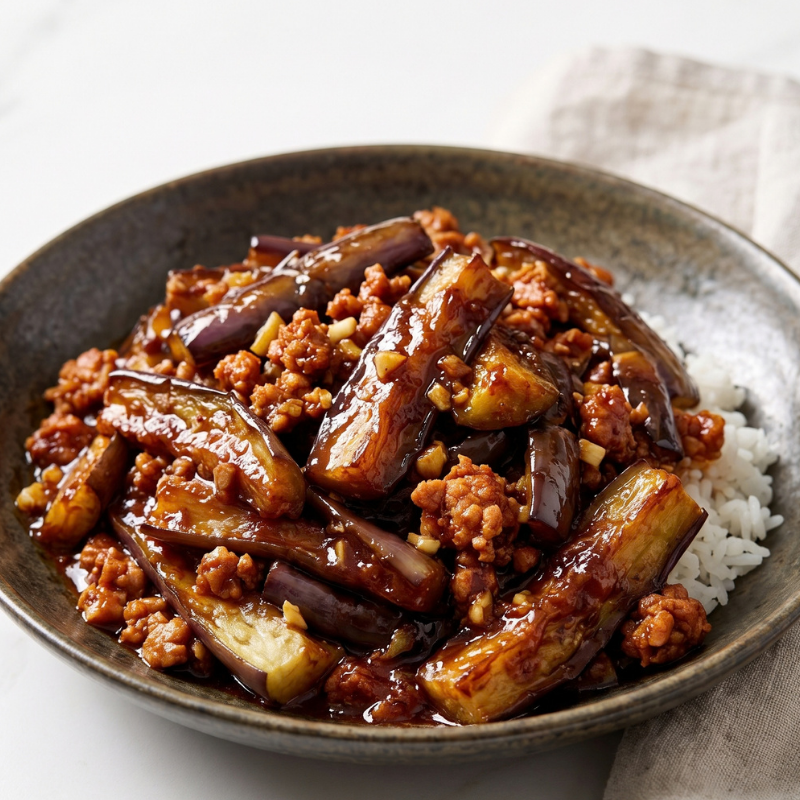
Stir-Fried Sichuan Brinjal with Minced Pork, 鱼香茄子 (yu xiang qie zi), is a Sichuanese rice classic of deep-fried brinjal braised in a glossy, savory-sweet sauce with pork and hot bean paste. It sits on every economical mixed rice stall in Singapore for good reason: cheap to make, impossible to stop eating.
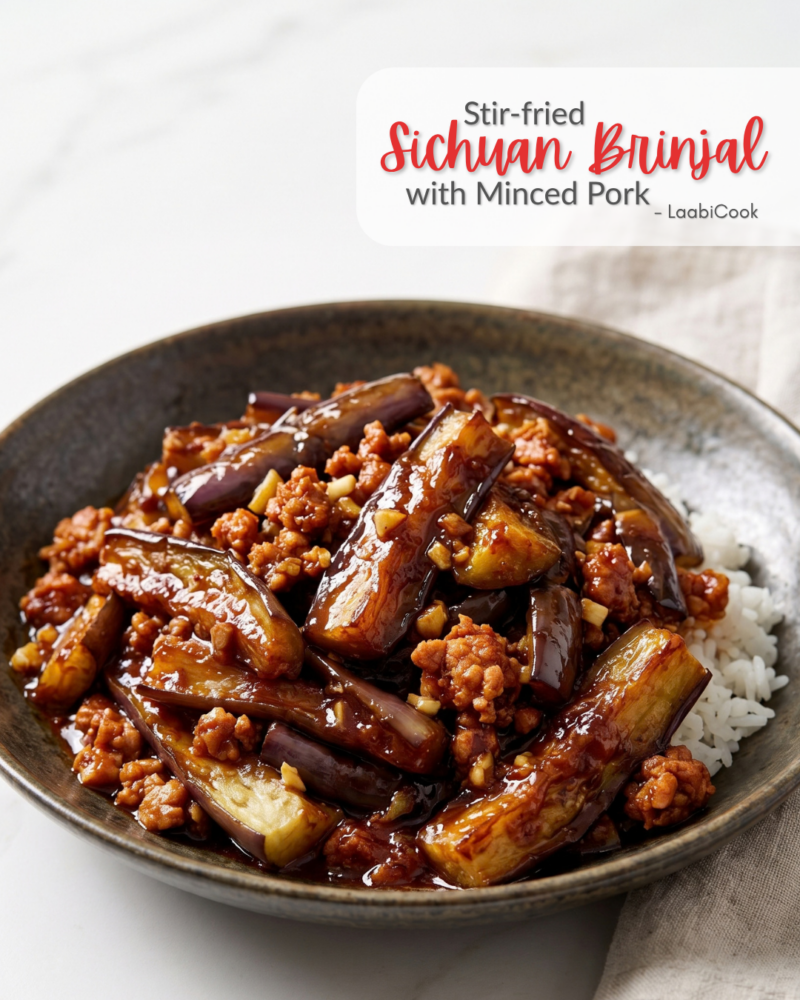
Brinjal is my favorite vegetable. I order it whenever I see it at the economical rice stall, and this is the version I learned to cook at home so I do not have to wait in line. The deep-fry step is non-negotiable for that silky, custardy interior. The sauce clings. The rice disappears. You will understand why this sichuan brinjal recipe has survived a thousand Sichuan winters and every Singaporean food court renovation.
Why You’ll Love This Recipe
- Economical rice stall flavor at home: Hot bean paste, Worcestershire sauce, and cornflour slurry give you the exact glossy, savory-sweet profile you pay S$4 for at the stall. Only 7 core ingredients if you count the sauces as pantry staples.
- Texture that converts brinjal skeptics: The 2-3 minute deep-fry collapses the spongy structure into something silky and rich that soaks up sauce like a sponge. No mushy cafeteria eggplant here.
- One wok, 20 minutes: Deep-fry, drain, build sauce, combine. The active cooking time is short enough for a weeknight, and the dish holds warm while you finish the rice.
The Culinary Secrets Behind This Dish
Deep-frying brinjal before saucing is the step home cooks skip and restaurants never do. At 180°C oil, the exterior browns through Maillard reactions while the interior collapses into a custardy texture. This structural breakdown is what lets the brinjal absorb sauce deeply instead of letting it pool on the plate. The brief 2-3 minute fry also drives off moisture that would otherwise dilute your sauce into soup.
The cornflour slurry works twice here. Mixed into the sauce base, it thickens the liquid phase so it clings rather than runs. More importantly, the gelatinise starch creates a glossy surface that catches light, the visual cue of a proper Chinese stir-fry. The sugar balances the salt and fermented funk of hot bean paste; without it, the dish reads as harsh. Taste your bean paste first, some brands run saltier than others, and adjust the sugar accordingly.
What You’ll Need
Equipment
- Wok: You need high sides for safe deep-frying and the curved surface for efficient stir-frying. A flat-based wok or deep skillet works in a pinch, but you will use more oil.
- Paper towels: Essential for draining the fried brinjal. Proper draining prevents greasy sauce and gives you that light, absorbent texture instead of oil-slogged flesh.
Ingredients
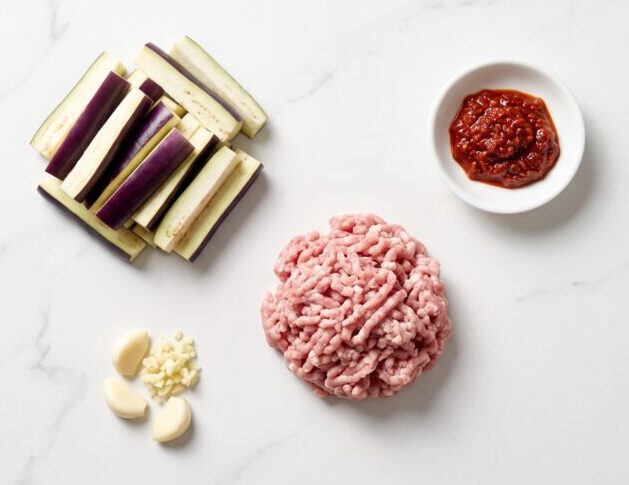
For deep-frying
- 1 cup oil, for deep-frying: Any neutral oil with a high smoke point. You are not consuming it all; most stays in the wok and gets discarded.
- 750 g brinjal, quartered and cut into 5-cm lengths: Long purple Asian brinjal preferred; it has fewer seeds and thinner skin than the globe variety. The 5-cm length gives you manageable pieces that hold together.
For the stir-fry
- 2 tbsps oil: Reserved oil from deep-frying.
- 3 cloves garlic, minced: The aromatic foundation. Minced fine so it perfumes the oil quickly without burning.
- 250 g minced pork: Provides savory depth and textural contrast. The fat renders into the sauce, carrying flavor.
- 2 tbsps hot bean paste (辣豆瓣酱): The soul of the dish. Fermented broad bean and chili paste from Sichuan; brands vary wildly in salt and heat, so taste before adding extra soy sauce.
- 1 tsp rice wine: Shaoxing or rice wine. Adds aromatic complexity and helps deglaze any fond on the wok bottom.
- 1 tsp light soy sauce: For salinity and umami without darkening the sauce color.
- 1 tbsp Worcestershire sauce: The Singaporean economical rice stall secret. Adds tang, depth, and that particular savory-sweet note you cannot place but recognize instantly.
- 2 tsps sugar: Balances the salt and fermentation. Start here and adjust; some hot bean pastes need more.
- 1 tsp cornflour, mixed with 1 tsp water: Slurry for gloss and cling. Mix just before adding; cornflour settles fast.
Step-by-Step Cooking Guide
1: Deep-fry the brinjal
- Heat 1 cup oil in your wok over high heat until shimmering. Add brinjal pieces in batches if needed; crowding drops the temperature and makes them greasy. Fry for 2 to 3 minutes until golden at the edges and the flesh yields softly when poked. Remove with a slotted spoon and drain thoroughly on paper towels. Reserve 2 tbsps oil and discard the rest.
2: Aromatics and pork
- Wipe the wok clean or use a fresh one. Heat the 2 tablespoons of reserved oil over medium-high heat. Add minced garlic and stir-fry until fragrant, about 30 seconds, watching closely so it does not brown. Add minced pork and break up with your spatula. Stir-fry until the pink is gone and the pork is slightly crisped at the edges, about 2 minutes.
3: Build the sauce
- Add hot bean paste, rice wine, light soy sauce, Worcestershire sauce, sugar, and the cornflour slurry. Stir vigorously to combine; the slurry will thicken almost immediately into a glossy coating. Taste now: you want savory-sweet with a little spiciness. Adjust sugar or soy if your bean paste ran salty.
4: Reunite and finish
- Return the fried brinjal to the wok. Fold gently to coat every piece in sauce. Let it cook 30 seconds to 1 minute, just until the sauce tightens and clings to the brinjal like lacquer. The pieces should look glazed, not swimming. Serve immediately over hot rice.
Ingredient Substitutions & Variations
| Ingredient | Substitute | Taste & Texture Impact |
| Hot bean paste (辣豆瓣酱) | Gochujang or doubanjiang from Korean or non-Sichuan Chinese brands | Gochujang is sweeter and less fermented; you will miss the complex funk. Doubanjiang from other regions may be milder. The dish works but tastes flatter. Seek out Pixian douban if you can. |
| Worcestershire sauce | 1 tsp tamarind paste + 1/2 tsp soy sauce + pinch of sugar | You lose the specific savory depth that makes this taste like Singapore economical rice. The homemade version is acceptable but noticeably different. |
| Minced pork | Minced chicken, crumbled firm tofu, or omitted for vegetarian | Chicken is leaner and less rich; the sauce will need a drop more oil. Tofu soaks up flavor well but adds no rendered fat. Omitting entirely still gives you a good dish, just less substantial. |
| Rice wine | Dry sherry or omit with extra splash of water | Sherry works in a pinch. Omitting loses aromatic complexity but the dish survives; add the water to keep sauce consistency right. |
Recipe twists:
| Variation | Description & Culinary Details |
| Salted Fish Brinjal (咸鱼茄子煲) | Add 1 tablespoon diced salted fish to the pork step, finish in a claypot over low heat for 5 minutes. The fermented fish transforms the dish into a Cantonese classic with deeper umami. |
| Vegetarian with Mushrooms | Replace pork with 200g shiitake caps, quartered. Fry the mushrooms first to drive off moisture, then proceed. The texture mimics meat surprisingly well. |
Allergen Friendly Adjustments
- Gluten-Free: Not as written. Standard soy sauce and Worcestershire sauce contain wheat. Use tamari and a gluten-free Worcestershire or the tamarind substitute. Check your hot bean paste; some brands use wheat as filler.
- Dairy-Free: Already dairy-free. No milk, butter, or cream in the classic preparation.
- Nut-Free: Already nut-free. No tree nuts or peanuts in the ingredient list.
- Soy-Free: Not possible as written. Hot bean paste, soy sauce, and Worcestershire all contain soy. The dish is built on fermented soybean products.
Serving and Pairing Suggestions
- Jasmine rice: Non-negotiable. The sauce demands a neutral, absorbent base. Brown rice works but competes with the delicate flavors.
- Hot Chinese tea or barley water: The tea cuts through the oil; barley water is the traditional Singaporean food court pairing for heatiness balance.
- Stir-fried kai lan with garlic: Bitter greens provide textural contrast and the cooling properties my mother insists on when we eat fried food.
Storage, Reheating, and Freezing Guide
- Refrigeration: Cool completely and refrigerate in an airtight container up to 3 days. The brinjal will soften further; this is unavoidable but not unpleasant.
- Reheating: Microwave covered with a damp paper towel, or reheat in a wok with a splash of water to loosen the sauce. The texture revives better than you expect.
- Freezing: Not recommended. The fried brinjal turns mushy and weeps liquid upon thawing, breaking the emulsified sauce. Make fresh; it is fast enough.
Frequently Asked Questions (FAQ)
▶ Why deep-fry instead of just stir-frying the brinjal raw?
Raw brinjal sponges up all your sauce and turns to mush without developing flavor. The brief fry collapses the cell structure so it absorbs sauce elegantly, not greedily, and builds color through browning. Skip it and you have a different, lesser dish.
▶ My sauce is thin and watery. What went wrong?
Either your cornflour slurry settled before adding, your wok was not hot enough to activate the starch, or you added too much liquid. Push everything to one side, let the pool of sauce bubble hard for 30 seconds to reduce, then toss.
▶ Can I use the big purple globe brinjal from the supermarket?
You can, but peel it first; the skin is thick and bitter. Cut into slightly smaller pieces as it is denser. Asian brinjal is worth seeking out at wet markets or Indian grocers for fewer seeds and better texture.
▶ Is this very spicy?
Depends entirely on your hot bean paste. Some brands are mild and savory; others blow your head off. Start with 1 tablespoon, taste the sauce, add more if you want heat. The sugar tames the burn significantly.
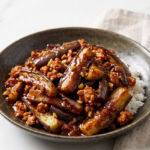
Stir-Fried Sichuan Brinjal with Minced Pork
Equipment
- wok
- paper towels
Ingredients
- 1 cup oil for deep-frying, reserve 2 tbsps for stir-fry
- 750 g brinjal , quartered and cut into 5-cm lengths
- 3 cloves garlic , minced
- 250 g minced pork
- 2 tbsps hot bean paste
- 1 tsp rice wine
- 1 tsp light soy sauce
- 1 tbsp Worcestershire sauce
- 2 tsps sugar
- 1 tsp cornflour , mixed with 1 tsp water
Instructions
- Heat oil in wok over a high fire. When hot, deep-fry brinjal for 2 to 3 mins. Remove and drain on paper towels. Reserve 2 tbsps oil and discard the rest.
- In wok, heat reserved oil and stir-fry garlic till fragrant.
- Add pork; stir-fry for another 2 mins.
- Add bean paste, rice wine, soy sauce, Worcestershire sauce, sugar and cornflour mixture. Stir to mix well.
- Bring brinjal back to wok and allow to cook until sauce thickens.
- Serve hot with rice.
Gobble these up too!

Brinjal lovers, this one’s for you. Pork, garlic, hot bean paste, cornflour slurry for gloss.… Cook recipe >
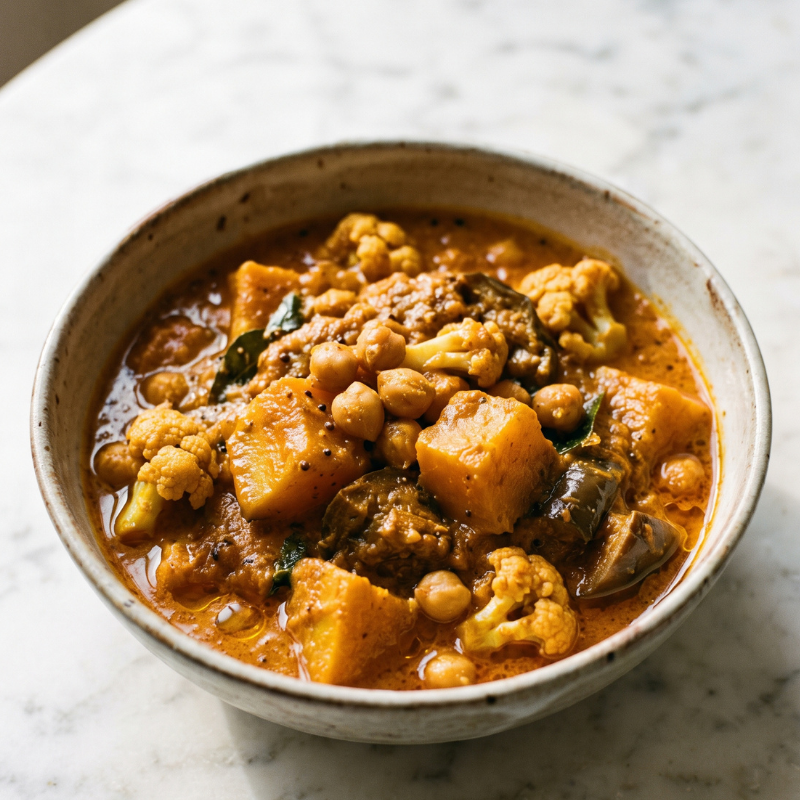
This chickpea, pumpkin and eggplant curry simmers into something truly comforting. Serve it over rice… Cook recipe >
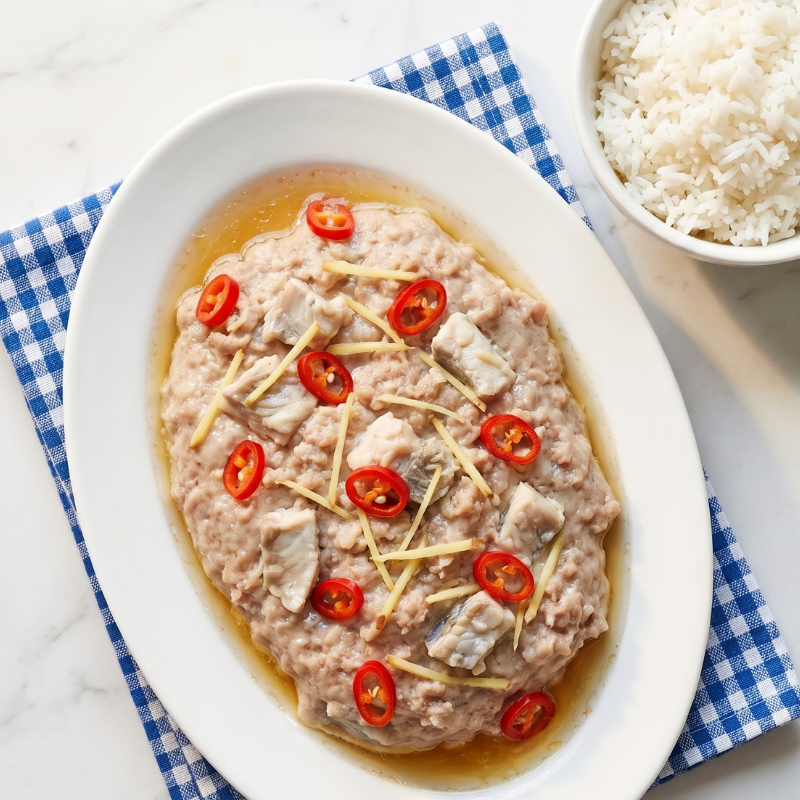
This homey Cantonese classic asks little of you and gives back so much. Let the… Cook recipe >
Weeknight cooking should feel like a hug. This beef and tofu recipe delivers deep flavor… Cook recipe >