There is a particular kind of quiet that settles over a kitchen when something good is simmering on the stove. The smell of soy and sesame oil curling up from a hot pan, potatoes beginning to turn golden at the edges, dried mushrooms releasing their dark, foresty depth into warm water; this is the sound of supper taking care of itself. A pork potato mushroom stew asks very little of you once it gets going, and it gives back a deep, savory bowlful that clings to steamed rice the way comfort food should.
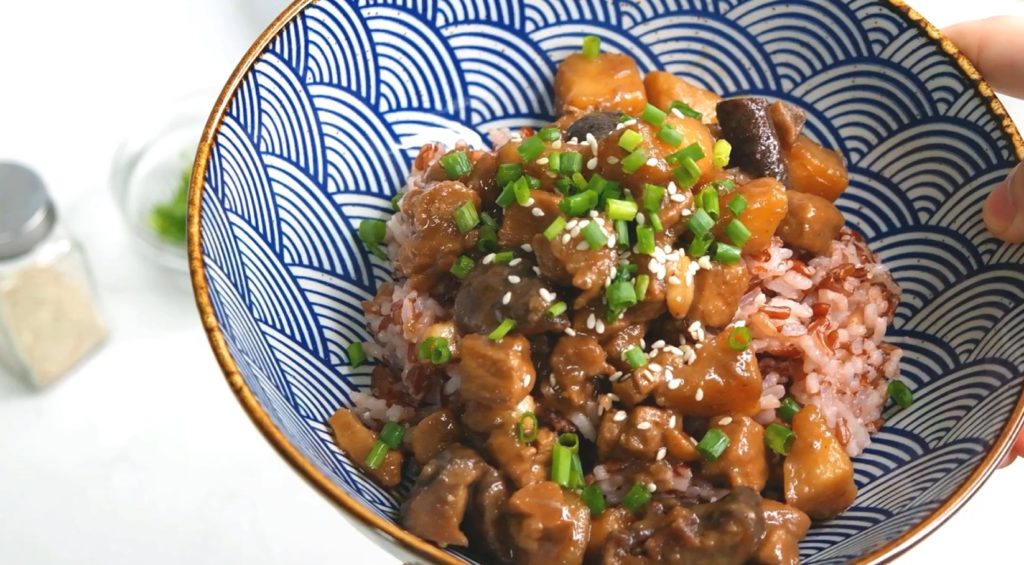
This is the sort of dish that grew up in home kitchens rather than restaurant menus. No precise knife work, no last-minute panic. You brown, you pour, you let the pan do the rest. By the time the liquid has reduced to a glossy, clinging sauce, the pork will be tender, the potatoes creamy at their centers, and your kitchen will smell like somewhere you want to be.
Why You’ll Love This Recipe
- One pan from start to finish: Everything happens in a single frying pan. That means one thing to wash, and it also means every layer of flavor stays right where it belongs.
- Built for busy evenings: After a quick sequence of browning and stirring, the stew covers itself and simmers. You are free to set the table, pour a drink, or simply lean against the counter and breathe.
- Earthy depth from dried mushrooms: Soaking dried mushrooms creates a stock more complex than plain water could ever give you, and the re-hydrated mushrooms themselves carry a meaty, concentrated savor that fresh ones cannot quite match.
The Culinary Secrets Behind This Dish
Browning the potatoes before the liquid goes in is not just for color. That brief contact with hot oil jump-starts the Maillard reaction, creating hundreds of flavor compounds that will survive the simmer and deepen the finished stew. The same principle applies to the pork; you want a little caramelization on the exterior before the soy sauces and wine create a braising environment. Once the liquid arrives, the temperature drops and surface browning stops, so that initial sear is your only chance to build this foundational layer.
Dried mushrooms carry two gifts. First, their cell walls have already broken down through dehydration, so they re-hydrate into a tender, almost velvety texture that absorbs sauce beautifully. Second, the soaking water becomes an umami-rich stock full of soluble glutamates. Using that water rather than discarding it means you are seasoning from within, not just laying flavor on top. The soy sauces work in tandem; light soy brings salt and fermentation brightness, while dark soy contributes color and a subtle molasses depth. The sugar balances the salt, and the Shaoxing wine, with its faint dried-fruit character, bridges the gap between the earthiness of mushrooms and the richness of pork fat.
What You’ll Need
Equipment
- Large frying pan or skillet: You need surface area to brown potatoes and pork without crowding, plus high enough sides to hold the simmering liquid without spattering your stove.
Ingredients
- 500 g pork, cubed: Shoulder or belly both work well here. The fat renders gently during simmering, keeping the meat succulent and enriching the sauce.
- 500 g potato, peeled and cubed: Starchy varieties will break down slightly to thicken the sauce; waxy ones hold their shape better. Either way, the cubes should be roughly the same size as your pork for even cooking.
- ¼ cup oil, for frying: A neutral oil with a reasonably high smoke point lets you brown without burning. You need more than a slick here; the potatoes need room to fry properly.
Mushrooms and liquid
- 2 handful dried mushrooms, soaked and cut into bite-sized pieces: Shiitake are traditional and reliable, but any dried mushroom with good depth will serve you. Their soaking water is liquid gold; do not pour it away.
- Water, used to soak mushrooms: This becomes your cooking liquid, carrying concentrated mushroom essence into every bite of the finished stew.
- Additional water: Added as needed to almost cover the solid ingredients before simmering begins.
Seasonings
- 2 tbsps light soy sauce: The salt backbone of the dish, with a clean, fermented brightness.
- 1 tbsp dark soy sauce: Adds a deep chestnut color and rounds out the salt with a touch of caramel sweetness.
- 1 tbsp sugar: Balances the salt and soy, and helps the sauce reduce to a subtle gloss.
- ½ tbsp sesame oil: Added to the seasonings rather than the fry, so its delicate aroma stays alive through the cooking.
- 3 tbsps Shaoxing hua tiao wine: A Chinese cooking wine with a gentle, aromatic sweetness that lifts the heaviness of pork and potato.
- ⅛ tsp salt: A cautious amount, since the soy sauces bring significant salt; you can adjust at the end if needed.
- ⅛ tsp black pepper: A quiet warmth that ties the savory elements together without announcing itself.
Garnish
- Sesame seeds: A small crunch and a visual cue that this is a finished, cared-for dish.
- Spring onions, chopped: Fresh, sharp greenery on top of a deep brown stew; the contrast is as much about flavor as it is about looks.
Step-by-Step Cooking Guide
1: Heat the oil
- Pour the oil into your frying pan and set it over a medium flame. Give it a minute to come fully up to temperature; a cube of potato should sizzle assertively when it hits the surface.
2: Brown the potatoes
- Add the cubed potatoes and let them fry, turning occasionally, until they take on a light golden color at the edges. This should take 5-7 minutes. You are not cooking them through yet, just building a flavorful crust.
3: Add garlic
- Toss in the garlic and stir-fry for about 30 seconds, until the smell rises up warm and insistent. Do not let it brown; bitter garlic will haunt the finished stew.
4: Sear the pork
- Add the cubed pork and stir-fry until the exterior turns from pink to a pale, slightly firm opacity. The pieces should show some light browning but need not be cooked through; the simmer will finish the job.
5: Add mushrooms
- Add the soaked, cut mushrooms and fry for another 30 seconds, just long enough for them to meet the heat and begin releasing their aroma into the pan.
6: Season everything
- Pour in the light soy sauce, dark soy sauce, sugar, sesame oil, Shaoxing wine, salt, and black pepper. Stir thoroughly so each piece carries some of the dark, glossy coating.
7: Add the liquids
- Pour in the reserved mushroom soaking water, then top up with additional fresh water until most of the solid ingredients are just covered. Stir once more to distribute everything evenly.
8: Simmer until reduced
- Cover the pan, raise the heat to bring the liquid to a boil, then reduce to medium and let it simmer. Lift the lid to stir occasionally, and watch for the moment when the liquid has reduced to a thick, clinging sauce rather than a soup. This will take roughly 25-35 minutes depending on your pan and flame. The potatoes should yield easily to a gentle prod with a spoon.
9: Serve and garnish
- Ladle the stew over steamed rice while it is hot and saucy. Scatter sesame seeds and chopped spring onions over each bowl. The contrast of temperatures, the warm stew against the fresh green onions, is part of what makes this so satisfying.
Ingredient Substitutions & Variations
Cooking should be adaptable! If you’re missing a few items, here is how you can easily swap them out while keeping the same incredible flavor profile:
| Ingredient | Substitute | Taste & Texture Impact |
| Dried mushrooms | Fresh mushrooms | You lose the concentrated depth and the silky texture of rehydrated dried mushrooms. The dish will still be good, but noticeably lighter in umami. |
| Shaoxing hua tiao wine | Dry sherry, or omit and add a splash of rice vinegar with extra sugar | Dry sherry is the closest match. Omitting entirely costs you a layer of complexity; the vinegar workaround gives acidity but not the same aromatic warmth. |
| Pork belly or shoulder | Boneless chicken thighs | The stew becomes leaner and the sauce less rich. Chicken thighs stay moist, but the finished dish lacks the silky mouthfeel that pork fat provides. |
Recipe twists:
| Variation | Description & Culinary Details |
| Add root vegetables | Replace half the potato with peeled, cubed daikon or carrot. The daikon becomes almost translucent and sweet, absorbing sauce like the potatoes do, while adding a different kind of earthiness. |
| Spice it up | Fry a few dried chilies or a spoonful of doubanjiang along with the garlic. The heat cuts through the richness and changes the character from soothing to gently invigorating. |
Allergen Friendly Adjustments
- Gluten-Free: Not as written. Both light and dark soy sauces typically contain wheat. Substitute tamari or certified gluten-free soy sauces to make this dish gluten-free.
- Dairy-Free: This recipe is already dairy-free. No milk, butter, or cream appears anywhere in the ingredient list.
- Nut-Free: This recipe is already nut-free. Sesame seeds and sesame oil come from sesame, which is a seed rather than a tree nut, though some people with nut allergies also react to sesame. If this applies to you, simply omit both.
- Soy-Free: Not as written. The soy sauces are fundamental to the flavor. Coconut aminos could substitute in a pinch, but the taste profile would shift significantly toward sweetness and away from the deep savor this stew depends on.
Serving and Pairing Suggestions
- Steamed jasmine rice: The natural home for this stew. The rice soaks up every drop of reduced sauce, and the plain starch gives your palate a rest between bites of intense savoriness.
- Cold Chinese beer or jasmine tea: A crisp lager cuts through the richness of the pork fat. If you prefer not to drink alcohol, hot jasmine tea offers a floral counterpoint that lifts the earthy mushrooms.
- Simple stir-fried greens: Bok choy or gai lan with nothing but garlic and a touch of salt. The freshness and slight bitterness balance the density of the stew.
Storage, Reheating, and Freezing Guide
- Refrigeration: Cool completely and refrigerate in an airtight container for up to 3 days. The flavors will actually deepen overnight as the mushrooms and soy continue to mingle.
- Freezing: Not recommended. Potatoes change texture dramatically when frozen and thawed, becoming grainy and prone to falling apart. The stew will taste fine, but the mouthfeel suffers enough that it is worth making fresh.
- Reheating: Warm gently in a covered pan over low heat with a splash of water to loosen the sauce. The microwave works in a pinch, but stir halfway through and expect the potatoes to be slightly softer than they were.
Frequently Asked Questions (FAQ)
▶ Why did my potatoes fall apart in the stew?
You likely used a very starchy variety, or simmered too vigorously once the liquid was added. Next time, choose a waxy potato, or keep the heat at a true medium simmer rather than a hard bubble.
▶ Can I use fresh mushrooms instead of dried?
You can, but you will need to replace the mushroom soaking water with a good stock. The stew will be milder and less complex. If you can find dried shiitake even in a small quantity, mix them with fresh for a compromise.
▶ Do I really need both light and dark soy sauce?
For the intended flavor, yes. Light soy brings salt and fermentation; dark soy brings color and a subtle sweetness. If you only keep one in your cupboard, use light soy and add a tiny extra pinch of sugar, knowing the finished stew will be paler and slightly less rounded.
Pork, Potato & Mushroom Stew
Ingredients
- 500 g pork cubed
- 500 g potato peeled and cubed
- 2 handful dried mushrooms soaked and cut into bite-sized pieces
- Water used to soak mushrooms
- Additional water
- 1/4 cup oil for frying
Seasoning
- 2 tbsps light soy sauce
- 1 tbsp dark soy sauce
- 1 tbsp sugar
- 1/2 tbsp sesame oil
- 3 tbsps Shaoxing hua tiao wine
- 1/8 tsp salt
- 1/8 tsp black pepper
Garnish
- Sesame seeds
- Spring onions chopped
Instructions
- Heat oil in frying pan, over medium fire.
- Add potatoes fry until slightly brown.
- Then add garlic and fry for 30 seconds until fragrant.
- Add cubed pork, stir-fry until slightly cooked.
- Add mushrooms, fry for another 30 seconds.
- Add in all the seasoning, mix well.
- Pour in mushroom water, top with more water until most of the ingredients are covered. Mix.
- Cover, turn up heat and bring to boil. Then turn heat to medium, let it simmer and stir occasionally until most of the water has reduced.
- Serve with rice and garnish.
Video
Gobble these up too!
-

Lemon prawns, a zesty Chinese seafood stir-fry with whiskey and spring onions. Only 7 ingredients,…
-
Learn the Teochew trick for taming bittergourd. This braised chicken uses pickled pineapple and chilli…
-
Brinjal lovers, this one’s for you. Pork, garlic, hot bean paste, cornflour slurry for gloss.…
-
No cream, no fuss, just a thick savory stew you can pull together after work.…