There is a particular hush that falls over a kitchen when a whole duck emerges from the oven, skin lacquered to amber, fat rendered to a whisper. This easy roast duck brings that moment within reach of any home cook, no special equipment or days of preparation required. The method borrows wisdom from Chinese roast duck traditions, simmering the bird first to tenderize the meat and begin the fat-rendering process, then roasting at fierce heat to transform the skin into crackling.

You will need an afternoon, yes, but not your constant attention. Most of that time is hands-off, the oven doing the work while you tend to other things. The result feeds four to six generously, with rich dipping sauces made from the same pot that bathed the duck. Gather your people, pour something warm, and bring this golden bird to the table.
Why You’ll Love This Recipe
- Deep flavor, simple method: The two-stage cooking, simmer then roast, builds layers of savoriness that belie the straightforward technique.
- Make-ahead friendly: The duck chills after simmering, so you can break the work across two days without sacrificing a thing.
- One bird, many rewards: The poaching liquid becomes your soup and your fat for roasting potatoes another day.
The Culinary Secrets Behind This Dish
The simmering step does more than partially cook the duck. Submerging the bird in seasoned liquid begins rendering fat from beneath the skin, which is the secret to that final crispness. Fat and water do not mix; as the duck simmers, fat melts and migrates outward, while the meat absorbs the aromatic broth. The subsequent air-chilling firms the skin, drying it further so that hot oven air can desiccate and blister it into shattering crackling. This is the same principle behind Peking duck’s elaborate air-drying, achieved here in a home kitchen with nothing more than your refrigerator.
Piercing the skin before roasting creates channels for remaining fat to escape. Without these vents, the fat pools beneath the skin and steams it soft. The five-spice and salt mixture served alongside is not mere seasoning; it is a traditional accompaniment that lets each diner balance the rich meat with aromatic warmth and salinity to their own taste. The sugar in the poaching liquid aids browning through the Maillard reaction, while the soy sauces provide both salt and the deep umami of fermented wheat and soy.
What You’ll Need
Equipment
- Kitchen string: Needed to truss the legs, which holds the bird compact for even cooking and presentation.
- Large lidded pan or stockpot: Must accommodate the whole duck submerged in liquid; a tall narrow pot works better than a wide shallow one.
- Roasting rack and baking dish: Elevates the duck so fat drips away and air circulates for all-over crisping.
- Fork or skewer: For piercing the skin; a fork’s tines create the right size holes without tearing.
- Large bowl: For cooling and refrigerating the strained stock.
Ingredients

For the duck
- Duck, 2 kg, cleaned: The foundation of the dish; size matters for timing, so aim close to 2 kg.
- Garlic, 2 cloves, halved: Perfumes the poaching liquid and thus the meat from within.
- Spring onions, 3 stalks, 7-cm lengths: Adds gentle allium sweetness to the cooking broth.
- Ginger, 3 cm piece, thickly sliced: Provides warming spice that cuts through duck fat.
Poaching liquid
- Dry sherry, ½ cup, optional: Adds subtle nutty depth; the dish works without it but is less complex.
- Dark soy sauce, ½ cup: Contributes color, caramel notes, and salinity.
- Light soy sauce, ½ cup: Brings salt and umami without the heaviness of dark soy.
- Sugar, 1 tsp: Balances salt and aids final browning.
- Chicken stock, 500 ml: Dilutes the soy to prevent over-salting while adding body.
To serve
- Sea salt flakes, 1 tbsp: The textural crunch and clean salinity contrast with rich meat.
- Chinese five-spice powder, ½ tsp: Warm aromatics of star anise, cloves, cinnamon, Sichuan pepper, and fennel.
Step-by-Step Cooking Guide
1: Truss the duck
- Tuck the wing tips underneath the body to prevent burning, then tie the legs together at the ankles with kitchen string. This keeps the bird compact so it cooks evenly and sits steadily in the pan.
2: Prepare the poaching liquid
- Combine garlic, spring onions, ginger, sherry if using, both soy sauces, sugar, and chicken stock in your large pan. Bring to a full rolling boil over high heat.
3: Simmer the duck, first side
- Lower the trussed duck into the boiling liquid, breast side down. Cover and reduce heat to maintain a gentle simmer for 15 minutes. The liquid should bubble steadily, not violently.
4: Turn and simmer again
- Flip the duck carefully using tongs and a wooden spoon for support. Cover and simmer another 15 minutes. The meat will have firmed and begun to turn opaque.
5: Drain and cool
- Lift the duck from the pot and let it drain in a colander or over the sink for 5 to 10 minutes. The skin will look pallid and slick; this is exactly right.
6: Chill the duck
- Once cool enough to handle, transfer to a plate, cover loosely, and refrigerate at least 30 minutes or up to overnight. This drying step is crucial for crisp skin later.
7: Save the stock
- Strain the poaching liquid through a fine sieve into a large bowl, pressing gently on the solids. Cover and refrigerate; the fat will rise and solidify on top.
8: Preheat the oven
- Set your oven to 220°C, allowing a good 20 minutes to reach temperature. You want fierce heat from the start.
9: First roast, breast down
- Place the chilled duck on your rack set inside a baking dish, breast side down. Pierce the skin all over with a fork or skewer, penetrating just through the fat layer without stabbing the meat. Roast for 30 minutes.
10: Flip and finish roasting
- Turn the duck breast side up, pierce the skin again, and return to the oven for 40 minutes. The skin should be deeply golden and audibly crisp when tapped; if not, give it 10 minutes more.
11: Reduce the sauce
- While the duck roasts, lift the solidified fat (save it for roasting potatoes) from your reserved stock. Pour the de-fatted stock into a pan and boil uncovered for 5 minutes.
12: Serve with accompaniments
- Joint the roast duck into quarters and arrange on a warm platter. Serve with stock and a small dish of salt mixed with five-spice powder for dipping.
Ingredient Substitutions & Variations
Cooking should be adaptable! If you’re missing a few items, here is how you can easily swap them out while keeping the same incredible flavor profile:
| Ingredient | Substitute | Taste & Texture Impact |
| Dry sherry | Shaoxing wine or dry white wine | |
| Dark soy sauce | Additional light soy sauce plus 1 tsp molasses | You lose some caramel complexity; the color will be lighter. |
| Chinese five-spice | Ground star anise or cinnamon | Simpler flavor profile; still warming but lacks the layered complexity. |
| Spring onions | Leek greens or half a yellow onion | Leek is milder; yellow onion is stronger. Both work but change the character slightly. |
Recipe twists:
| Variation | Description & Culinary Details |
| Sichuan pepper duck | Replace the five-spice with 1 teaspoon ground Sichuan pepper and ½ teaspoon ground white pepper for numbing heat and floral notes. |
Allergen Friendly Adjustments
- Gluten-Free: Not as written; soy sauce contains wheat. Substitute tamari for both soy sauces to make gluten-free.
- Dairy-Free: This recipe contains no dairy.
- Nut-Free: This recipe contains no nuts.
- Alcohol-Free: Omit the sherry; the dish works well without it, though slightly less complex.
Serving and Pairing Suggestions
- Beverage pairing: A chilled off-dry Riesling cuts through the fat, or serve Chinese black tea for tradition.
- Starch side: Steamed white rice or mantou buns to soak up the rich sauce.
- Vegetable side: Quick-braised bok choy with garlic, using a spoonful of the reserved duck fat.
Storage, Reheating, and Freezing Guide
- Refrigeration: Store roast duck and sauce separately in airtight containers for up to 3 days.
- Reheating: Warm roast duck in a 180°C oven for 15 minutes to re-crisp skin; sauce gently on the stove-top.
- Freezing: Not recommended; the crisp skin becomes leathery and the texture of the meat suffers.
Frequently Asked Questions (FAQ)
▶ Why does the skin need to be pierced so many times?
The holes create escape routes for melting fat. Without them, the fat pools and steams the skin soft instead of allowing it to crisp.
▶ Can I skip the chilling step and roast right after simmering?
You can, but the skin will be noticeably less crisp. The refrigerator drying is what makes this an easy roast duck with restaurant-quality results.
▶ What do I do with all the rendered fat?
Save every spoonful. It is liquid gold for roasting potatoes or frying eggs.
▶ My duck is larger than 2 kg. How do I adjust?
Add 5 minutes to each simmer stage and 10 minutes to the final roasting time, checking that the skin is deeply golden and the leg joint moves easily.

Easy Roast Duck
Equipment
- Kitchen string Needed to truss the legs, which holds the bird compact for even cooking and presentation.
- Large lidded pan or stockpot Must accommodate the whole duck submerged in liquid; a tall narrow pot works better than a wide shallow one.
- Roasting rack and baking dish Elevates the duck so fat drips away and air circulates for all-over crisping.
- Fork or skewer For piercing the skin; a fork's tines create the right size holes without tearing.
- Large bowl For cooling and refrigerating the strained stock.
Ingredients
For the duck
- 2 kg duck , cleaned
- 2 cloves garlic , halved
- 3 stalks spring onions , cut into 7-cm lengths
- 3 cm piece of ginger , sliced thickly
For the poaching liquid
- ½ cup dry sherry , optiona
- ½ cup dark soy sauce
- ½ cup light soy sauce
- 1 tsp sugar
- 500 ml chicken stock
For serving
- 1 tbsp sea salt flakes , or coarse salt flakes
- ½ tsp Chinese five-spice powder
Instructions
- Tuck the wing tips underneath the body to prevent burning, then tie the legs together at the ankles with kitchen string. This keeps the bird compact so it cooks evenly and sits steadily in the pan.
- Combine garlic, spring onions, ginger, sherry if using, both soy sauces, sugar, and chicken stock in your large pan. Bring to a full rolling boil over high heat.
- Lower the trussed duck into the boiling liquid, breast side down. Cover and reduce heat to maintain a gentle simmer for 15 minutes. The liquid should bubble steadily, not violently.
- Flip the duck carefully using tongs and a wooden spoon for support. Cover and simmer another 15 minutes. The meat will have firmed and begun to turn opaque.
- Lift the duck from the pot and let it drain in a colander or over the sink for 5 to 10 minutes. The skin will look pallid and slick; this is exactly right.
- Once cool enough to handle, transfer to a plate, cover loosely, and refrigerate at least 30 minutes or up to overnight. This drying step is crucial for crisp skin later.
- Strain the poaching liquid through a fine sieve into a large bowl, pressing gently on the solids. Cover and refrigerate; the fat will rise and solidify on top.
- Set your oven to 220°C, allowing a good 20 minutes to reach temperature. You want fierce heat from the start.
- Turn the duck breast side up, pierce the skin again, and return to the oven for 40 minutes. The skin should be deeply golden and audibly crisp when tapped; if not, give it 10 minutes more.
- While the duck roasts, lift the solidified fat from your reserved stock. Pour the defatted stock into a pan and boil uncovered for 5 minutes.
- Joint the duck into quarters and arrange on a warm platter. Serve with stock and a small dish of salt mixed with five-spice powder for dipping.
Gobble these up too!
-

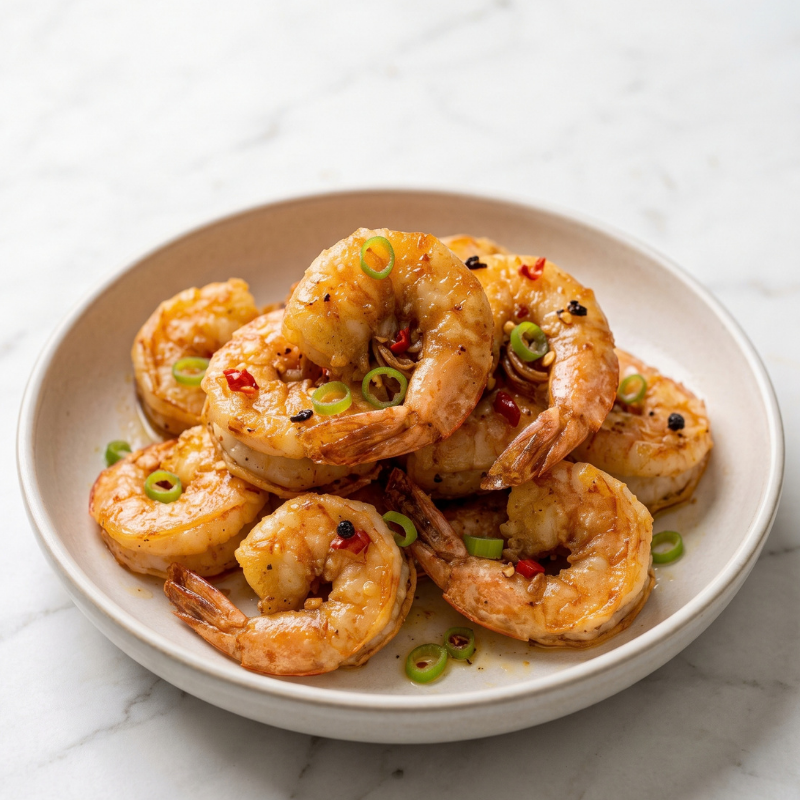
Lemon prawns, a zesty Chinese seafood stir-fry with whiskey and spring onions. Only 7 ingredients,…
-
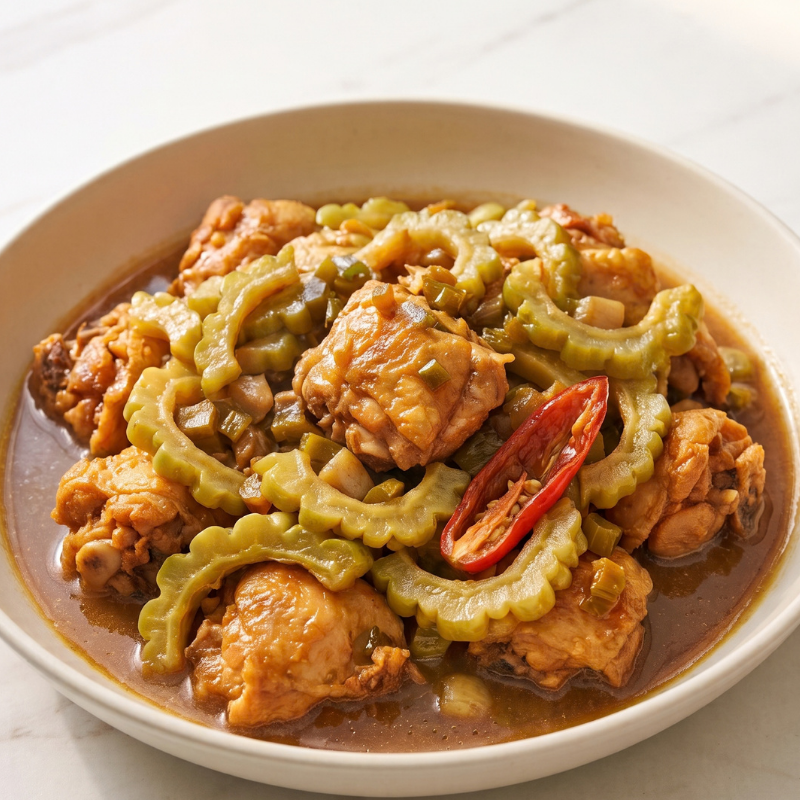
Learn the Teochew trick for taming bittergourd. This braised chicken uses pickled pineapple and chilli…
-
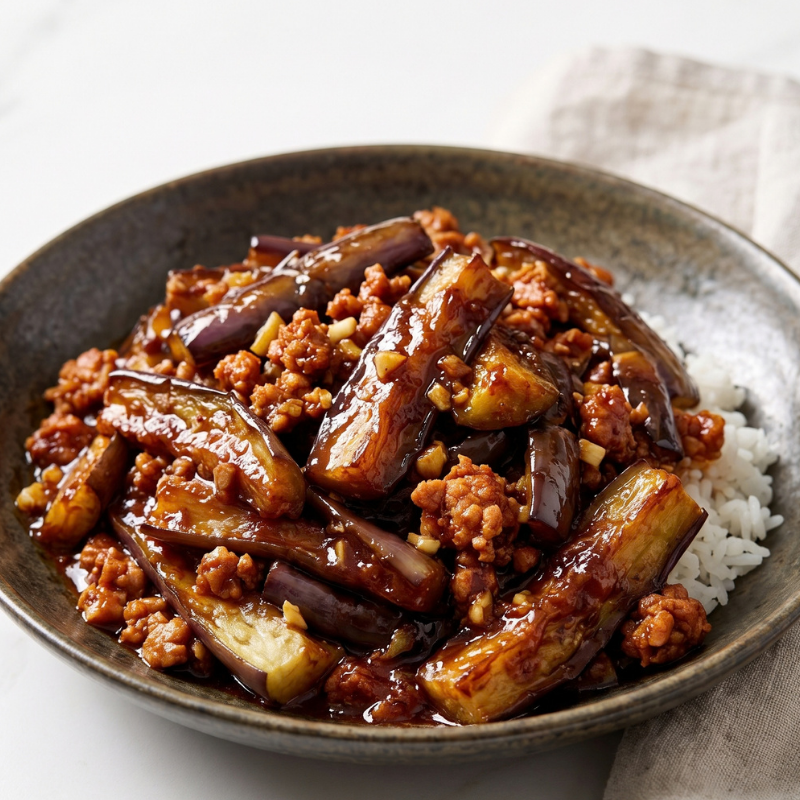
Brinjal lovers, this one’s for you. Pork, garlic, hot bean paste, cornflour slurry for gloss.…
-
This is how I clear my CNY bak kwa stash: wok-fried with halved Brussels sprouts,…