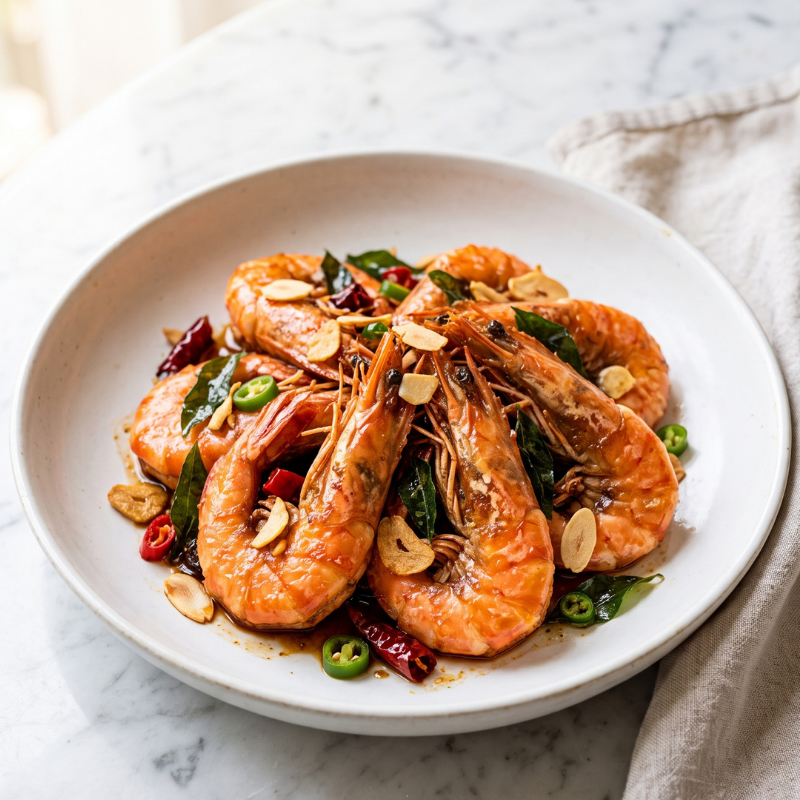
Pik Fong Tong Prawns (避风塘虾), a Cantonese tze char dish of flour-dusted prawns deep-fried until shatteringly crisp then tossed with aromatics, curry leaves, and XO sauce. The name refers to a typhoon shelter, where fishermen once cooked their catch with whatever they had on hand: garlic, chilli, and dried seafood.
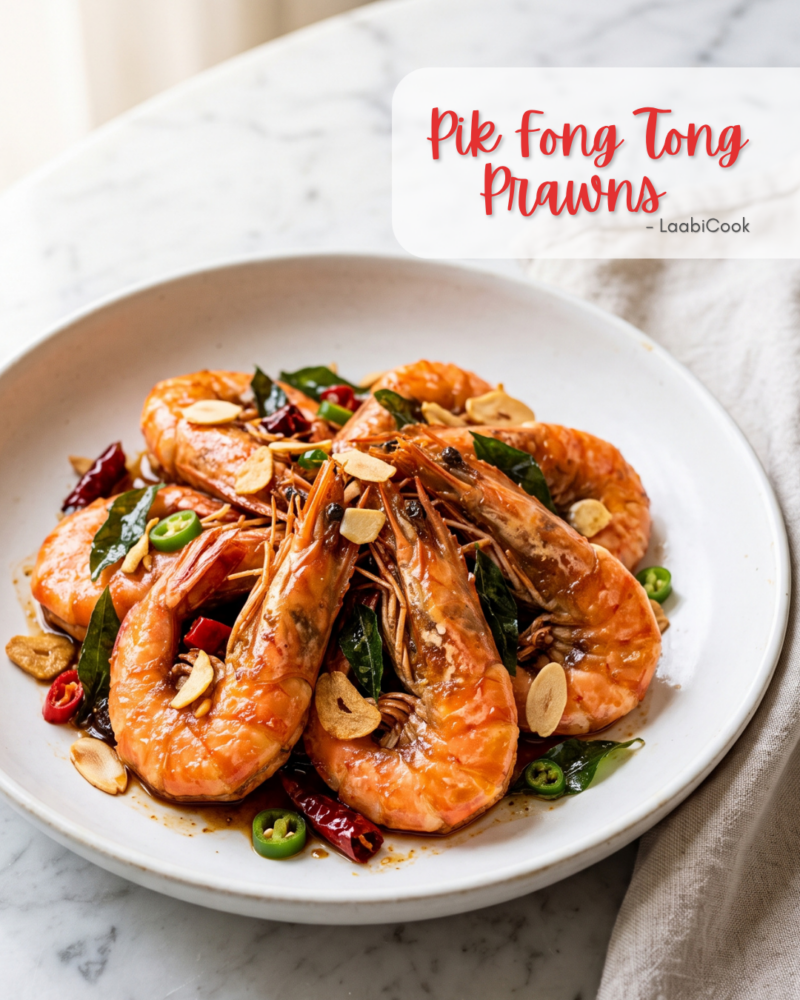
This is a dish that my dad keeps requesting for. It is fast, it is showy, and it uses just 12 ingredients if you count salt and sugar. The whole thing takes under 20 minutes from fridge to plate. You get restaurant-crispy pik fong tong prawns at home with one wok and no special skills. Want to know the real payoff? The first bite cracks between your teeth, then the curry leaves hit, then the XO sauce lingers. That is why I make it again and again.
Why You’ll Love This Recipe
- Shatteringly crisp in minutes: A thin flour dusting and smoking hot oil deliver restaurant-level crunch without a heavy batter or double-frying.
- One wok, minimal cleanup: Deep-fry, drain, and stir-fry in the same pan. No separate sauce pot or colander needed.
- Impressive with almost no prep: The ingredient list is short, the technique is straightforward, and the finished dish looks like you ordered in from a tze char stall.
The Culinary Secrets Behind This Dish
The flour coating here is thin by design, not a heavy batter. That matters because you want the oil to sear the prawn surface within 1 to 2 minutes, not spend time cooking through wet dough. A light dredge hits two things at once: surface moisture gets locked away so the shellfish sizzles immediately, and the starch itself undergoes rapid dehydration into a brittle layer. Too much flour and you get gumminess; too little and the prawn weeps moisture into the oil, dropping the temperature and killing crispness.
Draining almost all the oil before the second fry is what makes this a true tze char technique. You are not deep-frying the aromatics; you are stir-frying them in a near-dry wok so the curry leaves and chillies toast rather than boil. XO sauce contains oil already, so that residual teaspoon in the wok is just enough to wake up the dried shrimp and scallop notes without drowning them. The almonds go in raw because the heat of the just-cooked prawns is enough to warm them through; fry them earlier and they scorch.
What You’ll Need
Equipment
- Scissors: For trimming the sharp tips off prawn heads and tails, which prevents piercing during eating and helps the flour cling to clean edges.
- Wok: For high-heat frying and then near-dry stir-frying in the same pan. Its curved sides make draining oil fast, and the seasoned steel holds heat when the aromatics hit.
Ingredients
- 12 fresh tiger prawns: The star. Shell-on with heads and tails intact gives the true tze char look; the shells protect the flesh during the hot oil blast.
- 2 cups oil: For deep-frying the prawns. Any neutral oil with a high smoke point works; you need volume for the initial crisping, then most gets drained away.
- 30 g white flour: Creates the shattering coating. A thin, even layer dehydrates fast in hot oil without turning bready.
Aromatics and sauce
- 5 g curry leaves: Fragrant and essential to Singaporean tze char. Fresh leaves fry quickly and perfume the entire dish.
- 10 g dried chilli, cut into 1-cm pieces: Adds a slow, smoky heat and a pop of color against the golden prawns.
- 5 g chopped chilli padi: Fresh, sharp heat that cuts through the richness of the fried coating and XO sauce.
- 1/2 tsp chopped onion: Sweetens slightly as it hits the hot wok and forms part of the savory base.
- 1/2 tsp chopped garlic: Raw garlic added to the stir-fry stage; it cooks just enough to lose its harsh edge while staying pungent.
- 2 tsps XO sauce: The luxury condiment that makes this dish special. Dried seafood in oil adds deep umami you cannot get from soy or oyster sauce alone.
Finish and seasoning
- 10 g ready-fried garlic: Scattered at the end for a different garlic experience: sweet, crunchy, and fully cooked.
- 20 g sliced almonds: Adds a final layer of crunch and a mild, nutty sweetness that balances the heat.
- Pinch of salt: Fine-tunes the seasoning. XO sauce is already salty, so you need only a little.
- 10 g white sugar: A small amount to round out the savory flavors and help the coating caramelize slightly.
Step-by-Step Cooking Guide
1: Prep the prawns
- Clean and shell the prawns, leaving heads and tails intact. Use your scissors to snip off the sharp tips of the heads and tails; this stops them from jabbing you later and gives the flour a clean edge to cling to. Set the prawns aside on a plate.
2: Coat and heat
- Pour the oil into your wok and set it over high heat. While the oil heats, sprinkle the flour over the prawns and toss until every surface is evenly coated. Shake off any excess; you want a dusting, not a paste.
3: Fry until crispy
- When the oil is smoking hot, add the prawns in a single layer. Fry for 1 to 2 minutes until the coating turns pale gold and the shells look brittle. The prawn bodies will curl slightly. Remove immediately with a slotted spoon and set on a rack or paper towel. Drain all but 1 teaspoon of oil from the wok.
4: Fry the aromatics
- Add the curry leaves to the hot wok and stir-fry gently for a few seconds until they sizzle and release their fragrance. Add the dried chilli and chilli padi, tossing to mix. Then add the onion, chopped garlic, and XO sauce. Stir-fry until the oil is absorbed and the aromatics look crisp and smell intensely savory, about 30 seconds to 1 minute.
5: Toss, season, and serve
- Return the prawns to the wok. Toss everything together so the aromatics cling to the coating. Add the salt and sugar, then toss again to distribute evenly. Sprinkle the ready-fried garlic and sliced almonds over the top, give one final mix, and dish out while everything is still crackling hot.
Ingredient Substitutions & Variations
| Ingredient | Substitute | Taste & Texture Impact |
| White flour | Rice flour or tapioca starch | Different texture. Rice flour gives a lighter, more delicate shatter but less golden color. Tapioca starch is even more brittle and slightly transparent. |
| XO sauce | Oyster sauce with dried shrimp powder | Noticeably less luxurious. XO sauce is irreplaceable for its specific dried seafood depth. A mix of oyster sauce and a pinch of dried shrimp powder approximates the direction but not the quality. |
| Dried chilli | Fresh red chilli, sliced | Milder heat and less fragrance. Dried chilli contributes a smoky, slow-building warmth that fresh chilli cannot replicate. The dish works but tastes less complex. |
| Sliced almonds | Cashews or pine nuts | Less crunch, more earthiness. Cashews or pine nuts work in a pinch; peanuts are too assertive and fight the XO sauce. |
Recipe twists:
| Variation | Description & Culinary Details |
| Pik Fong Tong Sotong | Swap prawns for cleaned sotong rings. The flour coating works beautifully on squid, though cooking time drops to under 1 minute to prevent rubberiness. |
| Salted egg yolk coating | Add 1 teaspoon of salted egg yolk powder to the flour dredge. The coating takes on a savory, sandy richness that pairs with the existing garlic notes. |
| Classic Hong Kong style | Omit the XO sauce and double the ready-fried garlic and dried chilli. Finish with a squeeze of lime. This is closer to the original Hong Kong typhoon shelter style before XO sauce became standard in Singapore. |
Allergen Friendly Adjustments
- Gluten-Free: Not as written. White flour coats the prawns for crispness. Swap for rice flour or tapioca starch. The coating will be lighter and slightly less golden, but still shatters well.
- Dairy-Free: This recipe is already dairy-free. No butter, cream, or milk products are used.
- Nut-Free: Not as written. Sliced almonds add crunch at the finish. Swap for toasted sesame seeds or more ready-fried garlic. You lose some textural contrast but keep the savory finish.
- Shellfish: This recipe contains prawns. No direct substitute exists that replicates the dish; the technique works with firm white fish cubes, but that becomes a different dish entirely.
Serving and Pairing Suggestions
- Ice-cold Chinese beer: Tsingtao or Tiger beer cuts through the oil and heat. The carbonation scrubs your palate between bites of fried prawn and chilli.
- Steamed jasmine rice: Plain rice soaks up the stray XO sauce and garlic bits at the bottom of the plate. You will want every drop.
- Stir-fried kang kong with belacan: A wet, savory vegetable dish balances the dry crispness of the prawns and rounds out a proper tze char meal.
Storage, Reheating, and Freezing Guide
- Refrigeration: Not recommended. The crispy flour coating turns leathery within hours, and the almonds soften from residual steam. Eat immediately for best texture.
- Freezing: Does not suit this dish. The coating will fall apart upon thawing, and the aromatics lose all their snap. This is a cook-and-eat recipe.
- Reheating: If you must reheat, use a hot oven at 200C or a dry wok over high heat for 1 to 2 minutes. Never microwave; the coating goes from crisp to chewy in seconds.
Frequently Asked Questions (FAQ)
▶ How do I know the prawns are done without overcooking them?
The recipe says 1 to 2 minutes because tiger prawns cook fast and the flour layer is thin. Pull them when the coating turns pale gold and the bodies just curl; they will keep cooking from residual heat. Overcooked prawns go rubbery fast in this much heat.
▶ What exactly is XO sauce, and where do I buy it?
XO sauce is a Cantonese condiment of dried scallops, shrimp, and ham in oil. It is salty, savory, and slightly sweet. You can find it at Asian supermarkets; Lee Kum Kee is a common brand. Do not skip it, as it carries much of the dish’s umami depth.
▶ Can I remove the prawn heads and tails?
The heads and tails add flavor to the oil during frying and give the classic presentation. If you truly dislike handling them, you can remove entirely, but the dish loses its tze char identity. The shells themselves are not meant to be eaten.
▶ Can I make these ahead for a dinner party?
Yes, but only for a few hours and uncovered. The flour coating softens in a sealed container. If you must hold them, leave on a rack and re-crisp in a hot oven or wok for 30 seconds before serving.
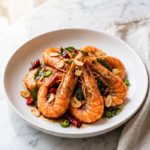
Pik Fong Tong Style Sautéed Prawns
Equipment
- scissors
- wok
Ingredients
- 12 fresh tiger prawns
- 2 cups oil
- 30 g white flour
- 5 g curry leaves
- 10 g dried chilli , cut into 1-cm pieces
- 5 g chopped chilli padi
- ½ tsp chopped onion
- ½ tsp chopped garlic
- 2 tsps XO sauce
- 10 g ready-fried garlic
- 20 g sliced almonds
- PInch of salt
- 10 g white sugar
Instructions
- Clean and shell prawns, leaving heads and tails intact. Using a pair of scissors, cut the tips of heads and tails. Set aside.
- Heat oil in a wok over a high fire. Meanwhile, sprinkle flour over prawns. Mix well to coat prawns evenly.
- When oil is smoking hot, add prawns. Cook for 1 to 2 mins until prawns are crispy. Remove and set aside. Drain oil, leaving only 1 tsp oil in wok.
- Add curry leaves to hot wok, stir-fry gently then add dried chilli and chilli padi. Stir-fry to mix well. Add onion, chopped garlic and XO sauce. Stir-fry until oil is absorbed, and ingredients crisp and fragrant.
- Bring prawns back to wok. Mix ingredients well. Add seasoning. Toss to mix well. Sprinkle fried garlic and almonds over. Dish out and serve.
Gobble these up too!
-

Want restaurant-crispy prawns at home? The secret is a light flour coating and smoking hot… Cook recipe >
-
This homey Cantonese classic asks little of you and gives back so much. Let the… Cook recipe >
-
This fried mee sua recipe brings together two Singapore classics: birthday noodles and hawker-style frying.… Cook recipe >
-
Fennel and lime lift these garlic prawns into something special. Serve over rice and watch… Cook recipe >