Pasteis de nata (蛋挞), Portuguese flaky egg tarts, have been around since the 18th century. Catholic monks in Belém, Portugal first made them: a flaky pastry shell holding a burnt, rich, sweet egg custard filling, somewhat similar to a crème brûlée.

The original takes half a day of butter folding and temperature control that I have absolutely no patience for. This is my Portuguese egg tarts recipe for very lazy people. Only 4 ingredients. No puff pastry from scratch. No hunting down frozen puff pastry that Singapore supermarkets never seem to stock when you actually need it. I use frozen prata, the same stuff I fry for breakfast, and the oven does the rest in 30 minutes. It was during the circuit breaker, craving egg tarts with no shops open and delivery fees absurd, that I worked this out. Now it is the only way I make them.
Why You’ll Love This Recipe
- Genuinely 4 ingredients: Prata, eggs, evaporated milk, sugar. Chocolate and blueberries are optional extras, not requirements. The shopping list fits on a sticky note.
- No pastry skills needed: Rolling, folding, and butter temperature management are someone else’s problem. The prata manufacturer did the lamination work for you.
- 30 minutes from raw to eating: Defrosting aside, the active time is under 10 minutes and the oven does the rest while you make coffee.
The Culinary Secrets Behind This Dish
The frozen prata hack works because prata is already a laminated dough, just like puff pastry. The manufacturer has folded fat into flour dozens of times, creating hundreds of thin layers that separate in hot oven air. When you roll the prata into a log and slice it, you cut across those layers. The sliced-side-down press into the tart case forces the layers to fan outward, so the heat hits edges from multiple angles.
Steam expands between fat and flour, and you get puff without the hours of folding butter yourself. The 80 percent fill rule matters more than it looks. Egg custard is a liquid that expands as proteins coagulate and steam builds. Fill to the brim and the mixture overflows, burning on the tray and sticking your tart to its case. The 20 percent headspace lets the custard dome slightly, then settle back. That dome is what exposes the center to the most direct heat, creating the characteristic burnt spots that define a proper Portuguese egg tarts recipe.
What You’ll Need
Equipment
- Oven: Needs to hit 220°C reliably; the high heat is what puffs the prata layers and caramelizes the custard top.
- Tart cases: Molds the prata into the classic shallow cup shape; you need enough for 12 tarts.
- Baking tray: Catches any custard overflow and makes moving 12 tarts in and out of the oven safe.
- Mixing bowl: Large enough to whisk 2 eggs and a full can of milk without splashing.
- Whisk: Beats sugar into eggs until dissolved so the custard does not separate or sink.
- Sieve: Removes foam and albumen strands; this is what gives Portuguese egg tart custard its glassy surface.
Ingredients
- Frozen prata, 4 pieces: The lazy person’s laminated dough. Already layered with fat, it puffs into flaky tart shells with zero folding work.
- Eggs, 2 large: Sets the custard and provides the golden color; the proteins coagulate at around 70°C to hold the filling.
- Wang Zai milk, 1 can (385g): Evaporated milk concentrated to richness; it carries the vanilla-caramel notes that define this custard style.
- Sugar, 40g: Sweetens and caramelizes on the surface under high heat, creating the signature burnt spots.
Group 1
- Chocolate, optional: Melts into a surprise layer beneath the custard for anyone who wants a dessert tart.
- Blueberries, optional: Bursts into jammy pockets that cut through the richness of the egg filling.
Step-by-Step Cooking Guide
1: Stack the prata layers
- Cut 2 pieces of frozen prata in half. Stack all 4 pieces alternately: whole, then half with the straight cut side facing out, whole, then half with straight side out again. This creates the layered spiral you will see when sliced.
2: Wrap and defrost
- Cover the stack with plastic wrap. This prevents condensation from wetting the dough while it defrosts, which would fuse the layers and ruin your puff.
3: Preheat the oven
- Set your oven to 220°C and let it come fully to temperature while the prata softens. A hot oven from minute one is what forces those layers apart.
4: Roll into a log
- Once the prata is fully soft and pliable, roll the entire stack into a tight log. The spiral of layers inside is what creates the flaky rings in the finished shell.
5: Slice into rounds
- Slice the log into 12 equal pieces. Place each slice cut-side down on your work surface and press gently into a rough circle. The cut face shows the lamination clearly.
6: Press into tart cases and arrange on tray
- Flatten one round with your palm, then press it into a tart case. Keep pushing and spreading until the dough comes slightly over the edge. The overhang shrinks back as it bakes. Repeat with all 12 slices. Work quickly; warm prata gets sticky and harder to handle neatly. Arrange the filled tart cases on your baking tray, leaving a little space between them for air circulation.
7: Whisk the custard
- In a mixing bowl, whisk the eggs, Wang Zai milk, and sugar until the sugar is fully dissolved and the mixture is even in color. No streaks of yolk should remain. Pour the mixture through a sieve into another bowl or jug. This removes foam and stringy albumen, which is what gives the baked custard its characteristic smooth, glassy top.
8: Fill the tarts
- If using chocolate or blueberries, drop them into the shells now. Pour the custard in until each shell is about 80 percent full. The filling expands as it bakes, and overfilled tarts will overflow and stick.
9: Bake until blistered and golden
- Bake at 220°C for 20 to 30 minutes. Look for a puffed, golden pastry edge and a custard top with dark caramelized spots, even a few small burnt patches. That is the sign of proper Portuguese egg tarts. Let them cool 5 minutes before attempting to remove from the cases, or the custard will collapse.
Ingredient Substitutions & Variations
Cooking should be adaptable! If you’re missing a few items, here is how you can easily swap them out while keeping the same incredible flavor profile:
| Ingredient | Substitute | Taste & Texture Impact |
| Frozen prata | Frozen puff pastry | Noticeably different texture; puff pastry flakes more delicately, prata has a slightly breadier chew. |
| Wang Zai milk | Whole fresh milk | The custard is less rich and less stable as fresh milk is thinner. |
| White granulated sugar | Caster sugar or light brown sugar | Slightly less caramelization on top; the custard will taste similar but lack some depth. |
Recipe twists:
| Variation | Description & Culinary Details |
| Gula melaka custard | Warm 2 tablespoons of gula melaka with the milk until dissolved, then cool before whisking with eggs. The palm sugar gives a smoky, caramelly depth that reads as very local. |
Allergen Friendly Adjustments
- Gluten-Free: Not gluten-free as written. Frozen prata is made with wheat flour. Swap to gluten-free puff pastry or a gluten-free tart shell, though the flakiness will differ.
- Dairy-Free: Not dairy-free as written. Wang Zai milk is evaporated cow’s milk. Substitute with coconut evaporated milk or another plant-based evaporated milk; the custard will taste less rich but still sets.
- Nut-Free: Already nut-free. Frozen prata, eggs, evaporated milk, and sugar contain no nuts.
- Egg-Free: Not egg-free as written. The custard depends on whole eggs for structure and color. Egg replacers will not produce the same burnt-top custard.
Serving and Pairing Suggestions
- Kopi-O kosong: A strong black Singapore coffee without sugar cuts through the custard sweetness perfectly.
- Fresh fruit plate: Papaya, dragon fruit, or watermelon balance the richness and follow the local habit of fruit after a sweet.
- Iced barley drink: Cooling and light, it cleans the palate if you are eating more than one tart, which you probably are.
Storage, Reheating, and Freezing Guide
- Refrigeration: Store cooled tarts in an airtight container in the refrigerator for up to 3 days. The pastry softens slightly but the flavor holds.
- Reheating: A 5-minute blast at 180°C in the oven or air fryer crisps the egg tarts back up. The microwave works in 20-second bursts but makes the base chewy, not flaky.
- Freezing: Not recommended. The custard weeps and separates when thawed, and the prata layers never regain their original crispness. These are best eaten fresh or within a day.
Frequently Asked Questions (FAQ)
▶ Can I use real puff pastry instead of prata?
Frozen puff pastry works exactly the same way: roll, slice, press. Fresh puff pastry is harder to handle because it is already soft and will not hold the spiral shape as cleanly.
▶ What is Wang Zai milk, and where do I buy it?
Wang Zai milk is a concentrated canned milk with about 60 percent of the water removed. It gives a richer custard than fresh milk without the heaviness of cream. In Singapore it is sold in every supermarket and provision shop.
▶ The tops got quite dark. Did I overbake?
The burnt top is traditional and intentional in Portuguese egg tarts. It comes from high heat caramelizing sugars on the custard surface. If you prefer less color, bake at 200°C for 5 minutes longer, but you lose some of that crème brûlée character.

4 Ingredients Portuguese-style Flaky Egg Tarts
Ingredients
- 4 pcs Frozen prata
- 2 Eggs
- 1 can Wang Zai milk
- 40 g Sugar
Additional Filling (Optional)
- Chocolate
- Blueberries
Instructions
Dough
- Cut 2 pcs of frozen prata in half, then stack the pratas alternately; whole, then cut prata with straight sides facing out, whole and cut prata with straight sides facing out again. Cover with plastic to prevent water condensation while the prata dough defrosts.
- Preheat oven at 220°C
- After prata dough has fully defrosted, roll it into a log. Slice into 12 equal pieces, place sliced side down, shape it slightly into a circle.
- Flatten a sliced dough with palm, press dough in tart case and keep spreading it until it's slightly over the edge of the case. Repeat process for the rest of the dough. Place ready egg tart shells on baking tray.
Egg Filling
- In a mixing bowl, whisk eggs, milk and sugar together.
- Sieve egg mixture.
Assemble
- Place additional fillings in egg tarts shell if you like and pour egg filling until 80% full.
- Bake at 220°C for 20 to 30 mins.
Video
Gobble these up too!
-

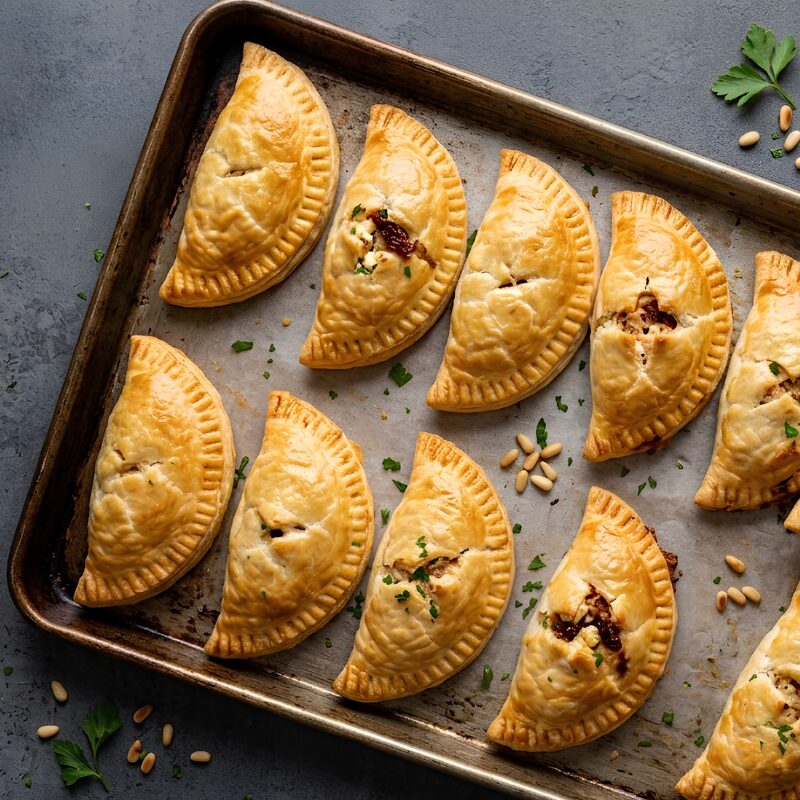
There is something magical about the aroma of baking puff pastry wafting through the kitchen.…
-

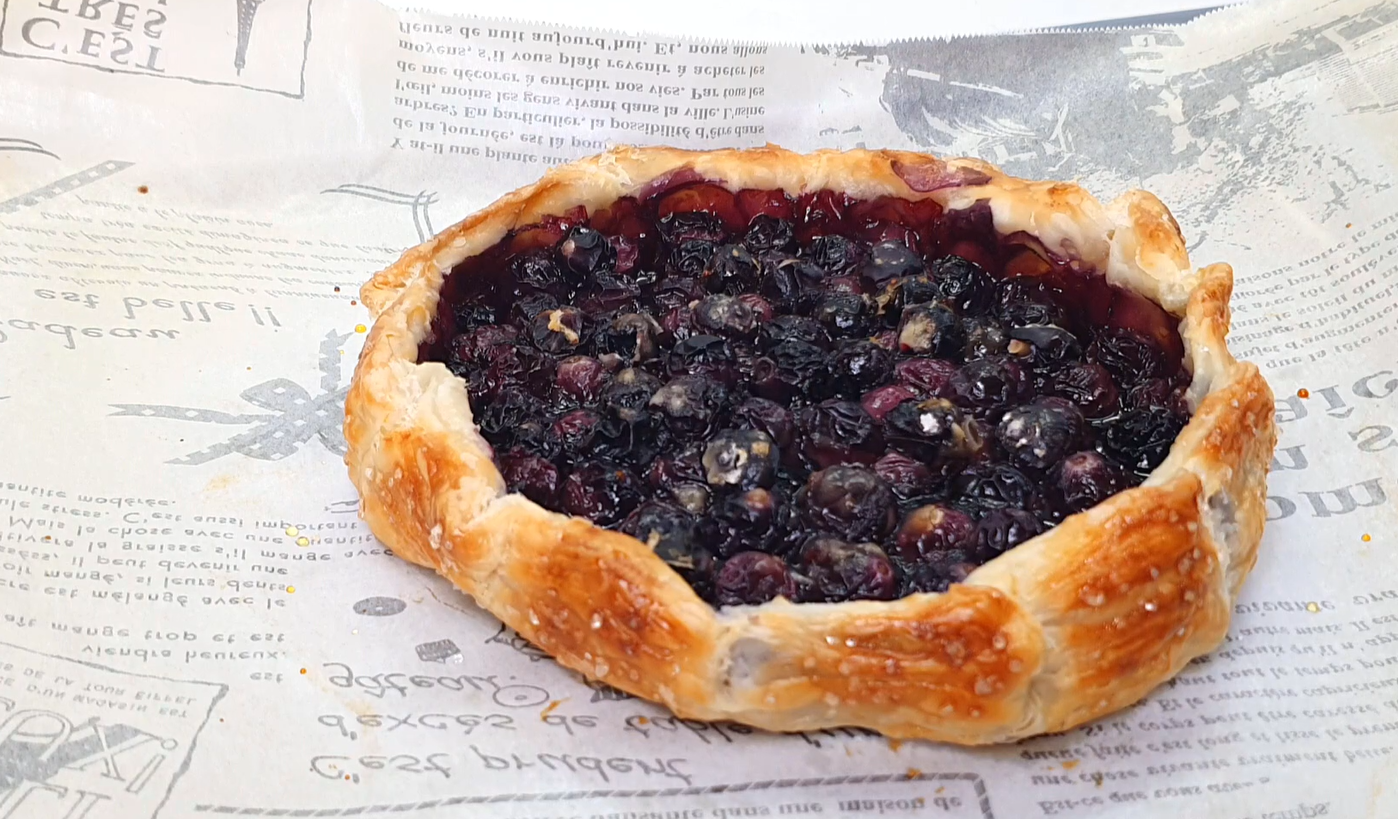
A rustic open faced blueberry pie that requires no special pans or tools to make,…
-

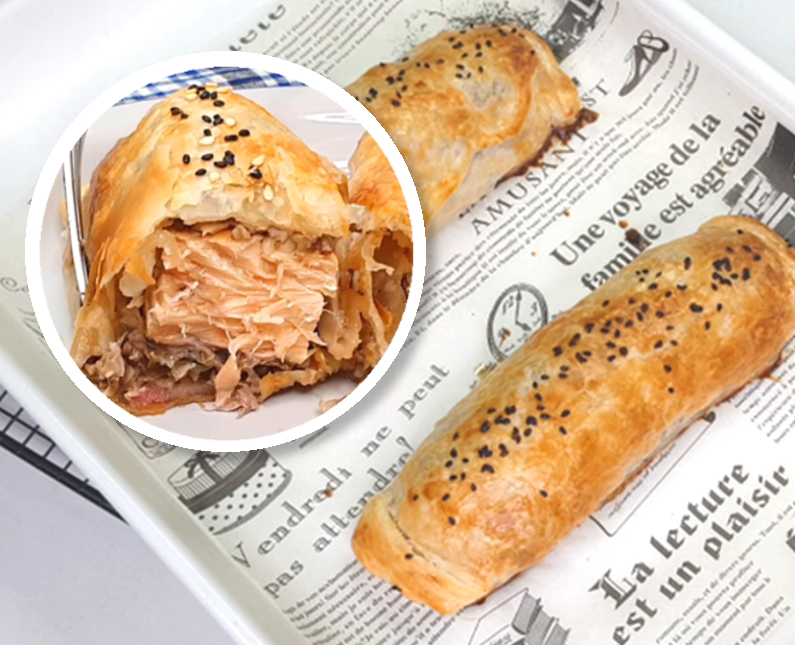
My version of Salmon Wellington aka “salmon en croute” consists of salmon, covered in mushrooms and…
-
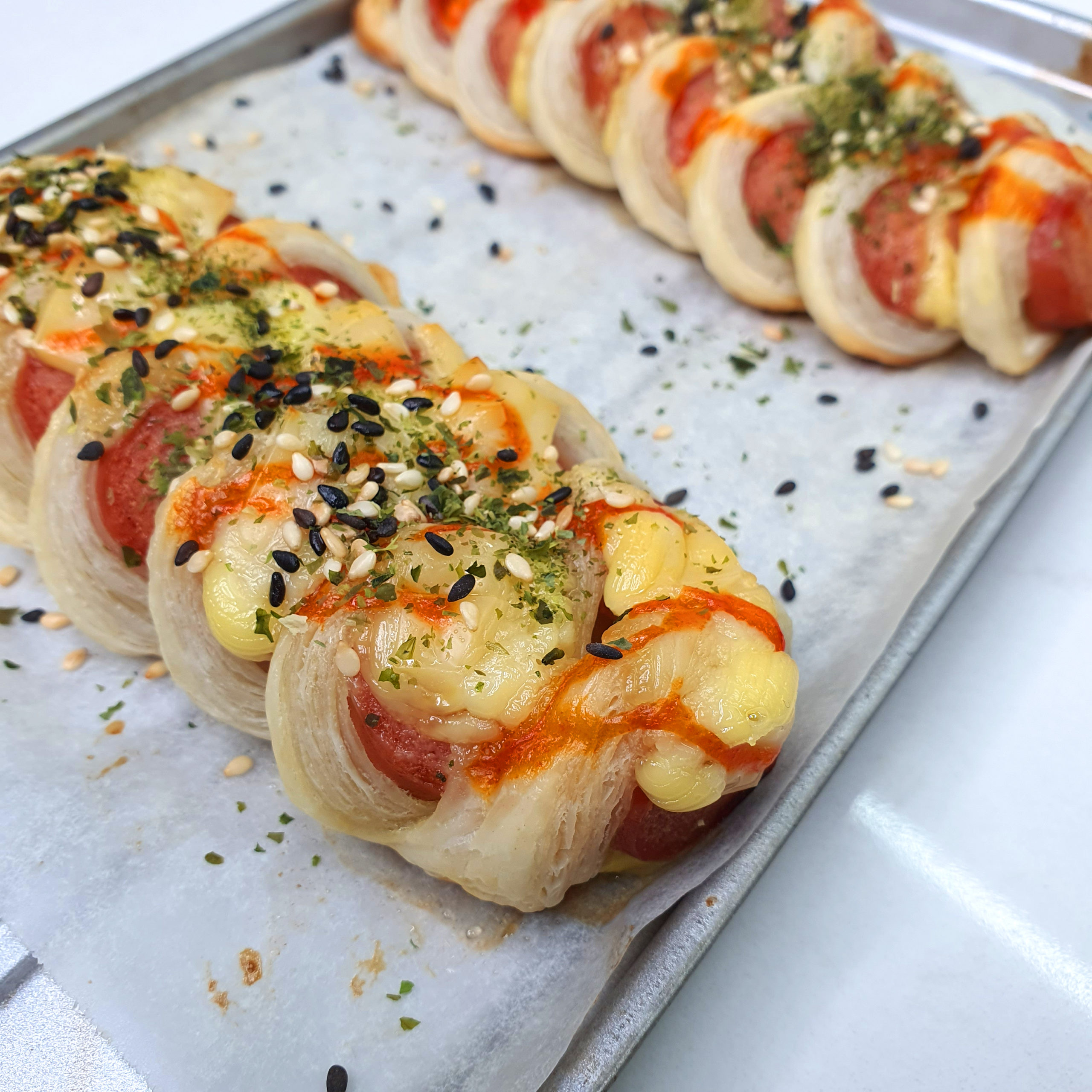
Quick Sausage Pastry with Frozen Prata is a lazy Singaporean hack that turns supermarket frozen…